
At a Glance: RV LIFE Podcast Episode #163
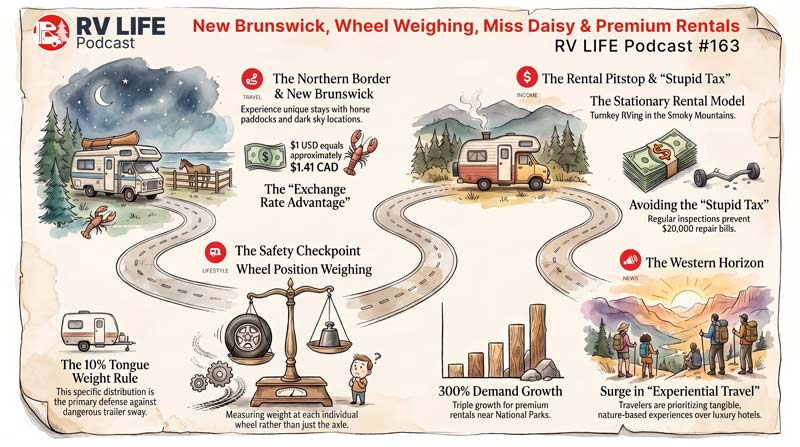
Explore New Brunswick RV travel, from lobster and history to off-grid camping, glamping, full hookups, and horse-friendly stays. Learn why wheel position weighing matters for tire safety, loading, sway, and what your RV can really carry. You’ll also hear how Miss Daisy became a Smoky Mountains RV rental business. And get insight into growing demand for premium RV rentals near western national parks.
Whether you’re planning a cross-border RV adventure, wondering if your rig is loaded safely, or thinking about renting out your camper for extra income, this episode has practical advice you can use.
Episode 163 of the RV LIFE Podcast takes you from the campgrounds of New Brunswick, Canada, to RV safety clinics, the Smoky Mountains, and the national parks of the American West. Along the way, you’ll discover why New Brunswick deserves a spot on your travel list, what individual wheel weights reveal that truck stop scales can’t, how one couple built a successful RV rental business after learning some expensive lessons, and why premium RV rentals continue to grow near America’s most popular parks.
If you’re looking to make smarter travel decisions, improve your RV’s safety, or explore new ways to enjoy the RV lifestyle, this episode is packed with insights from experienced guests who have been there and learned what works.
RVing New Brunswick, Wheel Position Weighing, Miss Daisy & Premium Rentals
Top Reasons to Listen Now
- Travel: Discover New Brunswick camping, lobster, history, off-grid stays, and why Canada may be a smart trip for U.S. RVers.
- Lifestyle: Learn why wheel position weighing can reveal RV safety issues that total weight alone may miss.
- Income: Hear how Miss Daisy became a Smoky Mountains rental business built on checklists and hard-earned lessons.
- News: Understand why premium RV rentals are growing near western national parks and who is renting them.
RESOURCES MENTIONED
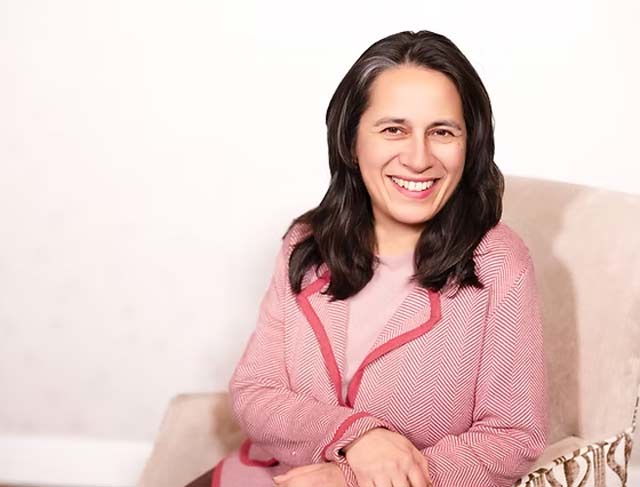
- Salma Burney
- Trey Selman
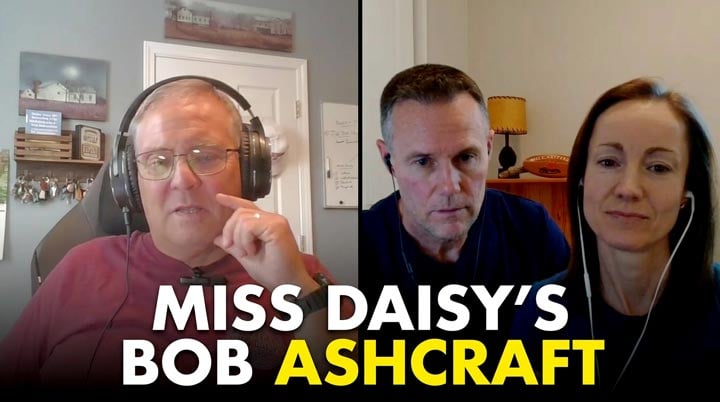
- Bob Ashcraft
- Becky Goodell

Be A Guest or Share Your Story!
https://podcast.rvlife.com/contact
Listen to the RV LIFE Podcast Episode #163
Listen and subscribe to The RV LIFE Podcast on Spotify or in your favorite podcast app. Or, read the full episode transcript below. Leave a comment, or contact us with any questions or feedback.
Connect & Learn More
- https://podcast.rvlife.com/about
- https://facebook.com/rvlifepodcast/
- https://instagram.com/rvlifepodcast/
- https://www.facebook.com/groups/rvlifemovement
Got a great story or tips to share with listeners? Leave us a voice message!
(NOTE: Audio submitted may be published on the podcast unless specifically requested otherwise.)
RVing New Brunswick, Wheel Position Weighing, Miss Daisy & Premium Rentals
RENE: You know, every RV trip starts with a plan, but the longer you do this, the more you realize that planning is only part of the story.
JIM: As we like to say, that’s the current plan, right? Sometimes the real value is knowing where to go, what not to pack, and how to stay safe getting there. Welcome back to the RV Life podcast. I’m Jim.
RENE: And I’m Rene. With today’s episode, we’re covering a lot of ground from camping in New Brunswick, Canada to one of the most overlooked safety issues in RVing.
JIM: John starts us off north of the border with Salma Bernie from the New Brunswick Campground Owners Association. They talk camping history, lobster, off-grid stays, and why this might be a really good time for Americans to visit Canada.
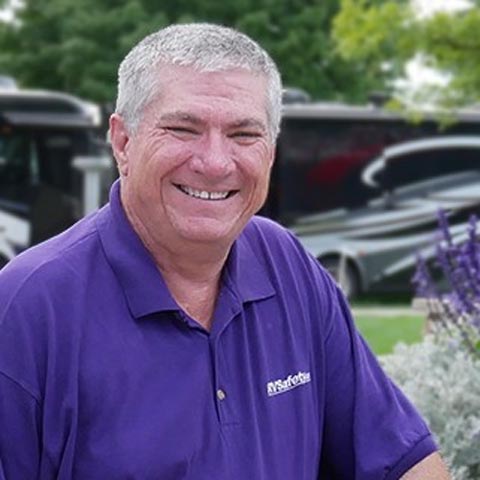
RENE: Then we sit down with Trey Selman from the RV Safety and Education Foundation to talk about wheel position weighing. And yes, this is one of those topics that sounds technical until you realize how it affects your tires, your suspension, your tow vehicle and everything you bring along.
JIM: Then Rose and Glynn talk with Bob Ashcraft about how he and his wife Trudy turned their RV, Miss Daisy, into a rental business in the Smoky Mountains and how those real world lessons turned into their book.
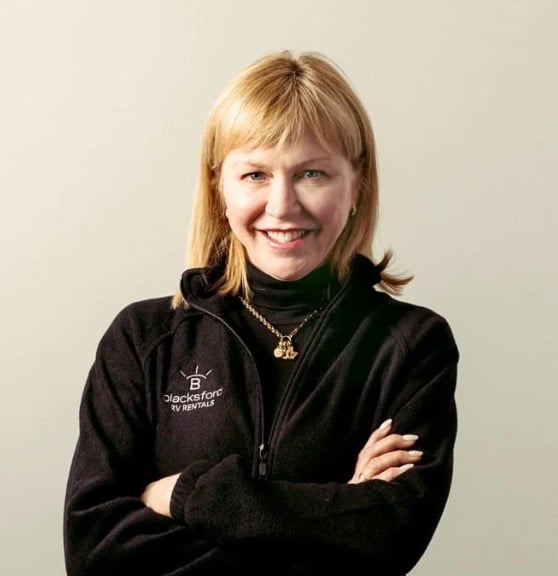
RENE: And Bob wraps things up with Becky Goodell from Blackford RV Rentals, where premium RV rentals are growing fast, especially around the West’s big national park destinations.
JIM: So, let’s get started with a trip to New Brunswick, where the camping comes with history, dark sky, and apparently a lot of lobster.
RENE: Lobster. John takes us to New Brunswick, Canada with Salma Bernie, who runs Offgrid Adventure and also serves as president of the New Brunswick Campground Owners Association.
JIM: They talk about the province’s camping options from full hookup campgrounds to off-grid stays, glamping, drive-in movie campgrounds, and even camping with your own horse.
RENE: And for us American travelers, there’s another reason to pay attention right now. The exchange rate.
JIM: Here’s John with Salma Bernie.
JOHN: Hey everybody and thank you so much for joining us on this segment of the RV Life podcast, our destination segment. My name is John DiPietro and today we are traveling north of the border. Everybody’s heading south, but we’re heading north and we are heading up into Canada to see our friends in the friendly province of New Brunswick. And we want to welcome Salma Bernie with us. And Salma, you run a campground up there. And you’re involved with the provincial parks in the province that are privately owned, right?
SALMA: Yes, I’m the president of the New Brunswick Campground Owners Association, which is part of the federal one for Canada, which is the RVDA.
JOHN: Which in the United States is the RV dealers association, but nevertheless, we get between French and English. We got a few letters mixed up here and there, but the reality is we all love camping and we all love RVing. And a lot of people, when they think of Canada, they think of Quebec or if they’re on the West Coast, they think of British Columbia or in July, they think of Calgary with the stampede. But New Brunswick is really a special place. And for those that aren’t familiar with its geography, tell us where New Brunswick is and distances from major metropolitan areas.
SALMA: Sure. So, I’ll start with hopefully everyone knows where the state of Maine is. So, from the state up in the top right hand corner. The state of Maine borders New Brunswick. And an interesting fact is as soon as you go past the border of Maine, you’re now in a new time zone. Because here in Canada, we have the Atlantic time zone which is New Brunswick, Nova Scotia, and Prince Edward Island and then we have another time zone for Newfoundland which is 30 minutes more.
JOHN: In fact Canada has two extra time zones past the state of Maine. We leave Maine, we get to New Brunswick. History really abounds. I want to talk about three things today: History, food, and where do we stay? We don’t really have to get too detailed into history, but I’ve been there a few times and the city of St. John is an amazingly fascinating historical location.
SALMA: It is and we are actually Canada’s only bilingual province official. So that means anybody who works for the government has to say hello bonjour. English and French. It is the largest of the three maritime provinces and the maritime provinces are New Brunswick, Nova Scotia and Prince Edward Island and is home to the world’s longest covered bridge.
JOHN: And I’m also told that it is home to the world’s longest lobster roll. Is that true?
SALMA: Yes. There is the Shediac Lobster Festival.
JOHN: We segueed into food pretty quickly, didn’t we? Are you hungry?
SALMA: Yes, we did. I will be by the time we’re done this.
JOHN: Is it primarily British history or is it French history or is it a combo of both?
SALMA: There’s a combo because there’s the native Indians, the Micmac people, the Wolastoqiyik. There’s the Acadian French that are on the east coast, and there is the British because New Brunswick is one of those that was part of the Dominion. So, they joined the Dominion in Canada in 1867. So, that was New Brunswick, Ontario, Quebec, and Nova Scotia. That’s what started Canada.
JOHN: Okay, so we’ve done our history lesson. We’re going to go back to food in just a minute. But as far as cities are concerned, I bring up St. John because many Americans have been there because of cruise ships. It’s become a major cruise ship port in the summertime at least. And I know that we would always encounter campers, RVers around there. Talk a little bit about the RV opportunities and camping opportunities there and start with your own park. because you told me before that you have a unique feature at your park.
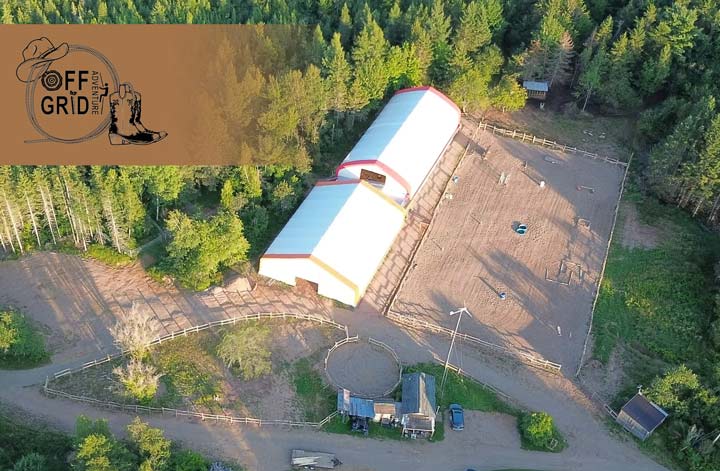
SALMA: Well, my park is called Off-Grid Adventure. We’re a back to nature campground. And what makes us unique is we’re totally off the grid. So, when you come here, you’re not going to be plugging in your camper. You’re not going to be plugging in the water line, but you will experience a place where there is lots of quietness, lots of trees. We are a dark sky location and we are the only place you can go camping with your horses. So if you own horses, you can trailer your horse. You can actually open the horses up into one of our paddocks. We have an indoor and an outdoor arena for the horse and you to enjoy obstacle trails. So we are unique in that respect.
JOHN: So you don’t have trail rides or anything like that for somebody who likes horses but doesn’t have their own horse with them.
SALMA: No, we don’t rent our horses. Just imagine you’re getting on this 1,500 lb animal. They don’t know you and you don’t know them. And you’re getting on their back and if you’re scared, a horse can sense a human’s heartbeat.
JOHN: Oh, really?
SALMA: And they can sense that you have anxiety, you’re nervous, and they’re going to be like, “Okay, we’re going to take this person for a ride.” And that’s not fair.
JOHN: Not fair at all. For other attractions, campgrounds you can get your full hookups, but there are rustic ones as well for people that want to be closer to nature.
SALMA: Exactly. We have all sorts. We have glamping sites for people who just want to go and stay in a dome. But for RVers, there are wonderful campsites. The unique one, we have two in New Brunswick that actually have a drive-in theater. So, you can park there at the campground and then on the weekends they have drive-in movies.
JOHN: Wild. That’s pretty wild. As far as the camping season is concerned, when does the season start and when is the end based on weather?
SALMA: A lot of people think it’s always May to October, but you can come in April. April is a great time. So the shoulder season is April, October, November. If you’re a hunter, hunting season starts in November here. So you can also do a little bit of hunting and RV camping at the same time. I guess the time that most people don’t want to go camping is December, January, and February. You can technically at my place, because we actually have places for people to do year round camping. But generally it would be April to end of October.
JOHN: One topic that is very pertinent this time of year because of the economic situation that we’re in right now is that it’s very advantageous for Americans to come to Canada. Talk a little bit about the exchange rate and what a dollar what a US dollar will buy in Canada.
SALMA: Well, let’s just see what the exchange rate is today. So, $1 US equals $1.41 Canadian.
JOHN: Wow. Almost one and a half.
SALMA: So you’re getting a great deal. You can get the tax back when you do come across.
JOHN: Certainly an advantage for Americans to go to Canada right now economically. As far as a website is concerned where people want to find out more about camping opportunities in New Brunswick, where should they be sent?
SALMA: They can go to my campground association. It’s called nbcampgrounds.com. And if you’re looking for events or places to see and things to do, then you want to go to the Tourism Industry Association of New Brunswick’s website, which is tianb.com.
JOHN: Salma Bernie, we want to thank you so much for spending time with us in this international podcast and I know that we are looking forward to heading north of the border and hopefully many of our listeners will do the same and come up and have a great time in New Brunswick.
SALMA: We love to see you and love to show you our beautiful province.
JOHN: Thank you so much. This is the RV Life podcast. Stay with us.
RENE: I love how New Brunswick has everything from dark sky off-grid camping to full hookup resorts and camping with your horse. Now, there’s a neat niche for you.
JIM: Yeah, I’m still thinking about the lobster.
RENE: Fair enough. But pay attention. This next conversation is one every RVER should hear, even if it’s not quite as tasty.
JIM: We’re talking with Trey Selman from the RV Safety and Education Foundation about wheel position weighing. A CAT scale can tell you a lot, but it won’t tell you what weight is on each individual wheel.
RENE: And that’s more important than RVers realize. Especially if you’ve ever said, “We don’t really have that much stuff in here.”
JIM: Famous last words. Here’s our conversation with Trey Selman.
RENE: Welcome, Trey. It’s so nice to have you here.
TREY: Nice to be here. Thank you very much for your invitation.
RENE: You’re very welcome. I’m excited about this, too. We’ve been to CAT scales in the past in our previous fifth wheels, and we’ve also had specific wheel weighing done, which we’re going to talk about. But let’s start with the basics here. What exactly is wheel position weighing and how is it different from just pulling onto the scale at the truck stop?
TREY: Well, it’s measuring weight. So, in that way, it’s the same, but it’s just more detailed information. You’re able to get what’s happening on each end of the axle as opposed to the bigger pieces. Platform scales, we love them. That would be a CAT scale or a truck stop scale. And you can get some information, you can get overall information or maybe even the axles, but RVs are unique vehicles. And so, we like to see these individual weights which you can get each axle end.
JIM: For any listeners who might not have been to a smart way from Escapees or other place where this is done, you’re putting a scale under each wheel. So you’re not only measuring the weight of the axles individually, but also each end of the axle, right?
TREY: That’s correct.
JIM: You have this total weight that you get from a CAT scale. Let’s say that you’re a new RVER and that’s the best you could do at the time because that’s all you know about. Which is what we did. That’s how we started. But why is that weight, that number that you get, not really enough to determine whether or not your RV is safe or overweight?
TREY: There’s nothing wrong with it at all. It’s good to get an overall weight. It’s very easy to get. It’s inexpensive and it’s very prolific. Those scales are thousands of CAT scales across the country. I strongly suggest that people use that tool to get that information. It’s just that RVs are a little bit different vehicles and they have unique characteristics and it helps to understand your RV and to check for some extra safety items to get more detailed information.
RENE: How is it different in the sense that a motor home might those numbers might apply differently to a motor home than say a trailer and tow vehicle?
TREY: They don’t apply differently. You’re going to get axle end weights on an RV in general whether it’s a motor home or it’s a travel trailer or a fifth wheel. We’re houses on wheels and we’re not just big empty boxes. With a big empty box when you’re moving stuff from one place to another you can easily distribute the weight so that it’s even across the axles. In an RV it’s a living unit. A lot of the stuff in the RV is already bolted down, like all the power equipment, all the appliances, water tanks. They can’t move. Then on top of that, we stick all our stuff in there in all kinds of different ways, and you could just overload some of those pieces of equipment, the axles or the brakes or the wheels or the tires. We want to check that out and make sure those components are not being overloaded.
RENE: I think I’m getting it now. And I know that when Jim put a workstation in our previous fifth wheel, I was very concerned about having all that extra weight on one side, but then you went and you took out the bunks in the other part of the fifth wheel, and I felt like it kind of evened it out because you redistributed the weight.
JIM: I also removed a couch with storage space under it, which I just had stuff under there. In my head, I didn’t do the actual weights, which we should have done maybe before and after, but I did take out some weight and put some weight back in. These are all things people need to consider, but I wonder, what’s the most common big surprise RV owners tend to experience when they do get these individual wheel position weights? Is there anything that happens a lot that people aren’t usually aware of?
TREY: People aren’t aware of weight in general because most RVers drive passenger cars, and we don’t think about weight at all. So, they’re just not even understanding that. Sometimes it’s out of sight, out of mind. I don’t even want to know, that’s the mindset. But then when they do find out that they’re overloading their vehicle, it’s sometimes a shock. Then it becomes a different kind of conversation, dealing with that shock and what do I do? If it’s pretty bad, then you don’t have too many options. You need to get rid of some stuff. If there are other ways to manage it, there are certain ways that can be managed and we try to give those helps and tips to help do that.
JIM: How important are the numbers, the specs from the manufacturer? If you’re 100 lb over, is there any leeway in those or are they pretty strict?
TREY: They’re pretty strict. The weight ratings of the vehicle are pretty strict. Now, that doesn’t necessarily mean you’re going to have a component failure when you get 2 ounces over the weight rating. But certainly the more you’re over, the more likely you will have some problems. It’s going to wear your components out faster and puts you at a higher risk for component failure, life and safety.
RENE: You mentioned the problems and component failure. What are the best and worst case scenarios from being overloaded? Is it sway? Tire wear? Axles falling off? What’s the simple thing that might happen?
TREY: All of those things. We’re talking about the vehicle’s capability to be able to carry weight and move weight around the country. Those weightbearing components when they’re overloaded are at risk at failing sooner. If it has to do with the ability for the vehicle to move like in towing, we’re talking about the engine, the transmission, drivetrain, stressing them so that they’re overheating.
JIM: I’ll tell you, Trey, we’ve had our share of failure when it comes to being overloaded. In our early days, all it took was two tire blowouts on the same side within a year of each other when I realized we need to get weighed. We need to do a real weighing which is what RVSEF does. When we did find out we were a little bit overweight. We were pushing our limits and it was interesting that being overweight resulted in the blowouts on the same side. It taught us to get a TPMS and let’s weigh.
TREY: It’s good knowledge to have. We strongly suggest getting a CAT scale weight or a platform scale weight at a truck stop because they’re just so easy to get and they’re inexpensive to do. It gives you that overall weight and you can see what’s going on. Then when you get a chance, hook up with us. You can see on our website where our teams are across the country and get that more detailed information that can help you maybe make some adjustments.
RENE: You talk about adjustments that you can identify from measuring side to side and each individual wheel. As RVers, we don’t have much control over where those holding tanks are in our rigs. At 8 lb a gallon, those can carry a lot of weight and often people don’t even think about it. I presume it’s important to at least know where those things are so you know how to load. Considering that, what are some common loading mistakes you see that create dangerous weight imbalances?
TREY: When it comes to towing, it’s important to make sure that you have on travel trailers, at least a 10% tongue weight. That means where 10% of the weight of the trailer is loaded onto that tow vehicle. And that helps to mitigate sway. Another thing that can help with sway is speed, but that’s a whole another topic. Probably some of the other mistakes that RVers make is just not being aware that every item has weight. I don’t if I had a dime for every time someone told me I’d be rich when the RVers say, “I don’t have anything in here” when we see that they’re overloaded. Then they open up their basement and it’s full to the top. All of those individual components are not big in themselves, but they all add up. We need to understand that every single item has weight.
JIM: Are you telling me that my t-shirt collection has an impact on the overall weight?
TREY: That’s what I’m saying. But at least it’s not a rock collection or a bowling ball collection. We all have too much. There is a limit to what our vehicles can do.
RENE: In our previous rig, I had a jewelry making workshop where tools like hammers and bench blocks were part of the workshop area and it was really tough because I knew that kind of stuff was obviously adding weight. Now we have a travel trailer and I noticed as soon as we got the travel trailer that we could feel sway and getting blown around a lot more with this RV than with our fifth wheel. Would you say that being overloaded has more of an impact on travel trailers than fifth wheels?
TREY: Proper weight distribution has a greater effect on travel trailers than fifth wheels. Just because that connection point is on the bumper, it’s more susceptible to trailer sway. Proper loading, which means proper weight distribution, more front to back, is important. With fifth wheels because the connection point is over the rear axle, that in itself helps to mitigate sway and we don’t really have as much of an issue with that.
RENE: What about something like a truck camper or a sprinter van?
TREY: They also have issues with regards to weight. It’s going to be overloading those weight bearing components and component failure. Our number one thing that we work with is tires. We work with tire manufacturers and that’s probably the number one safety component that we’re most concerned about. We look at the tires and make sure proper inflation pressure is part of the equation.
JIM: I would guess that prevention is the key thing here. You want to know this stuff before you start noticing tire wear. Doing specific wheel weight measurements is a good prevention measure.
TREY: I would agree. Before I worked for the foundation, the very first thing that we did was weigh the vehicle and the first place we went was from Texas to Kentucky to get weighed by the foundation in wheel position weighing.
RENE: You mentioned right away. Is that a good practice when someone gets an RV before they even load it to go get that weighed to see where your weight distribution is so you know how to load it properly?
TREY: Well, to the degree that you can on a platform scale. At least you know where it is and it’s a cheap inexpensive thing to do. It’s $15 to go to a CAT scale. On a motor home, you can sometimes separate the axles out. Travel trailers or fifth wheels, it’s kind of hard on a platform scale to separate out the axles and that’s where that more detailed information can come in. Wheel position weighing.
JIM: It was a real eye opener when we had ours done. We got ours done at Escapees Rainbow’s End the first time. Where can RVers get this done if they’re not in Texas?
TREY: You could go to our website. We have a schedule there that shows our annual schedule where our teams travel to weigh RVs. We’re doing it at rallies because that’s where people are bringing their loaded RVs. At a rally, we can do it before or after when people are arriving there and they’re loaded up. That’s the safety concern.
RENE: Should somebody come with full tanks when they want to get weighed?
TREY: We strongly suggest that you have your holding tanks filled how you normally travel. Some people travel with full tanks, some travel with a quarter of a tank because that’s one way to manage weight. Water’s 8.3 pounds per gallon and if you have a 100 gallon tank, that’s 800 lb of stuff that you can’t carry. It’s certainly an easy way to manage your weight.
JIM: It’s funny the water thing. Rene and I would constantly go back and forth with each other about that. Should we travel with full tanks? What about this? When we discovered we were slightly overweight, we compromised and said, “Okay, no more traveling with full water tanks if we could help it.” What are your thoughts on that argument?
TREY: Not all RVers do things the same way. It depends on how you’re going to live in the RV, how you’re going to travel, and what your limitations are. If you need to carry more stuff, especially full-timers, you probably need to think about how to manage that water weight. If you’re just going out for the weekend, you’re probably not carrying as much stuff as a full-timer. You’ll find out how you travel and then you can make adjustments. My personal thing is that we only normally travel with about a quarter of a tank freshwater. Now I’ve moved over to the other side of the RVing world and I’m a motor home owner and we have a lot more weight capacity. But we’ve got certainly a habit of traveling with less than full fresh water.
RENE: Every RVER is different, right? But it comes back to knowledge and knowing your specs. Listeners, I highly encourage you to check out RVSEF to find out where you can get some individual wheel weight weighing done. Trey, can’t thank you enough for joining us.
TREY: Happy to. Thank you.
RENE: Now, that conversation makes you want to open every cabinet and ask, “Do we really need this?”
JIM: The answer, it’s probably no, but also probably I’m going to keep it anyways until the scale says otherwise. Trey did such a good job explaining why weight isn’t just about the total number. It’s about where that weight is sitting, how it affects your tires, and whether your RV is really loaded the way you think it is.
RENE: And now we’re going from RV weight to RV rentals. Rose and Glynn talk with Bob Ashcraft about how he and his wife Trudy took their camper, Miss Daisy, and turned it into a Smoky Mountains rental business.
JIM: This is a fun one. Bob doesn’t sugarcoat that learning curve. There are checklists, renters, propane lessons, awnings, tire surprises, and what he calls the stupid tax.
RENE: Every RVER has paid a little of that. We sure have. Here are Rose and Glynn with Bob Ashcraft.
ROSE: Hi, Bob. Welcome to the RV Entrepreneur segment. Thank you so much for coming on today.
BOB A: Well, thank you for having me. Appreciate it.
GLYNN: We are looking forward to this conversation with you because we’re going to chat about how you and your wife Trudy took your first camper, I believe you call it Miss Daisy, and you turned it into a successful RV rental business in the Smoky Mountains of Tennessee. And then also how you used your real-world experience to write a book on making RV camping less stressful, something I know we could all use.
BOB A: I appreciate it. We started Miss Daisy back in 2017 and we kind of got into it by accident to be quite honest with you. We loved camping. We used to camp in a tent and it gave me an opportunity to get back into camping. I used to camp with my grandparents. So we bought Miss Daisy. Long story short, we started camping again and I started watching some guy on the YouTube. I think he was talking about renting his RV and I thought, “Well, that’s kind of intriguing. That’s kind of different. How do you do that?” One thing led to another and I did some research and ended up contacting one of those RV rental sites online and all of a sudden we found out that we were renting our camper out. My goal was always to have a part-time income ready to retire in 5 or 10 years at that point.
GLYNN: That’s a great way to dive into it but it is scary for me to think about renting out my RV to someone else to drive somewhere. So why did you choose the setup vacation rental model instead of peer-to-peer RV rentals?
BOB A: Honestly, at that point, we didn’t know any different. We started renting it out. It was a travel trailer. It’s kind of funny. The first guy that one of the very first people that came had a little Ford Ranger and this trailer was 7,000 pounds. He had a Ford Ranger wanting to tow my RV and we’re like, “Yeah, that’s not gonna happen.” He had a bumper ball and no seven pin adapter or anything. So, you learn kind of quick. But, to get back to your question, we just didn’t really know any different. I was just trying to make a little bit of side income. We eventually ended up selling those and moving into what we have now in Outdoor Resorts of Gatlinburg. We have three units up there and they’re permanently stationed. Life is a lot different up there. I have a cleaner that cleans them. I have a maintenance man that helps me run them. I’m about 90 miles from Gatlinburg where I live. It provides its own challenges. One quick example, last summer we had someone in Gatlinburg, she calls me up, she’d opened the door and smelled the rotten egg smell and you all know what that is, propane, right? Apparently they had left one of the eyes on and it filled the camper with propane. I first thing I told him of course was do not enter the camper whatsoever. Called my maintenance guy right away and we figured out real quickly it was just the stove eye and luckily nothing bad happened. I learned the challenges of people picking them up and me delivering to people and I also learned that there’s new challenges when they’re stationary.
ROSE: Would you say that those new challenges are easier to manage than dropping them off?
BOB A: Oh, for sure.
ROSE: That’s what I thought.
BOB A: Yeah, for sure. I’ve got three units up there now. It’s a lot better. I have my weekends back and I won’t lie to you, I’m a little selfish, you might say, that we have our weekends back where I’m not delivering campers and picking up campers anymore. It’s nice to have our weekends back and we can go camping ourselves.
GLYNN: What surprised you most about running RV vacation rentals?
BOB A: I guess what I thought people might know, which they didn’t. I don’t know why I would have thought they would know that because I didn’t know anything when I first bought my RV. I’m sure we all have a huge learning curve we went through, right? So I guess I just expected people would know what they’re doing and obviously I learned pretty quickly that they didn’t. Or for the most part they didn’t. Some people were very good, but a lot of people wanted to, like my example again with the guy that comes with a pickup truck with a Ford Ranger pickup truck wanting to pull a 7,000 lb RV.
GLYNN: How did you overcome that? Did you have to teach them a lot?
BOB A: I’ve been in training in the nuclear power field for 34 years. I’ve gotten very decent at training. I developed checklists and what I ended up doing was using these checklists and I would hand new guests a checklist especially when they were picking them up for me or I was delivering them. I would say here’s your checklist, here’s how you set up an RV step by step, here’s how you break one back down when you want to leave. At that point it was kind of funny, I don’t know how many people would ask me, “Why don’t you write a book?” I guess to answer your question, I would use checklists a lot. Excel is awesome and I could print those out and hand them to people and they loved it.
ROSE: I was going to ask if they followed it or did the people just kind of try and do their own thing?
BOB A: I want to say most of them followed them and used them. They seem to be very helpful. But people are people. You know that.
GLYNN: Yes. People are people and that’s a brilliant way to solve that problem. Would you say the overhead is worth it?
BOB A: Oh, yeah. There’s a lot more overhead up there in Gatlinburg in the resort. But, I’m not dealing with trying to teach people the ins and outs. Now I can just make a quick phone call to my maintenance guy up there and he takes care of things. The stress level went down a lot in Gatlinburg. One example is we had one of the first summers I had four guys rent my camper. The very first night they had it they called me and said hey we can’t get any hot water. Well they had four guys standing trying to take a 20-minute shower, a six gallon hot water tank. That’s not going to work real well. You deal with those kind of phone calls all the time.
GLYNN: It sounds like you’ve traded the overhead of time for the financial overhead, which is easy to overcome.
BOB A: I don’t know about easy, but it’s easier, right?
GLYNN: Well, making money is easy compared to trying to make more time.
BOB A: This is true.
ROSE: How important is the resort experience for your guests? I went through a lot of your reviews on Airbnb and they are raving reviews, so it’s clear that their experience is important to you.
BOB A: Oh, yeah. Trudy and I try to make sure we keep the units as clean as possible. We don’t like to go to a hotel or something that’s dirty. Our cleaner up there does a fantastic job and we go up there and check things. So that’s one of the biggest things. We’re right there in the Smoky Mountains, which is huge. The resort itself has two big pools, putt putt course, tennis courts. It’s a little older resort, but it’s still maintained very well. People love it there. Bear activity, we’ve got videos of bears behind one of our campers all the time because one of our campers backs right up to the mountain. Last Memorial Day, they have what they call Big Boy, and he is a big bear. He decided he was going to join the golf cart parade. You can’t make this stuff up. To get back to your question, the resort I think is very huge. But we try to maintain our units as clean and comfortable. There’s no arguments. There’s no fighting over trying to back a camper into the campsite. The camper is already there. It’s set up ready to go.
GLYNN: This is a turnkey solution.
BOB A: Exactly.
GLYNN: What do the guests really want from this RV vacation experience?
BOB A: I think they just want the ability just to show up and open the door and go in. It’s like a hotel, but it’s not a hotel. You’ve got a little house. It’s not a cabin. In Gatlinburg, there’s thousands of cabins, but their expense is a lot higher. We don’t charge that kind of level. They still get the full amenities of an RV.
ROSE: Bob, I could talk about the business model of this all day long because I have a thousand questions, but I think it’s also very important if we segue into your time writing a book. You wrote a book called Make Your RV Camping Trip Memorable, Not Miserable, which focuses on real world lessons and the mistakes we all make. Why did you start publishing this?
BOB A: Again, it kind of goes back to these guests say, “Why don’t you write a book.” Trudy and I got to thinking, we really do have a lot of stories and we had jotted down a lot of the things that happened. I write procedures at work, so it didn’t bother me whatsoever. I started just tinkering with it back in COVID. I incorporated all the stories and all the things that had happened to us and some of our guests and then I incorporated my checklist and I made a book. The book is more for introductory people or someone new to RVing, but I think anybody will get a good kick out of it. You’ll get a laugh with some of the mistakes that I’ve made, guests have made.
ROSE: Speaking of all these mistakes, give me like one or two little mistakes and then how you learned from those.
BOB A: My first Miss Daisy. I had a guest was going to take it from Knoxville to Austin, Texas. I decided I better check the tires because I’ve never really crawled on the ground to look at the tires and I got sick to my stomach when I looked at the inside of the tires. They were bald. I had steel belt showing and I was getting ready to let them take that to Austin, Texas. Come to find out my axle bent and I had never really checked those tires. Just more stupid tax on my part. I didn’t pay attention. You talked about my second book. I have a whole chapter in my second book which I call the COVID camper. We bought a camper right after COVID and they told me it was built during COVID. One of the times I took it, I was upset. I walked back out, disconnected this fifth wheel, shut the tailgate. You see the problem already? Shut the tailgate, pulled forward and slammed the kingpin right into the tailgate because I was upset. More stupid tax. That COVID camper, $20,000 in repairs. Yes, $20,000 in repairs. I looked at Trudy and said, “I don’t care what this costs us. We’re trading this camper.” It cost us a pretty penny.
ROSE: Bob, I could listen to the stupid tax stories all day long. Is there any advice you have for aspiring RV entrepreneurs?
BOB A: Don’t be afraid to start. We didn’t mean to start this. We kind of started by accident. Don’t be afraid to start. We’ve enjoyed it. We’ve had a lot of laughs. Get out there, try something.
ROSE: It’s great advice.
GLYNN: Yes, we hear that a lot. You make the mistakes, but you learn and you move on. What is the best way for the listeners to find you?
BOB A: We’ve actually started a YouTube channel at Miss Daisy’s RV Life and missdaisystennesseerentals.com. There you can find our three units. We rent through Airbnb and VRBO. I have a link to my book on there as well.
ROSE: Somebody that I was listening to today told me just start.
BOB A: Well, that’s kind of a good friend of mine down here in Tennessee. I thought, we’ll try it because we camp about every other weekend with our friends. I’m still working a full-time job. Hopefully for about another year. My goal is to go travel around the country for a couple years. That’s my goal.
ROSE: I hope you do. Thank you so much, Bob, for joining us today.
GLYNN: Yes, thank you, Bob.
BOB A: Thank you so much for having me. I appreciate it and it’s quite an honor.
JIM: I really appreciate Bob’s honesty. It’s easy to talk about success after the fact, but the mistakes are where the real lessons are learned.
RENE: And that stupid tax is painfully accurate. We’ve all had that moment where one small oversight turns into one very expensive lesson.
JIM: And that’s also why his rental model is interesting. Guests get the camping experience without the towing, the setup, or backing into a site after a long travel day.
RENE: Which leads nicely into Bob’s industry conversation with Becky Goodell from Blackford RV Rentals. Blackford focuses on premium RV rentals near major western destinations like Yellowstone, Grand Teton, Zion, Bryce, and other national park routes. Becky explains why demand is growing, who’s renting, and how more people want the RV experience without jumping straight into ownership. Here’s Bob with Becky Goodell.
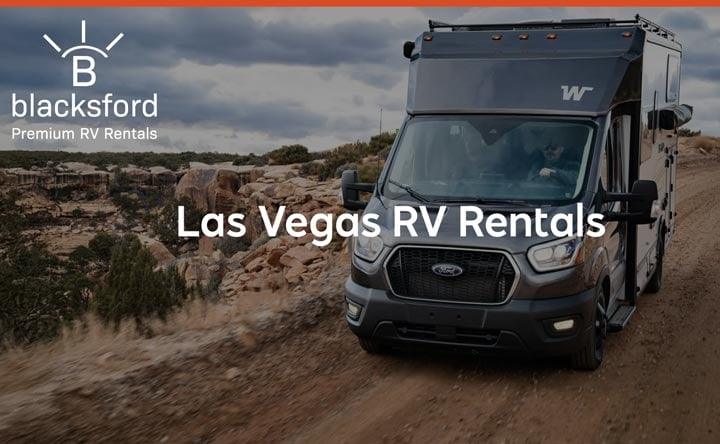
BOB Z: All right, today we are with Becky Goodell, CEO of Blackford RV Rentals in Las Vegas and other cities. Becky, glad to have you join us again. What’s going on with Blackford and what’s going on with RV rentals in general?
BECKY: Well, Blackford is a premium RV rental company and our business has tripled in the last 3 years. We started out in Bozeman, Montana. We’re one of the top rental companies there for Glacier, Yellowstone, Grand Teton. We expanded to Vegas three years ago and that demand has steadily increased. We opened Phoenix a year and a half ago and then last month we opened Seattle, which has been doing fabulously. Our customers tend to be the top 25% of the income threshold, and they like the feeling that we have backup RVs, we have premium service, we’re there 24/7 on your trip. That reputation is driving a lot of our demand as are our locations near these great bucket list national parks.
BOB Z: There’s been a lot of talk about Las Vegas and RV rentals lately. Why is it so attractive to RV renters? What do they do when they pick up their RV? Where do they go?
BECKY: Well, you picked a good time to talk to me, Bob, because I’m actually in an RV right now in Zion National Park. Two days ago we were in Vegas. Almost all of our demand is for people going to see Utah’s Mighty 5, the Grand Canyon. Zion is 2 hours away. There’s a state park called Valley of Fire about an hour from Vegas. Death Valley is about an hour and a half away. You’ve got Joshua Tree, 3 or 4 hours. Zion in the last 5 years has become the second most visited national park in the US after Great Smoky Mountain. The town of Springdale, Utah is spectacular. It’s lovely and safe and you’re literally at the doorstep of the park. Vegas has done a good job of marketing itself as more than just gambling and shows. It’s a gateway to natural beauty. Often the flights are not that much to get to Vegas. So people fly, they do a couple days in Vegas, and lo and behold, they also want to see national parks.
BOB Z: Given your clientele, what types of vehicles are you renting and are you increasing the size of your fleet?
BECKY: We have about 25 vehicles, all drivable. They’re late model 2024, 25, 26 models. They’re all drivable B’s and C’s. We have Winnebago Solis PXs, Winnebago Ekos, Nexus class C’s, Winnebago Views. There’s demand for all of it.
BOB Z: How about the demographics of the people that are renting?
BECKY: 50% is families. The other half for the most part are active empty nesters. We do get some dinks, young professionals making good money and they want to have an adventure. We’re seeing in the last two months just 30 to 40% increase in demand across all markets. We think it’s driven by uncertainty with international events. People don’t want to risk going on a cruise or going to a safari in Africa. They like to stay home. We’re mostly domestic.
BOB Z: I think travel to all the national parks is going crazy. There are a lot of good reasons to stay in the United States right now. Rent an RV and have some fun.
BECKY: Yeah. There’s a huge increase in surging demand for experiential travel. People want to have experiences. They’re on their phones all day and they want more real, substantive, tangible experience. This has driven a lot of demand for RV trips. The RV rental business allows people to try out the RV and have an RV trip without making the purchase decision and responsibility.
BOB Z: I think the industry is responding too with their marketing and branding. They’ve done a great job of bringing a lot of new people into it. Any immediate expansion plans?
BECKY: We have a couple new markets on the horizon. We’re going to stay mostly in the west. It could be Denver, Salt Lake, the Bay Area, or Southern California. Standby and you’ll see.
BOB Z: All right, Becky. Thank you very much. Always a pleasure to catch up with you.
JIM: What a great trip we took today. We started in New Brunswick, went deep into RV weight safety, heard how one camper became a Smoky Mountains rental business, and finished with a growing demand for premium RV rentals out west.
RENE: So, the common thread I heard here is that RVing works best when you understand what kind of experience you’re really looking for. Maybe that’s off-grid camping in Canada, or maybe it’s a fully setup rental in the Smokies. It could be a premium rig near a national park.
JIM: And no matter what kind of RV trip you’re planning, the safety basics still matter. Weight, tires, loading, and knowing what your rig can actually handle are not optional. As always, you can find more RV tips, trip planning tools, campground information, and RV safe navigation at rvlife.com.
RENE: Check the episodes page at podcast.rvlife.com for complete show notes. And if you enjoyed this one, share it with another RVER, especially the one in the passenger seat who’s always saying, “Don’t worry, there’s room for that one more thing.”
JIM: That person definitely needs this episode. Happy travels, folks. And if your next road trip includes another cast iron skillet or a trip to the rock shop, please remember, we need to understand that every single item has weight.
RV LIFE: Are you ready to elevate your RVing adventures? With RV Life Pro, you’re not just getting a service. You’re gaining a reliable companion for your journey. From planning your trips with precision to navigating with confidence and even connecting with a vibrant community of fellow RV enthusiasts, RV Life Pro is your all-in-one solution. Visit rvlife.com today and discover how RV Life can enhance your RVing experience.
FAQs About RV LIFE Podcast Episode
Yes. New Brunswick offers full-hookup campgrounds, rustic stays, glamping, dark sky camping, drive-in movie campgrounds, historic sites, seafood, and unique options like camping with your own horse.
Wheel position weighing measures the weight on each individual wheel position, not just the total RV weight or axle weight. That helps RVers spot side-to-side imbalances that can affect tires, suspension, sway, and overall safety.
Miss Daisy’s TN Rentals is Bob and Trudy Ashcraft’s Smoky Mountains RV rental business. Their RVs are set up for guests at Outdoor Resorts of Gatlinburg, giving renters the camping experience without towing, setup, or backing in.
Premium RV rentals let travelers experience RV trips near major national parks without buying an RV first. Becky Goodell says demand is growing from families, active empty nesters, and travelers looking for more meaningful domestic adventures.
The RV LIFE Podcast is presented by RV LIFE – Tools that Make RVing Simple
https://rvlife.com