
At a Glance: Guided Europe, Solo Travel, and Extreme Expedition Vans
Take your RV dreams to Europe, get real-world solo travel advice, and explore expedition-ready vans from 27 North. Then catch up on key RV industry trends – including RVTI’s push for training the next generation of technicians, KOA’s latest growth and new builds, Italian-built Wingham motorhomes and more.
In episode #150 of the RV LIFE Podcast, we’re taking you from guided RV adventures in Europe and Scandinavia to the realities of solo full-time RV travel and the engineering behind premium expedition-ready vans. Kay and Nick Flint of Fantasy RV Tours share how renting locally, following a scouted itinerary, and traveling with a group can make overseas RVing far simpler—and far more fun—than planning it alone.
Jim and Rene then sit down with travel agent and solo RVer Katie Jones, who brings eight years of road experience and a concierge-style approach to helping travelers navigate national parks, winter escapes, and those moments when trip plans go completely sideways. Her insights show why a real human planner still offers something AI can’t.
Finally, Rose and Glynn talk with Pavel Bozovic, founder of 27 North, to explore what sets true high-end Class B vans and expedition trucks apart—from marine-grade components and carbon-fiber shells to weight, aerodynamics, and safety that actually matter on the road. John and Bob wrap up with industry news covering technician training, KOA’s expansion, Italian-built Wingham motorhomes arriving in the U.S., and Grand Design’s new Omega frame.
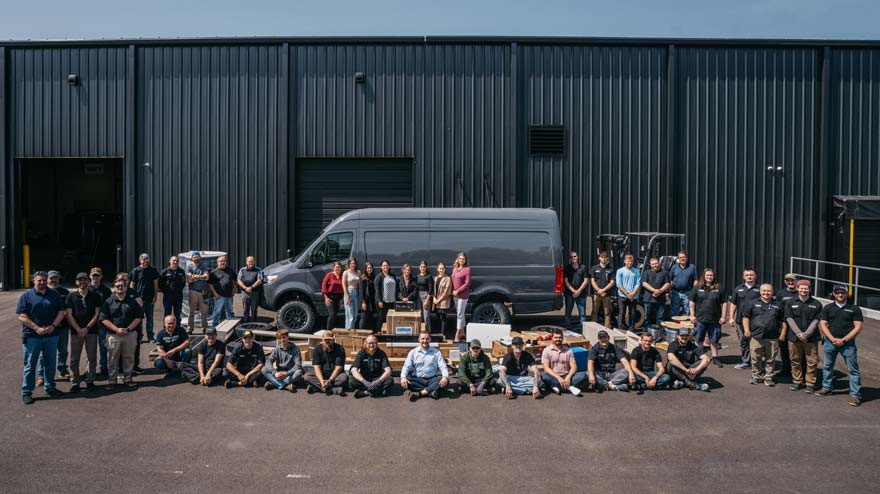
Guided Europe, Solo Travel, and Extreme Expedition Vans
Top Reasons to Listen Now
- Learn how guided European RV tours eliminate logistics, planning headaches, and cultural unknowns
- Get practical solo RVing tips plus travel insights only a real human planner can offer
- Discover what truly separates premium Class B and expedition rigs from the rest
- Catch up on the latest RV industry updates, from technician training to new motorhome designs
RESOURCES MENTIONED
- Fantasy RV Tours: fantasyrvtours.com
- Unplugged Travel: unpluggedtravel.net
- GuideAlong (formerly GyPSy Guide): guidealong.com
GPS-triggered audio tour guides for national parks and scenic drives - 27North Expedition Vehicles: the27north.com
- Pavel Bosovik: pavelbosovik.com
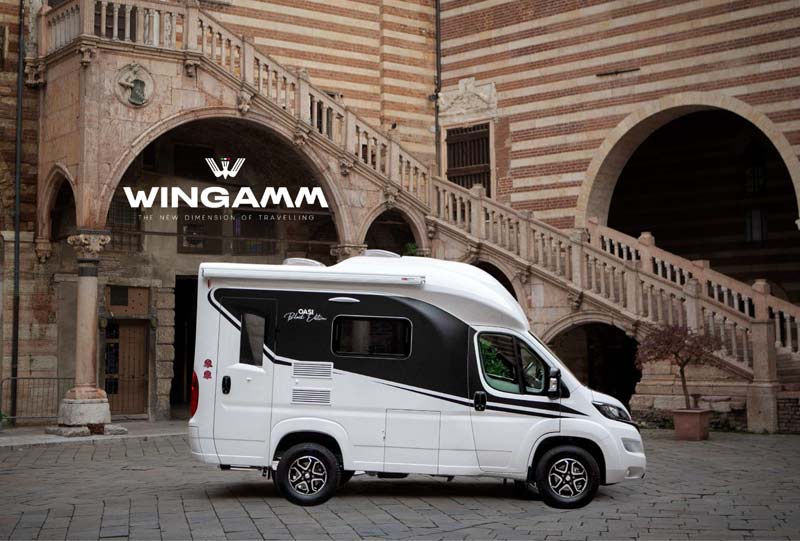
- Wingham Motorhomes: wingham.com
Be A Guest or Share Your Story!
https://podcast.rvlife.com/contact
Listen to the RV LIFE Podcast Episode #150
Listen and subscribe to The RV LIFE Podcast on Spotify or in your favorite podcast app. Or, read the full episode transcript below. Leave a comment, or contact us with any questions or feedback.
Connect & Learn More
- https://podcast.rvlife.com/about
- https://facebook.com/rvlifepodcast/
- https://instagram.com/rvlifepodcast/
- https://www.facebook.com/groups/rvlifemovement
Got a great story or tips to share with listeners? Leave us a voice message!
(NOTE: Audio submitted may be published on the podcast unless specifically requested otherwise.)
Guided Europe, Solo Travel, and Extreme Expedition Vans – RV LIFE 150
KATY: Some people are out here because they have to be. Some people are out here because they want to be.
PAVEL: And I lightly punched the upper cabinet and it just falls apart.
KAY: The value that we got for that tour was quite amazing.
JIM: From RV life. This is the RV life podcast. I’m Jim.
RENE: And I’m Rene. We’ve loved RVing for more than 18 years and our mission, just like RV LIFE, is to make RVing simple for you.
JIM: In case you haven’t heard or tuned in for a while with each new episode. Here we team up with our crew of co-hosts Rose and Glen, John and Bob, and of course, Jim and Rene to bring you real world travel ideas, lifestyle inspirations, stories of RV entrepreneurs earning income on the road, and industry news that actually matters when you’re out on the road.
RENE: In today’s episode, join us for our travel segment. John talks with K and Nick Flint from fantasy RV tours about guided RV tours in Europe and Scandinavia. Find out why having someone else handle the planning makes overseas ahving a lot less intimidating and in lifestyle. Jim and I sit down with travel agent and solo rver Katie Jones from Unplugged Travel. Listen in as we talk about solo Rv’ing work, camping, and how she helps people plan travel adventures beyond what AI can do.
JIM: And for our RV entrepreneur segment, Rose and Glen talk with Pavel Bozovic, founder of 27 North. Join them on an exciting trek about building high end, off road Class-B vans and expedition trucks to find out what really sets a premium RV brand apart. Then John and Bob cover some current industry news, including technician training efforts, COAs growth, a high end Italian motorhome brand entering the US, and new RV frame technology coming from Grand Design.
RENE: You can find show notes, links to today’s guests and all past episodes@podcast.com. All right, let’s hit it. First up, let’s kick off our European travel journey.
JIM: If you’ve ever dreamed of taking your RV life to Europe, but got stuck on things like shipping your rig, foreign campgrounds, or different currencies and voltages, this one’s for you.
RENE: In today’s travel segment, John DiPietro talks with K and Nick Flynn. They’re ambassadors for fantasy RV tours, and they’re going to chat about guided RV tours in Scandinavia and Europe using locally rented motorhomes. That way you don’t have to ship your own rig or figure it out all by yourself.
JIM: They dig into what’s included, how they handle logistics like fuel and campgrounds and currencies, and why traveling with a group can turn strangers into lifelong friends.
RENE: Here’s John with K and Nick Flynn from fantasy RV tours.
JOHN: Hey everybody, it’s John DiPietro. Welcome once again to another episode of the RV life podcast. And today we are We’re going to go guided. That’s right. No, it doesn’t mean we’re going to have somebody walk us across the street or do our shopping for us, but we are going to learn about a new way. Actually, not a new way, but maybe new for some people who haven’t done it before of taking an RV tour where you really don’t have to do any of the thinking. And, um, you know what? Many of the RVers that I know probably are happiest when they know that they can go somewhere and leave all the details to someone else. We are talking to ambassadors from fantasy RV tours, and they are Kay and Nick Flint, and they are talking to us today from Central Florida. Although when they say hello, you’re going to know immediately they’re not from Central Florida. So guys, welcome to the RV life podcast.
KAY: Thank you.
NICK: And good afternoon John.
JOHN: There we go. There we go. And we want to ask you a little bit about, um, the work that you’ve been doing with fantasy. And, um, I understand that you began your work as a, uh, I know there’s a better term than tour guide. Um, ambassador. That’s the word. Um, but you were customers, clients, guests, whatever you want to call it before you switched sides of the, uh, name tag. Tell us a little bit about how you found out about it and why you decided to stay with it.
KAY: Yes. Well, we wanted to, uh, we were our viewers, uh, since 2012, and we wanted to go to Alaska, and we started to look at, uh, how we would plan our journey to Alaska. And it was daunting.
JOHN: Daunting?
KAY: We we were so scared in case we broke down because, Us. You know, Nick is quite good, but he can’t change. Change the wheel. If we. If we had to.
JOHN: Or a.
NICK: Windshield. Changing the wheel on a 40 foot bus. Yeah. You’re not going to do it on your own?
JOHN: No.
KAY: So we came across fantasy, and, uh, we decided we would go, uh, with fantasy. And on that tour, we discovered that, uh, the value that we got for that tour was quite amazing. Uh, the cost of all of the activities, all the campgrounds, all the things that we did on that tour, uh, was comparable to what it would have been if we had if we had done it ourselves. But by going guided with fantasy, we found that, um, we were with other people. We had, uh, fellowship with people. We had fun. We did things we, uh, we wouldn’t normally have done, and we like the concept so much. That and I think they probably liked us and said, you know, you may want to think about joining us. And uh, here we are many years later, many years.
JOHN: You said 2012 was your first.
KAY: That was our first RV. It was 2016 was the year that we actually we were we went to, um, to Alaska. And late in 2016 we became ambassadors.
JOHN: Okay. So the gist of the whole focus of this particular segment of the RV life podcast is RV in Europe. And I know that you folks have led several of these, um, uh, ventures before. Scandinavia seems to be your, um, main area that you folks are involved with. But, um, there are several companies that that do this, and what it seems to do is to take all the worry about the planning. And, you know, when you’re going from Florida to Alaska. That’s one thing. You’re still in the US and you’re dealing with US dollars and you know, you might be in a different time zone, but everything is still American. But when you add Europe into it, it throws several other, I don’t want to say monkey wrenches, but several other hurdles into the equation that you have to, uh, to do on your own if you choose to do it on your own. And you folks seem to think that you’ll do it on, you’ll do it for them and let them come along and enjoy it.
NICK: All right. So, as you said earlier, we’re very fortunate we were brought up in Europe. However, today, if you were traveling from the US to travel in Europe, some of the things you’ve got to think about and some of the things you may find are a little bit of a challenge. You have different currencies to deal with. Yep. You’ve got to arrange insurance for your camper. How do I do that? How do I rent a camper? What are the campgrounds going to be like and how will I book them? Right. What happens if something breaks down or something goes wrong? And more importantly, in a way, is how do I find those little out of the way places that are always so much fun to go and explore? How will I find a guide who can talk in English to me?
JOHN: Now you you brought up something interesting. At the risk of interrupting you and throwing you off your off your, uh, your sentence there. Um, you said, how do you rent one? There are people that, you know, many times in the United States during the summer, you see these giant units that come in from Germany, these man units that, you know, have the the eight foot tires and that type of thing. Obviously, people have shipped that, um, you are eliminating the hassle of trying to ship your own RV from the United States to Europe, and you’re picking up a unit right there. That, to me, seems to be the worth the price of admission without having to deal with customs. And you know what? If the ship gets lost, what if something happens to the right? I mean, you’re over there waiting for your ship to come in, and, uh, you know, two more weeks. It’s in the Suez Canal somewhere.
NICK: Uh. Absolutely. So how am I going to deal with this? As you said, you could take your camper from here. We’ve looked at doing that in the past. One of the bigger hurdles is, remember, Europe is on 220V, as opposed to 110V. So before you’re even getting your camper off the ship, you’ve got a little bit of something to think about. You also would have to think about how am I going to connect to sewer? How am I going to drain my black tank, my gray tank? Because that is completely different in camping in Europe. So what we do, we’ve sourced a company. We will put you into a about a 2320 four foot camper. These are very well built campers. They’re all within two years old. The ones we’re using in Scandinavia this year. A lot of people say, what about fuel? How much fuel in Europe? Terribly expensive, on the face of it. Yeah. That’s going to cost you about six bucks a gallon. The reality is, those same campers are going to run you about 25 miles to the gallon. So you don’t have to be concerned at the cost of your fuel.
JOHN: They’re more fuel efficient over there.
NICK: Absolutely.
JOHN: Yeah, yeah. You know, the other thing is, um, just trying to get into some of the the petrol stations as we found out, um, you know, I mean, here in the US, you said you have a 40 footer, right? And maybe you tell a vehicle with you even getting into anything smaller than a Bucky’s can be a, um, can be a challenge. But in Europe, many times the fuel pump is right on the street. Um, yep. You know, um.
NICK: And that’s the great thing with these vehicles.
KAY: And, and because and by going with guided, then we will have already, uh, scouted where, um, are the good places to stop where the fuel stations that are really easy. Uh, where are they? And make sure that people actually can get in and out and can get fuel easily.
NICK: Um, quite importantly with that, has that same gas station, got a little local bakery just down the street for your croissant and fresh bread. Never forget that one in Europe.
JOHN: Oh yeah. Exactly. The smell of the bread when you’re walking by those little bakeries and you’ve done all that stuff. I mean, this company’s been around for, I don’t know how many years. Um, over 20 years, I believe.
KAY: Yeah.
NICK: 1991, 1991.
JOHN: Okay. What’s that? 25, 35 years? Um, they know where all the nooks and nooks and crannies are to to find that thing. The other thing that that we found last, uh, just last month when we were in Italy. If you’re in the European Community, the EEC, that everybody’s on the euro. But when you jump to Scandinavia, you’re not dealing with every company, every country dealing with the same, um, currencies, which could be another issue, right?
KAY: Yeah.
NICK: That’s just a little added piece of fun. So this year, um, we’re starting up with the Scandinavian tour with guests. First year for real. We have guests with us this time, and we’ll be dealing with four different currencies as we travel through the different countries.
KAY: Um, and we’ll help. We help people.
NICK: We help people out with that. Yeah. Very old fashioned style. Will give you a little currency conversion card. Or for those who are happy to use their phones, there’s a very neat little app that we will direct the guests to. You know.
JOHN: Many times you see companies advertise pretty much all inclusive. So generally, uh, I know if you want to stop at the local tavern for a pint of whatever, it may not be included, but generally, um, you’ve got your campsite included. You’ve got your routing from city to city included. Uh, how about meals and special attractions along the way? I know every tour is going to be different, right?
NICK: Yeah. Okay, so you’re right. Every tour is different. So obviously there is just to start at the top. There is the camper, the insurance for the camper, which is a very important thing. Um, then you will have obviously the campgrounds, there is a lot of meals will be included within the cost of your tour. There is going to be all those interesting little side trips that we go and do. Let’s go and explore Stockholm today. Well, we’ll use a bus to go from the campground into the city. We’ll use a guide while we’re there. We’ll be going in to see.
KAY: Walking to a walking tour.
NICK: We’ll go into different museums. All that sort of cost is included in there.
JOHN: In the admissions to those attractions are generally included as well.
NICK: That’s all covered.
KAY: But we do, we do also we we not all meals will be covered, partly because some people like to go and explore and do something that’s very different. They like to go and, you know, they have a favorite place. They’ve they’ve sought out. So they’d like to go off and do and see that. So therefore, you know, not every not all meals will be included, but most will.
JOHN: Okay. So, um, if you wanted to, um, find out more about the offerings that you have now, yours is Scandinavia. When is the time frame that you’ll be running yours?
NICK: This will run from mid-August through until mid September in 26, in 26.
JOHN: 26.
NICK: 27 and 28 then.
JOHN: Okay. And, um, is there a website that, uh, our viewers and listeners can check out to find out the specifics?
KAY: Yes, there is. It is fantasy RV tours.com.
JOHN: Com okay.
KAY: And the company run the company runs over 100 different tours and rallies and caravans and rallies, uh, as well as the, um, Scandinavia tours. We are also, uh, running the South Africa tour for a fantasy, uh, fantasy run. The other, um, overseas tours they run is one of Australia and New Zealand, but most of the other, all of the other tours are either in the US, Canada or Mexico.
JOHN: And on the US tours you drive your own unit.
KAY: Correct? Correct.
JOHN: In most in most cases.
JOHN: We want to thank you so much for taking time from your busy schedule to let our viewers know that there are so many options available for our viewers, regardless of where they want to go in this great world of ours. And I’m sure you would all agree that our viewers are a special breed of people. And probably by the second night of one of these tours, um, you’ve got some of your new best friends for the rest of your life. Would you say that’s to be the case?
NICK: Absolutely. And the people, particularly those who do the overseas and Alaska, some of the Canadian Maritimes tours, those people really do become friends for life.
KAY: And the company as a whole gets extraordinarily high satisfaction ratings for from, uh, from previous guests.
NICK: And returning customers.
KAY: Returning customers, a lot of returning customers.
JOHN: Probably is a is a high degree of people, high percentage of people. So anyway, again, we want to thank you so much for joining us here on the RV life podcast. You have been listening to Kay and Nick Flint from fantasy RV tours, and this is the RV life podcast. My name is John DiPietro. Thank you for joining us.
JIM: Cool. Ready to go? I am. I love how they basically said, you just show up, we’ll handle the gnarly parts. Things like two 20 volt power, different dump systems and four different currencies in Scandinavia alone. That’s a lot to tackle on your own.
RENE: Yeah, and anyone who’s tried to wedge a vehicle into a tiny European fuel station knows you don’t want to be figuring that out from behind the wheel of a big rig. Oh, and I like that they already scouted out fuel stops and bakeries. They have their priorities in order, don’t they?
JIM: That talk is a good reminder that human guided travel doesn’t make you less adventurous. It just moves some of that stress from your brain to someone else’s clipboard.
RENE: And that sure ties nicely into our lifestyle story today. Not everyone wants a fully guided tour, but a lot of us do want someone to help with planning, especially when we’re new solo or heading overseas.
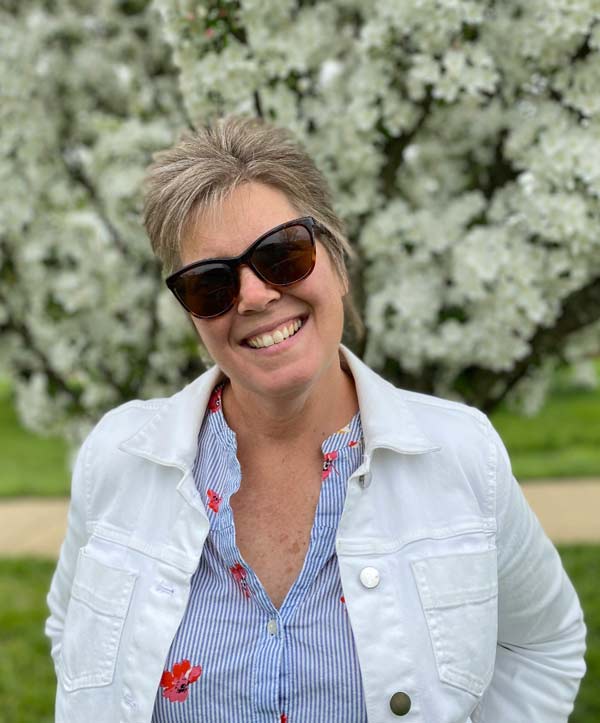
JIM: So for our lifestyle segment today, Rene and I talk with Katie Jones from Unplugged Travel. She’s a solo, full time rver former occupational therapist and now a travel agent who has lived all over the world but calls her RV home.
RENE: We chat about her eight years on the road, work, camping in national parks, winter escapes and how she helps people plan trips by RV, air, domestic and international while still leaving room for adventure and the unexpected.
JIM: Here’s our conversation with Katie Jones from Unplugged Travel.
RENE: Katie, it is so nice to have you here. Thank you for joining us on the podcast. I have a feeling we’re going to learn a lot from you today.
KATY: Well, it’s a pleasure to be here. I’m looking forward to it.
RENE: Yeah, yeah, let’s let’s do this because you have quite an interesting, adventurous story that I would love for you to share with our listeners.
KATY: All right. Where do you want me to start?
RENE: Well, you know, in doing a little research on you. So you’ve lived all over the place, and you just told me you started carving about eight years ago, which is a pretty long time for for a full time carver. That’s a that’s a pretty good, good amount.
KATY: It is. I’m. I’m gleaning that as I travel. Right. You don’t talk to many folks that have been doing it longer than five for various and sundry reasons. Yep. I’m an empty nester. I was living in the middle of the country. Both my kids were going to move to the East Coast. Hgtv was a big hit at that stage of the game about ten years ago, right? And tiny houses were a big thing. And I was talking to a friend and I said, but I don’t really know where I would put a tiny house. She goes, you need a you need an RV, not a tiny house, so you can find out where you want your tiny house. So one thing led to another. God opened a lot of doors, and I’d never really traveled in an RV before. And here I am driving a motor home and towing a car. Eight years? Yeah. I’m solo. Yep.
RENE: I’m even more impressed.
KATY: You know, there’s a fine line. I always say that there’s a fine line between impressed and, um. Maybe I’ve lost a marble or two along the way, but I do. I love it, I love it. So yeah, I’ve traveled quite a bit. That first year on the road, I realized I was going pretty quickly. Right. Which I think is an issue that a lot of people do in the beginning. They move fast. And I realized I was on a quest to hit a lot of the national parks. And after spending on my third Park Glacier, I thought, okay, wait, I got to figure out how to stay in these places longer than a week. And so then I was hearing about these work camping opportunities. And so I ended up work camping and, uh, two national parks, Grand Tetons, one summer and then glacier back to Glacier because I love Glacier National Park. Another summer. And I’ve had a couple other work camping gigs, and actually it was at one of my last work camping gigs that I realized I’ve loved my work camping opportunities. I’ve met some incredible people, work, camping. But I had I was working in a winery in South Dakota doing tastings. And, you know, sometimes when you’re doing that kind of thing, you talk with, with folks across the counter or what have you, and it’s easy to share your story. Other times you don’t. But, you know, oftentimes people are like, oh my gosh, you’ve been on the road for years. At that point, you’ve seen everything. And I realized, well, no, actually I haven’t, because when you work camp, you’re in a place for a season typically, right? Five months, four months, six months. And so you don’t see everything. And that got me thinking. You know, maybe something remote would be a better opportunity. And so one thing led to another there. And I found a remote opportunity that just paired really well for me. But yeah, absolutely love being on the road. It’s a fabulous community.
JIM: So before we jump into that new adventure you’re on in your work life, you traveled quite a bit throughout the world from what I’ve read, and that was probably a lot of air travel and or destination travel, a different type of adventure. But what type of similarities or differences have you seen in, you know, global travel, air travel versus RV travel? Adventure travel pros Cons Between the two.
KATY: Um, ooh, I think the pros and cons would really vary on the person and sometimes the situations, you know, because sometimes we get some situations in these rigs on wheels that are a little precarious. But you can get in precarious situations when you travel. Sure, you know, without a rig as well. But I would say that I feel because I do quite a bit of travel significantly. I was married to a military man. We did travel quite a bit, you know, I lived in Alaska and I lived in Europe and the experiencing different cultures. Um, I think it was a little freer, although it was in one sense, right. But at another time you were also at the mercy of the government of where and when you were traveling as well, versus as in a motorhome at this point on my own. So, you know, I don’t know. There’s pros and cons to all of it. I think, uh, it just depends on the part of the journey of of your story that you’re in.
JIM: Sure.
RENE: Oh, yeah. And there’s lots of stories when you’re in arvier, as you know. So I’m wondering what things that have happened to you, what kind of events that have happened to you as an Arvier have made you want to help people plan their own adventures, either by air, by land? Um, what what about what you’ve experienced is helping you become a better travel planner for people?
KATY: Well, I think that would go to One. I am a planner and researcher in my DNA and I’m a helper in my DNA. I was an occupational therapist for 31 years before I hit the road, so that’s just part of who I am. And I think we were talking earlier about the RV community as a whole and how it’s super supportive and welcoming. I didn’t necessarily anticipate that when I hit the road, and people are always wanting to help, right. Give you some pointers and advice on oh gosh, my pointer and advice if you’re going to Tennessee is call the campground direct and make sure you get really good directions because Tennessee, not so friendly to my worst story ever is in Tennessee, right? So people are always trying to help and give you those kind of guidance or, gosh, I haven’t been to this national park yet where you, you know, oh, you really got to go here. And when you go do x, y and z and Z, right. So I think it just was such an easy transition to go from planning RV or helping and assisting people and clients and patients as a therapist to this, and the community is so welcoming to that and giving back and forth that it just was a natural open door.
JIM: You know, so many times in our travel, we’ve gone to destinations and thought we saw everything we needed to see in an area. And then you go on to your mixer and someone says, oh, you went there, did you see X? Oh, you got to go see Y. And it’s like the one thing you miss. So you mentioned being a helper and you’re helping people. But I wonder what do you see. How do you see your role as a travel agent in this age of DIY trip planning? With everyone going out there and using AI, or looking at Reddit to find out what they need to do?
KATY: But boy, I get that a lot. Well, here’s what here’s the thing, right? Ai booking travel yourself online. Absolutely. Ai is incredible for a lot of things, but it only goes so far. There is no personal touch. There is no personal. Oh my gosh, you missed y. Or have you heard of this special little restaurant down the way, right? I personally curate trips from start to finish, but the biggest piece is that my guests know when they’re traveling. I’m traveling with them. I’m watching their flights. I’m making sure they’re in their hotel. Right. Sometimes I refer to myself as a wizard behind the curtain a little bit. And here’s a great example of where AI would fall short. It could help you planning, but it’s not helping you in the execution. I had two girlfriends that wanted to meet up and go to an all inclusive in Mexico. It’s a resort I knew, a resort that gets great reviews, a resort I just had guests at Perfect Wonderful, had a great time. These two young ladies get there and I know when they are about to hit the resort and they reach out and say, Katie, it’s horrible. It’s awful. And I was flabbergasted. Right. What? And she said, well, it’s the they’re having issues and it’s like the perfect storm.
KATY: They were having water, electric and sewer. Yeah, exactly I won’t, I won’t I right, I won’t go any further. Right. We all know what that means. And I said, oh my gosh. And she said, I mean, everybody is affected. And I said, okay. And this is the difference between AI and and myself. I said, go to the beach, get a drink, relax, let me see what I can do. Right. So I’m able to get on the phone directly with my vendor and say, hey, what are we going to do? And they walk through the process. They’ve got to get the money’s released from the one resort so we can apply them someplace else. That’s got to happen, you know, directly. Okay, I’m on with them. I’m searching for some very similar like, options, price wise vibe close to them. So within three hours, they were on the new beach with. And she. She sent a picture of drink in hand with how fabulous it was. And it was so much beyond their expectations and so wonderful. But with within three hours they were from a not good situation to a fantastic situation. And I venture to say that AI would have never done that.
JIM: You know, that’s fantastic to hear. So it sounds like your role is more of concierge. When I think travel agent, it’s usually about planning the travel and then it’s over. That relationship is ended until there’s a complaint from someone. I’ve interviewed a number of people on the RV entrepreneur podcast, where we talked about adventure and how a true sense of adventure often comes from uncertainty. So if you’re actually there with them holding their hands, which is totally understandable in a foreign world, or if you’re overseas, how do you help facilitate the unexpected when you know some unexpected things are bad, but you want people to go out there in adventure and not just feel like everything’s cookie cutter. So being such an excellent planner and concierge, where does the line get drawn and you allow people to go and explore?
KATY: Well, I think that would be really based on. The first step I do with clients is we have a on my end, I call it like a getting to know you phone call. Right. And I want to hear your type of travel. And if you’re an experienced international traveler and you just are looking for somebody to do the plan part of it and you’re good and you’ve been off on your own and all of that, great. And if you have an issue, you know I’m here, right? You can always reach me. This is my personal cell WhatsApp, whatever. Right. People can reach out and they know that from the get go. Um, so absolutely, I have travelers that are good on their own, but for the most part, I have a lot of travelers that are very thankful that I am a text or a phone call away. Right? Because things the unexpected do happen. They happen in just the world of travel and they happen in the RV world. I always try to refer to my RV fun adventures as part of the adventure. Part of the journey. Um, no matter. Sometimes that’s easier to do after the fact than during, right? But the same with my travelers, right? It is. And and they hear a little bit of that before they even leave on their trip, right? Like, if you have any troubles, please reach out to me so I can help you sooner rather than later. I would, even if I can’t help, I’d try to do something.
JIM: So it’s nice to have that safety line, to be able to call and go and do your thing. But you can still pick up the phone.
RENE: I was just taken back to the days of using travel agents before cell phones, which makes me a dinosaur. But I remember that. And I remember you were just kind of on your own once you got someplace they might have booked your airfare or your cruise, but, you know, now it’s really nice to know there’s somebody like you who is just a phone call or a text away. I’m really curious. Do you specialize in any kind of trips or any parts of the world?
KATY: Um, at this stage of the game, after being an agent for three years, I would say I do anything, but I do specialize in Disney, European overall vacations, European river cruising, um, Alaska, Hawaii and all inclusives those are probably what I book the most I know the most about, but I have booked dive trips to Indonesia. I have booked.
RENE: Nice.
KATY: You know, ocean cruises from the Mediterranean to the Caribbean. So. And domestic travel too, right? So I booked just about anything. But yeah, Disney European vacations.
RENE: Yeah. Now do you ever do an RV trip for people? I recently met a couple when we were work camping, and they had somebody plan a flight out from New York to Denver. They picked up a motorhome, drove down around. I mean, it was like a combination of modes of travel. Do you do that kind of thing?
KATY: You know, it’s funny that you ask that, because when I got into this business, I thought I would really specialize in like national park travel and potentially help all our RVers or people that were wanting to kind of RV for a vacation and, and go, but I really have not been tapped into for that niche. So I have not now talking to our viewers, talking to our viewers around the campfire, at the campground or what have you. I definitely share some pointers as they’re traveling around. I’m probably one of my favorites is an app and for national parks, and it’s called The Guide Along. He used to be the Gypsy guide, but it’s called the Guide Along now, and he is a tour guide out of Canada that has an audio tour guide for. It’s an app for almost all of our national parks, and he is phenomenal. I absolutely love him. So you buy his tour package, you download the app and then it syncs to your phone. So it reads your phone, GPS, and it takes you through. And he’s talking and just these little snippets two minutes, four minutes, maybe five minutes. And then he’s off and then he comes back on again. But from history to geography to geology to fun stories, um, you know, Yellowstone is a huge park to drive through, and it’s gorgeous. But what are you looking at? Or what’s some of the history? And he’s there just narrating you and then, you know, hey, don’t miss this turn off on the right because there’s some really great stuff to see here. And then when you turn in he’s like, oh good decision. He’s super. He’s super fun.
JIM: That’s the great kind of value add that someone who knows about these things can add to the adventures. Um, but let’s talk about winter travel for a minute. We get a lot of, you know, RVers and snowbirds who head south to the same resort every winter like we do, and might want to change that up a bit. So what might be some of the, uh, popular or out-of-the-box adventures, either domestic or international, that you’ve helped people experience during winter months? Where are some places you might recommend if someone didn’t, if they just wanted to get away for the winter?
KATY: Yep. So I have talked with folks who have, I don’t know really how off the beaten path it is, but uh, either solo or have gotten a couple of, I’ll call it a small caravan of folks to go down to the Baja Peninsula. Right. That’s kind of a different thing. I’d like to do that one day, but I don’t want to do it solo. But I’ve also had people that have driven all the way down to Mexico, to the very tippity tips. Right, and park their RVs there. I’ve also had people that have parked their RVs and just condo down in Mexico for 3 or 4 months. Mexico is a big one. Costa Rica is another place that people will drop the RV and winterize it for 3 or 4 months, right? And then travel outside of the country to really take up a beach resort life for a while.
RENE: That sounds like Paradise. You just might have to help me and Jim with that one. So if somebody did do a DIY approach, let’s just say they still haven’t recognized the value of having somebody like you help them along. What are some of the pitfalls during, especially during winter, that our viewers should be aware of when they do things like put their rig in storage and go somewhere?
KATY: Well, I would say putting your rig in storage in the winter, depending on where that winter is. If we’re talking, you know, below freezing temperatures, I think I’ve seen in the different groups I’m interacting in and, and such that, you know, people come back to burst pipes because they didn’t blow the lines out. They just poured antifreeze down the drains. But they didn’t never blow the pipes out. Right. So I think that’s probably a big one. Rodents. That’s another big one. I, I don’t know the magic cure for that one yet myself, but that’s another issue. Right. And unfortunately, I had some friends that left a rig outside of Phoenix, Arizona, in a secured, fenced locked area, but it was broken into. Oh.
RENE: Oh.
KATY: And so, you know, I think that can happen anywhere. Not just Arizona, right? It could happen anywhere. But you do take a risk leaving your rig for an extended period of time, unless it’s in somebody’s home.
JIM: So maybe you could address some of the awesome destinations that some RVers like to go on if you’ve had some arvier type clients. What I’m getting at is what type of Arvier might be suited for what type of travel. You’ve got van lifers, you got class A people, you got overlanders. Can you maybe just summarise what type of arvier who might be listening, might be accustomed to a certain type of travel, or does it always differ?
KATY: I think it always differs, right? Because there are so many. I don’t know if you guys have noticed this. There are so many and a huge range of full time arvier today than maybe when you guys started, right? Like, I think you’ve probably seen a shift.
RENE: Oh yeah.
KATY: I see tons of 20 year olds solo out here doing this. I see tons of young families out here doing this. So I think that really just varies on folks why they’re out here too, right? Some people are out here because they have to be some people are out here because they want to be. So I think that really plays a big part in it as well. I think most people are just looking for freedom and Experience when they travel and our national parks, our state parks are a great opportunity at both of those.
RENE: Oh, I would agree with that. State parks have some really, really fabulous facilities, especially where you are right now in Oregon. Oregon state parks can be fabulous. Georgia. Uh, those are some of the nicest ones, I agree.
KATY: Yeah, Georgia is a fantastic state for state parks. Yes.
RENE: Yeah, yeah yeah, definitely. Well, I know you have tons of great tips on your social media because I was cruising through your Facebook page and I mean, I it’s endless the kind of great input you offer people tell us, our, tell our listeners where they can get in touch with you.
KATY: Oh, great. Well, they can get in touch with us. They can email us at info. Unplugged like you unplugged a cord from the wall travel net. They can visit the website. Unplugged net. Those are probably the two easiest forms of connecting. We’re Were unplugged travel duo on TikTok. Unplugged travel by Katie on Facebook. But Unplugged Travel Unplugged came up as the name because I had been on the road for four years at that point and I was unplugging from lots of different aspects of life, and one thing led to another and that that became the name of the business. But, um.
RENE: It’s a great name. It really caught my eye. And and that was why we wanted to have you on the show, because it kind of embodies the spirit of Arvin and the types of adventures that you have when you’re out there traveling. You know, the point is to unplug and absorb what’s in front of you as you’re traveling through it.
KATY: So put the phone down.
RENE: Yes. Yes, absolutely. Thank you so much, Katie. I’m so happy we got to meet.
KATY: Absolutely. My pleasure. This has been fabulous.
JIM: Fabulous, indeed. And I encourage anyone who wants to unplug, consider going to unplug. Travel.
KATY: You bet. You bet. Yeah. Great. Thanks, guys.
RENE: You know, I really appreciate how Katie described herself as the wizard behind the curtain. You can DIY the research, but when things go sideways like that Mexican resort with water, electric and sewer issues, well, it’s pretty nice to have a real human that you can text.
JIM: Yeah, that whole go to the beach, get a drink. I’ll fix this story says a lot. Ai won’t jump on the phone and rebook you when your hotel goes off the rails.
RENE: Oh, and I love that she brings her RV experience into it. Things like winter storage, burst pipes, rodents, and security. And those ideas for RVers who want to park their rig and fly to a winter base somewhere like Costa Rica or Mexico or anywhere.
JIM: Plus that guide along. App tip for national parks. Precious little gems like that can completely change how you experience a place like Yellowstone.
RENE: Oh, and speaking of people who see a gap and decide to build something better, that’s exactly what we’re talking about in our next segment. The RV entrepreneur.
JIM: In this episode’s income segment, Rose and Glen talk with Pavel Bacevic, founder of 27 North. His company builds high end class B adventure vans and carbon fiber expedition trucks, the kind of rigs that can actually handle that nasty Forest Service road. At the beginning of the segment.
RENE: They talk about how he started in his mom’s garage, why they use marine grade components and focus heavily on weight and safety. They also chat about customer service and community, which have been really central to his business growth.
JIM: If you’ve ever thought about starting your own RV related business, or you’re curious what really sets premium rigs apart, you’re going to want to listen to this one here.
RENE: Rose and Glen with Pavel Bozovic from 27 North.
GLYNN: Let me paint you a picture. You are at the head of a National Forest Service road. And now, this isn’t just any service road. This is a gnarly, unbelievably rough road. And you’re in a motorhome. I don’t think that motorhome is going to make it down this road. But at the end of this road is some incredible boondocking Locations next to a gorgeous lake at the base of a mountain. Well, today we have with us Pavel Bacevic, who runs 27 North, who builds just the type of RVs that will get you down this road. Pavel, welcome to RV life.
PAVEL: Thank you so much for having me. It’s a great honor to be linked up with such great individuals on such an awesome podcast.
GLYNN: Definitely for sure. Rose has a few questions for you. I have a few questions for you, but let’s get down and dirty and learn about your business and how you manufacture such incredible RVs.
PAVEL: Yeah, so it all started about five years ago. Um, in my mother’s garage. Uh, my wife and I started our journey, you know, newlyweds and foster kiddos. And we got our first RV, and we’re like, quick remodel and we’ll be on the road. Quick remodel turned into a six month nightmare. And so we quickly realized, wow, we we could, uh, we could definitely bring some positive change. And so, um, my wife and I built our first class B RV on a Ram ProMaster chassis. Uh, we pretty much the infill of it all was, um. Weather from it was a yacht industry, some aerospace and a handful of residential products. So not a single RV component. And then we posted on Facebook to share with others. And within the first few months we had over 40 pre-orders. And if we continue that philosophy over the last five years and have delivered hundreds of adventure vans, what we call them all over the country.
GLYNN: Wait, back up for one second. Pavel, you said not a single RV based product. You went with all marine grade. Fill me in. I want to know more.
PAVEL: Yeah. So like water pump, for example. Um, we realize our water pump was bad. We were running a service center out of my mom’s garage, and that was the first component we kept replacing, replacing, replacing. I’m like, what do boats use? Because surely if you’re in a boat in the middle of the sea and you realize, oh, there’s actual boat water pumps, so we use a boat water pump and then all the way down to the fit and finish, you know, the refrigerator, traditional refrigerators are plastic. And as you bounce up and down over hundreds of thousands of miles, they fall apart. It’s like, well, boats hit waves and they don’t break and they’re out in the middle of the sea. What are the boats using? Then we learn, oh, there’s this stainless steel isotherm, 12 volt appliance that doesn’t require propane to keep your food cold. So, like, why burn propane to cool down your food? This doesn’t sound right. Uh, so. Yeah, that’s what I mean by boat. Uh, or marine grade.
ROSE: That’s that’s fantastic. The name of your company is 27 North. Can you tell us the meaning behind that, please?
PAVEL: Yeah. So we started as Everest Conversions. And in recognition of Mount Everest, the tallest mountain in the world. Uh, it’s always been a vision of mine to scale and climb it and kind of wanted to be the pinnacle of adventure, which is our motto here. Um, fast forward a few years in, my wife’s like, you know, we got to be more of, like, one word OEM. We can’t be we don’t want to brand as a conversion company because we really produce something unique here. And so, uh, about two years into our business, we rebranded to 27 North, which is the latitude of Mount Everest.
ROSE: That’s really cool, I love that. Tell us a little bit more about the vehicles that you make briefly.
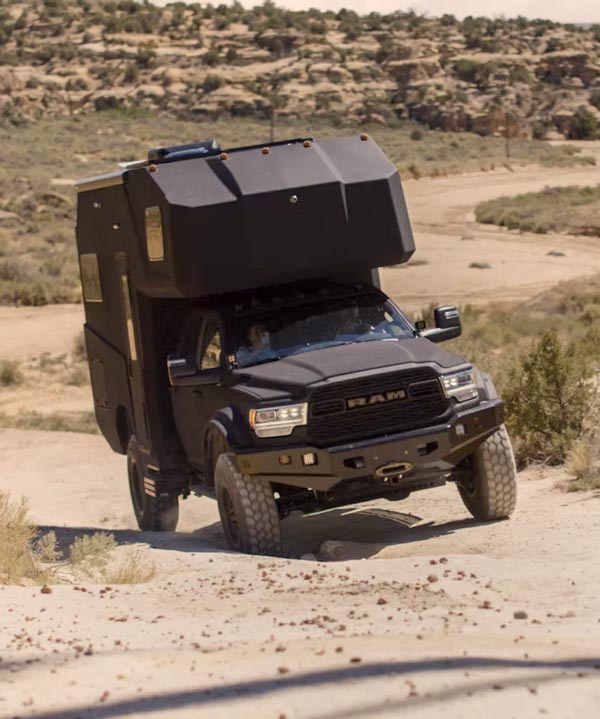
PAVEL: Yeah. So right now we specialize in class B’s, which is built on the Mercedes Sprinter 170 chassis with a 144 chassis rolling out later this winter. Uh, it’s essentially a 25 foot sprinter van, something that you would see, uh, commonly, um, out and about in RV parks and off roading. Um, and then the inside is made like a, like a luxury think luxury cabin, a spin off of a yacht. Um, and then the exterior is built like a overlanding jeep. So a lot of the components we use are Jeep overlanding components from our suspension, the Fox suspension, the ref country lights. And then we also have a line of expedition trucks, which falls in the class C category where we make our own habitat or shell. Uh, same thing. It’s a monolithic one piece carbon fiber into shell on the back of a Ram 5500 or a Ford 5500 pickup truck.
ROSE: Wow. Those sound amazing.
GLYNN: They are. You kind of had me at the carbon fiber because I’m thinking weight issues, and that is something I have preached so hard to everyone on our website. Everything else is that you just cannot be overweight, especially if you’re towing. But when it comes down to cargo carrying capacity, it sounds like you’ve built something that will have plenty of storage with. You don’t even have to think about your weight, your gvwr.
PAVEL: Exactly. That’s the first thing that was on our list. Whenever we went to design our expedition trucks and our adventure vans is. We did a quick Google search, then ran it through A.I. and we’re like, wow, everyone’s right there at or over Guo. No one’s doing anything about it. That was scary because I’ve personally been in 16 car accidents in my life. So I in addition, have this paranoia about, you know, my family, my family’s safety, and now my customers and their safety. Um, our expedition trucks are £4,000 lighter than our nearest competitor, uh, far below Gvw. It’s not even something we talk about here. And that’s all due to taking the time and investing almost $1 million in developing this one piece, lightweight shell that only weighs £699. And then the interior, I mean, you could do and bring all the cargo that you want. You could tow £10,000 safely with it and not have to worry about braking distance and, and driving, um, whenever you’re taking those turns or getting hit with crosswinds. Uh, so yes, weight is a crucial component not only for being able to bring additional passengers and cargo, but also for safety when you’re traveling cross country.
GLYNN: Oh for sure. Okay, so I’m sorry I’m stealing your thunder here because I’m excited about this. Because the that shell, when I look at it, it looks like a stealth bomber. And I know for a fact that you did some aerodynamic work with this thing so that it wouldn’t get blown across the highway, because you and I both know what it means, or what it feels like to be flying down the highway and, and have your, your, your bumper tow be pushed across or your camper van. Just act like a sail.
PAVEL: Yeah, yeah. It’s true. Um, so yes, the inspiration was a fighter jet. So the fighter jet, uh, the one that we went off with was initially inspired by the Night Owl. And so the way its airs and the feathers and the eyes, um, the fighter jet was inspired by that. So our inspiration was a combination of the night owl and a fighter jet. So the front end is completely, um, uh, aerodynamic and crosswind capable. Uh, the front cap, traditional RVs is just like a big old bulky cap. Uh, we carried that off of the Stellantis Ram front end. We worked directly with Stellantis. They were able to share with us their CAD drawings, and we were able to carry that over. So not only does it look appealing to the eye that air the the the the air coming head on is, is pushed through the back, making it more efficient, making it more stable. The sides in the back, uh, were inspired by the owl. So if you look at it head on, it actually looks like an owl like this. And so, um, yes, crosswind was important too. We faded the bottom in bringing the way that gravity travels through the walls down, bringing a lower center of gravity. And then the top. We we faded in and towards the back. Same thing as the owl, you know. Its head comes back sharply. And so that’s why we made the shell two feet shorter and then a drop off in the back. That whirlwind effect in the back. It actually helps it not only keep the back end of your vehicle or rig clean, it also gives it a little bit of like a propulsion effect.
ROSE: Ah yes man, I we could talk about these all day.
GLYNN: Fuel economy just keeps coming to mind. And how much money we spent on fuel cross country.
ROSE: Let’s get back to. Okay. You started in your mom’s garage, I believe. Yes. And now you have this huge facility in Springfield, Missouri. Take us back. What was that aha moment that kind of made you want to take that risk and start 27 north?
PAVEL: Yes. Uh, customers, whenever you see customers come and they’re emotional and they’re wiping tears, and then they’re on the road and they’re still crying and they’re still telling you, probably you got to do more. You gotta like, this is unheard of. Like on average, three day turnaround on on serious warranty claims and then all minor warranty claims, same day response, same day service, not having to go RV, uh, service centers. You know, an average buyer today spends three months a year in service, three months a year. Our average customer is three days per year. Three days per year. Um, we’re not perfect. We have some or similar issues to other RVs. Whenever we take a house and you put it on a vehicle and you put it on the road, it’s going to have issues. Uh, but we stand by our product. So every time a customer kept coming back, especially after the sale when they’re on the road and they don’t have buyer remorse and they just they pushed me and I’m like, wow, okay, this is our aha moment. We’re on to something here. No matter how big we go, so long as we stand by our values and our morals, our customers are the ones that are going to take us to the highest level Are.
GLYNN: You just said it. That’s how we ran our old business. You’re absolutely right. So the customers, there’s a need. Did you identify any other gaps in the market? Because I can I can think of 100 gaps right now. But fill me in.
PAVEL: Yeah. So the first biggest gap was customer service. That’s what we started on. That’s been the core of everything that we do. And if you call or run into any one of our current or past customers will tell you customer service, that’s like what we’re most known for, which is interesting to me because that’s not what I really wanted to be known for, but it’s fine. Um, I love supporting our customers. Uh, the second big niche that we saw in the industry, uh, was all around quality. Like, we were talking about cabinets falling apart. I remember one time I got so frustrated and I was like, trying to explain to my team, like, what we have here. And so one of my customers came in and we were servicing their rig as a competitor’s rig, and I’m just like, I took my fist and I lightly punched the upper cabinet and it just falls apart. Same price point quarter million dollar rig. And he’s like, I get it. And so we at no cost to rebuild all his cabinets. I’m like, I can’t in clear conscience let you and your wife travel across country with these cabinets potentially falling apart on you. Um, that was the second one. The third biggest thing that we found is just all around, um, delivery time whenever you purchase it. So we found that customers are spending, you know, a year plus researching this.
PAVEL: And then the buying process was so brutal. Half a day in sales, half a day in finance, and you lose a day, and it’s so treacherous. So we really fast tracked all of that. So our warranty documents, the sales, it’s all done online. You can do it remotely. And then you can either come in and pick up your unit from the dealership or have it delivered to your front door. So taking out that big sales burden where you feel like you’re being taken advantage of and it’s just not all around good experience. And then lastly, I would say our community, uh, it’s unreal. I love watching, um, our customers get together and do these rallies and get together at trade shows. Um, that’s something that I wasn’t expecting either. You know, for me, I’m more of a solo traveler with my wife. So we’re, like, in the middle of nowhere on the top of this mountain. But now having this community, um, recently a customer posted, hey, I’m going to the Arctic Circle, and I kind of don’t want to go myself. Anyone would go with me and like four customers, like, we want to go. And so now there’s like a group of five people going to the Arctic Circle, all, you know, 27 North customers.
ROSE: Yeah. Fantastic. Community is key, especially on the road. And that’s so wonderful that you’re fostering that with your company. Back to the beginning. When you’re starting this, can you kind of walk us through any of those initial hurdles you’ve faced with especially such a high ticket item in the beginning?
PAVEL: Yeah, I think the hardest hurdle for us was funding, um, the product. It kind of speaks and sells itself, the customer support on the tail end. We have customers all across the country promoting us more than we could ever promote ourselves. But growing, you know, we grew 1,000% in a matter of years. I think the last three years we grew 1,000%. So I think funding was the biggest hurdle, similar to any small business or anyone running a company is whenever you’re growing that fast, you’re burning a lot of capital. But we’ve been pretty fortunate enough to have, uh, good banking partners that believed in us and helped us through all of that. Um, and then in addition, you know, being 100% owner and employee owned, uh, we don’t really, you know, uh, aren’t giving an account to, like, a private equity or an investor group. And so we’re able to keep our quality. And it’s just so sad to see over the years, a lot of our competition that started so good, that had such good stories one by one, you know, sell all of their qualities and all their morals and all their values for a bottom line. Um, I think funding is the core of every RV manufacturer. If you can secure funding, good funding, and you’re able to scale and grow and keep your values and morals. But if you if you lose your moral compass because of funding, um, then that’s when things start to really fall apart.
GLYNN: That’s, you know, giving away some liquidity in your business by using VC money or, you know, not always a good thing because you just called it, you know, you you’re a slave to them. Your bottom line is more important. And you’re going to start forgiving or foregoing quality.
PAVEL: Exactly.
GLYNN: And I mean, it sounds like you you bank funded this.
PAVEL: Yeah, I that’s probably, you know, in regards to not only just the class B market, but in the RV industry across the board. Um, I would say all these RV manufacturers, they started off really good. Like if you looked at origin stories, they’re powerful. I mean, it’s the American dream, but at one point or another, that funding just messed everything up. I don’t even think it’s like passing from one generation to another. You know, one of my favorite brands out there, you know, they just did third generation Passover and still continuing somewhat good. But unfortunately, when it comes to that funding and being acquired and re-acquired, that’s when it all starts to fall apart. I truly believe if a lot of these manufacturers, um, stuck to their, you know, values the way they do to their funding, they would still hold on to the values that they started with.
GLYNN: I agree. Other than financing, were there any other difficult aspects of launching 27 North?
PAVEL: Um, I think the only big one was our dealer distribution model was really hard. Um, whenever we started bringing on dealers, uh, we didn’t take into account how much training they need, how much support they need. And so at one point, we had like six full time employees distributed through dealerships trying to onboard them. That was a really big hurdle that, um, we worked through. Um, and then I’d say probably another hurdle would be we once did this YouTube video and it was fully scripted. It’s supposed to be a game changer for us with some young influencers, and they went totally off script and just butchered it. And of course, the video went viral. Then someone else made a video. So it’s got like over 10 million views. Uh, so yeah, branding, uh, that, that kind of put a dent in our image, but we spun it off. As you know, this is just a fun learning curve and experience. Um, I think a lot of companies go through that, especially RV manufacturers. And the lower your values are, the more you have to deal with it. We’re just blessed that our values and morals are so high, and we have such a strong customer base that everyone came up and rallied to support us. But I think if your traditional RV manufacturer and you don’t have that customer base to rally and support you, PR is probably another big hurdle or obstacle that you have to work through year over year over year.
GLYNN: You know, if we rewind for a moment, you mentioned customer service being so important. Yeah. And I think PR is a little less important. It sort of is taken care of. If your customer service is so good that it builds a community of faithful followers.
ROSE: Word will spread.
GLYNN: Yes. And it takes care of itself, which is, I mean, and if 20 years in business taught me anything, the most important thing was the customer service and making them your family.
ROSE: So for the listeners there, they’re working from the road. Or maybe they want to and they’re looking at a class B van, maybe even this adventure vehicle. But but particularly vans camper van life. What are some pros and cons of these vans. And you know, who are they? Good for what? To what should they look for in a custom build?
PAVEL: I think Class Bs are the perfect solution for full timers, and that’s why van life is there. It all starts with the base. So your base or your foundation to your RV is the van itself. And not a single RV manufacturer out there has figured out how to build a shell that can compete with the shell of a class B, because if you look at the Mercedes sprinter van, the Ford Transit van, even the Ram ProMaster, they have 100 plus or minus years and millions of dollars. Like I met the executives of Mercedes, they spent over $100 million since inception on developing the shell. So you have this virtually indestructible shell that can handle rollover. It can handle side. You take any other RV and you put it up to the stress test. You know that it’ll fall apart like a matchbox. Yeah. Someone even called it a cardboard box. So that’s.
GLYNN: The.
PAVEL: That’s. Yeah. So that’s the power of the class B then the infill. So so long as you partner with the company that stands behind the product and gives you on site support because you’re living this full time, it’s the only way to go for van life. Because if you go even with a class C expedition truck, it’s a little obnoxious, a little big. You can’t park it in a target parking lot. I like you would A class B, you can’t go into small downtown like, yeah, you can, but it’s not the same. It’s just a little too big, too bulky, attracts too much attention. You can park. Uh, my wife and I travel across the country in our class B, you know, we stayed at a TJ Maxx for three days and no one came up to us. It just looks like a, you know, a regular van. So that’s I would say the number one thing, the thing that stands out and makes class B the best for van life.
ROSE: Yeah. And what’s something that they should look for in a camper van? A build.
PAVEL: I would say the only thing you should look for is customer support. Uh, because the level of customer support directly correlates with the quality of the build. I whenever I occasionally still do my sales trainings at different dealerships or even at trade shows, I will get my phone out and I’ll ask customers, hey, what kind of RVs do you guys currently own? And you know, they’ll say X brand or Y brand. I’m like, all right, let’s call the helpline. We Google it, the eight one 800 line, and it’s transferred and we can’t get Ahold of anyone. And then about like five minutes in I’m like, does everyone get the point? Should we keep going with this activity? Are you guys ready to try 27 North Line? So then I call the customer up and I say, hey Google 27 or call their customer support line three rings max. Someone answers the phone, hey, this is 27 North. How may I help you? Day or night? And then on top of that, if you look, there’s now reports and surveys of the time it takes to service a unit. You can find that. And if you’re not able to access it, ask the dealer. Dealers have these reports and so ask the dealer, hey, can you give me the quality inspection report for the last year? And you can see not only the turnaround time to service those, but how many problems they had.
PAVEL: So let’s say you take brand X, for example, and you get this report, whether on AI, Google or you ask the dealer to give it to you, or you can even ask the manufacturer if you get a hold of them. And you look at this report, I will ask you then, is that what you’re wanting to buy? Because that right there is the best scorecard to tell you on what you’re buying. Not the fancy Instagram with the pretty pictures, not the not even the sale price. Because yeah, they can lock you in at a sale right now. Right now you get an RV 50% off because we’re in a recession, okay? But you buy a 50% off. What is that, three months worth to you? If I say, hey, you have three more months to live this year, what is that worth to you? Is that worth some cheap discount and already know you’re still financing it. It’s going to be like 50 bucks difference per month. Go with the brand that has the highest quality and customer support, because that then answers you the question on the pros and cons of that particular brand.
ROSE: Excellent.
GLYNN: Well said.
ROSE: So for our listeners, they might be on the cusp of launching their own entrepreneurial venture. Do you have any advice? One one maybe founder lesson that you would give to them?
PAVEL: Yeah, um, entrepreneurship and starting a business like marriage, if you’re not all in for a lifetime, don’t start. Don’t don’t do it. Go be someone’s number two. The number two is make more money. They sleep well on the weekends. They’re not stressed. They don’t have anxiety problems. They’re not worried about how to feed 7000 thousand families. So, yes, if you’re not all in for life, don’t do it.
GLYNN: You know, that’s why we didn’t start another business. I’ll go be a number two. Yes.
PAVEL: Number two. Like the first years. You know, I made my first million in revenue. Things were going good, exciting. And then boom. Our first lawsuit. Boom! Our first, uh, trials and boom, boom, boom. And I’m like, whoa! You know, it’s been five years since. And so now I’ve tailored my advice and I speak at different conferences and universities and organizations. And I always say be someone’s number two. Like, if I could go back and do everything over, I would definitely be someone’s number two.
ROSE: Very good.
GLYNN: I feel you. I’m with you. Uh, so tell our listeners where they can find you.
PAVEL: Yes. The 27 North punched into Google or any AI bot that you’re using today. I recommend ChatGPT. Um, you can, uh, it’ll pull up all of our platforms. So, uh, we made it easy. The the number two. The number seven. North. North. Uh, that’s the handle star. Youtube, Instagram, Pinterest. You can find us anywhere and everywhere. Um, if you want to really learn more about us, I recommend 27 North YouTube. Uh, there’s a lot of different podcast videos, so just punch in 27 North on YouTube. Um, listen to some of our podcasts. Watching some of our videos. We have hour long walkthroughs. We have 20 minute walkthroughs. That’s where you’ll really get to know us, our team, what we stand for, and so forth.
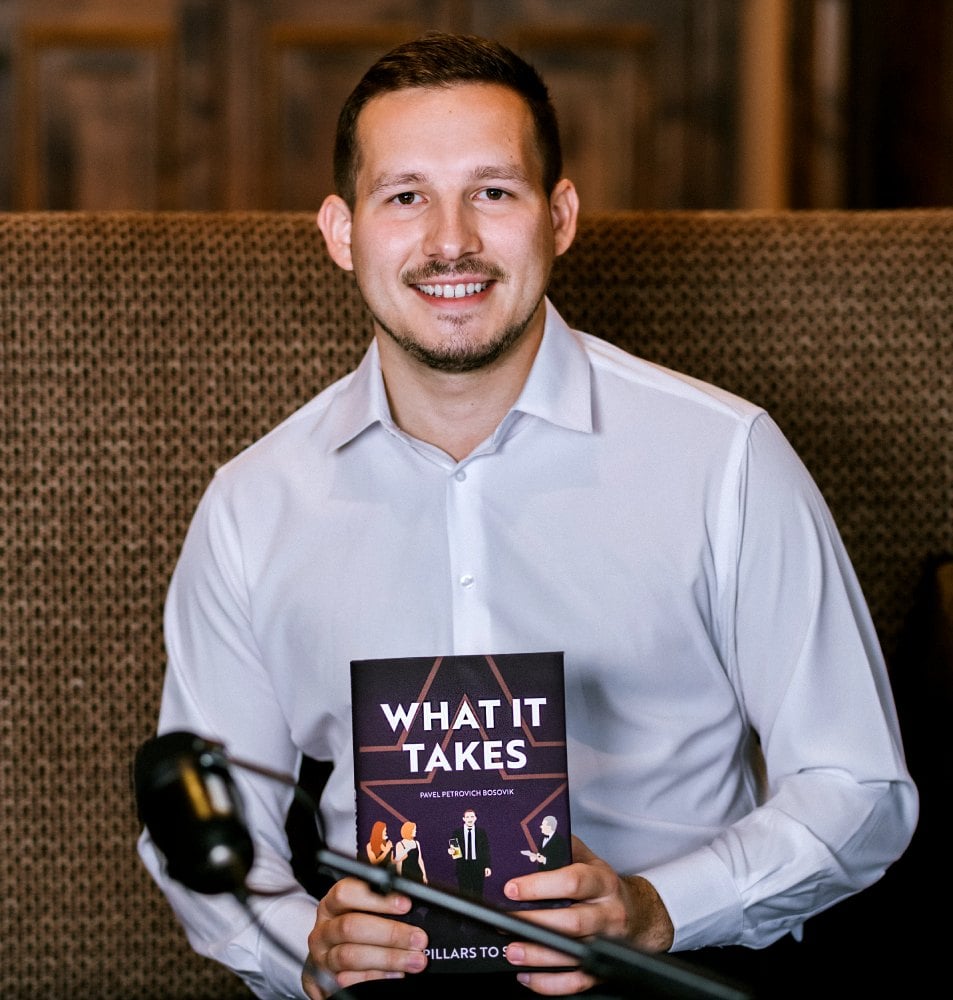
ROSE: Yeah. Thank you so much for coming on real quick. You do have a book coming out. We didn’t get to talk about that. What it takes seven pillars to success. So where can they find that as well.
PAVEL: So Pavel. Com or put Pavasovic into Google on my website you can preorder it. Um, we are scheduled to start delivering it in the spring, so we’re about three months behind schedule on it. But this spring we’ll have our official book launch. Uh, it can be pre-ordered on my website.
ROSE: Excellent. Thank you, Paul, for coming on.
GLYNN: Great talking to you.
PAVEL: Thank you.
JIM: Wow, that whole story about their carbon fiber shell being thousands of pounds lighter than competitors and obsessing over Gvwr, that’s something every rver should be paying attention to.
RENE: Yeah, and I like that his rigs aren’t just showy vanity RVs. Vanity. Get it? Ha! He thought through weight, aerodynamics, crosswinds, braking, distance, all the stuff that matters when you’re hauling a house down the highway.
JIM: And his point about customer support being the real scorecard. Calling a brand’s helpline as a test. That’s actually a great trick. Whether you’re shopping for a van, fifth wheel or anything else with wheels.
RENE: And his honesty about entrepreneurship that you have to be all in. Or you might be happier if someone’s really solid number two person. That’s a perspective a lot of people need to hear before they become an RV entrepreneur.
JIM: All of this guided tours, travel support, high end rigs, RV businesses. It sits inside a bigger ecosystem of industry trends whose training technicians, which brands are growing and what new products are coming down the line.
RENE: And that’s where John and Bob come in. In our industry news segment for episode 150, they talk about RV reaching out to high school students through teen life to grow the next generation of RV technicians. You’ll hear about Koa’s performance, new campground builds, and how they’re appealing to both longtime and brand new campers. Oh, and they also talk about an Italian built high end motorhome brand that’s setting up in US showrooms. They’re calling it the Ferrari of motorhomes. And you also hear about Grand Designs new Omega frame updates to address flex and strength in their larger rigs.
JIM: So here are the camper report guys, John and Bob with this week’s RV industry news.
JOHN: Hey everybody, welcome once again to the RV Life Podcast. My name is John DiPietro and this is the RV Life news section. And I’m joined by the number one authority on RV news in the entire United States, Mr.. Bob Zagami. Bob, welcome back to the to the podcast here.
BOB: Thanks, John. We’re having fun. And, uh, we got some very interesting industry news today for you.
JOHN: Exactly.
JOHN: And, you know, we’ve been hearing for years, Bob, that, um, there aren’t enough technicians to fill the needs of manufacturers and dealers across the country, and our friends at RVI are doing quite a job in searching every crack and crevice throughout the United States to try to find the right people. And they just recently went to a group for teen Life, which, um, contained evidently 500 youngsters that high school students.
BOB: I thought this was very creative. They they were part of a virtual fair hosted by Teen Life magazine, and they presented the unique opportunities in the RV trades and as service technicians. And another option for non-collegiate pathways after high school.
JOHN: Well, you know, the interesting part about this is that, um, if you reach people young and introduce them to a career, it’s a lot easier to introduce them to that when they don’t have any preconceived misconceptions Conceptions. Then wait till they’re already entrenched in the auto industry, or in the house building industry, and try to move careers where show them the fact that they can be involved in the RV industry and move up the ladder. You know, when you start out as a tech, it doesn’t mean you’re going to be a tech your whole life.
BOB: And the other thing, when you look at this, the other opportunity is for RV dealers. I mean, how many high schools are within 50 miles of an RV dealership? Why not invite those tradespeople in for a demonstration, a tour of the facility? Show them what RV technicians. You could do that once a month. Just invite them in. You know, some soda, some appetizers, and there’s links on the Teen Life web. Not just that virtual show, but there are links on the Teen Life website. So it’s a perpetual thing. So I dealers dealers should really hop on to this.
JOHN: Yep.
JOHN: Jump on the kids when they’re young and you know, you’ve got a you’ve got a employee for life.
JOHN: So yeah.
JOHN: And that and you know, one of the things you talk about customer for life. Coa is an example where, you know, they’ve been around for so long that when you say CoA, it’s kind of like the Coke or Pepsi or the Xerox of the camping industry. And our friend Toby O’Rourke just, um, addressed their annual convention and she is a pretty sharp person. Talk about some of the things that she talked about.
BOB: She’s incredible. And and she is data driven. She she always has these statistics. And at their recent conference they had, you know, they they have 500, over 500 uh units, 500 campgrounds. A lot of these are franchisees. Yeah. And the numbers she was going into their numbers and, and last year, their revenue was $494 million, which was just a shade below, uh, the $500 million that they did in 2024. So they’re they’re matching back to what they were getting back in 2022. So the the the population is climbing. And they noted that they had 19 new conversions that were added into the system with the highest, highest number since 2017.
JOHN: And new builds as well.
BOB: Right. They had three new builds in Morgantown, West Virginia, Lake Logan, Ohio, in near Zion National Park in Utah. So they they are staying up with the times, you know, modifying, uh, retrofitting some of their older units and building new ones. And, and she says 75% of the campers say Koa has great amenities. And that number jumps to 90% when we talk to new people, talk to new campers. And that’s the other thing is they’re they’re feeding that funnel with many new campers coming in. As people buy more RVs, especially first time buyers, they’re learning about CoA. And, uh, they noted that last year, 37% of the campers took one trip. And that may not sound like much, but to put it in perspective, in 2016 and 2018, the number was more like 12%, 13%. So camping is hot. Yeah, that’s to say the least.
JOHN: Yeah, to say the least.
JOHN: And speaking of hot, another brand that you’re going to be hearing more and more about. And we’ve seen it in Florida and we’ll be seeing more of it. Is is Wingamm and they’re made in Italy. Uh, just, uh, saw a couple of their units on the roads in Italy recently. And, um, you know, they’ve been around for a long time. They’re just coming to the United States. And Tony Diamond is there, uh, director of sales here in the United States. He’s very optimistic. Talk about what Tony said.
JOHN: Well, you know.
BOB: It’s very interesting because they’re going on the high, high end of the market. These are practically handcrafted, uh, Motorhomes, and they’re starting to seek additional franchise opportunities. They’re leaning towards the West Coast. They have Utah, they have Nashville, and now they’re looking to get a franchise. A franchise opportunity is not like a typical RV dealer. It’s more like a Ferrari showroom or Apple showroom. So they they’re going on the high end with a justified product. It’s a unique fiberglass monocoque construction, which, if people aren’t familiar with it, it’s kind of like it’s used a lot in the boat industry.
JOHN: There are no.
BOB: There’s no place to leak.
JOHN: No place to leak.
BOB: And that that’s a big one. So they got three models that they’re bringing into the states the five 40.1, the 610 and the flagship 693 different, you know, from 17 up to 24ft. Uh, they are also participating in the Florida show again, the Florida super Show in the evening. Before that, there’s a VIP invite to the motor enclave, where prospects are going to be able to see, and people who have already put down deposits on the product are going to be able to see and drive all three units.
JOHN: So they’re definitely taking some waves.
JOHN: They’re definitely taking a new approach to sales. I mean, the the salespeople are going to be dressed in in suits and ties and, you know, they’ll hand out nice bottled water, Italian bottled water, that type of thing.
JOHN: Gotta have gotta.
BOB: Have the Italian.
JOHN: Now. Yeah.
BOB: Some people might want Peroni beer.
JOHN: Yeah.
JOHN: Exactly.
BOB: The, the that bottle of water will work out well yeah, but you’re right. They’re going to be upscale. Uh, gourmet snacks. Uh, and, and people will be able to go in on a one on one opportunity to drive the product they want it to be. And they’re referring to it as the Ferrari of motorhomes. And that’s important because it puts it into a different type of marketing plan, but also reaching out to a different type of prospect audience.
JOHN: And, you know, the thing is this. You and I have seen these in person. And when you look at them, they don’t look that big. But when you get inside, they have that bed that comes down from the ceiling. And you, you don’t feel claustrophobic. I don’t know what it is, but it’s very airy feeling. They put it this way in Europe, they make use of every square inch a lot better than they do in America, because the roads are narrow and, you know, the highways are not like what they are here, but they’re they’re well engineered product.
BOB: And you and I, you and I will be at that motor, uh, and we’ll have a chance to finally test drive them ourselves. And we’ll be, uh, reporting and continuing our reporting on Williams fantastic company. Fantastic product.
JOHN: Yep. And another company that, uh, we were there at the beginning, probably 12, 15, 15 years ago. You know what? Uh, it it right around this time of year when, um, when Grand Design opened its first event, where they invited dealers and they had no product on the street, and it was an overflow crowd. They ran out of bagels. They ran out of coffee. Um.
BOB: Yeah. That was at the, uh, Louisville, uh, trade show, which is gone, by the way. Uh, it’s been replaced by the Elkhart Open House. Uh, they they announced just recently, uh, that they have a new frame and they and there were issues with their other frames. There was a lot of companies had issues with what they called the flex frame and some cracks and what have you. So they went back to the drawing board with Lippert, and they had this Omega product that will be on the reflection solitude, uh, and the momentum in, in one other one. But it’s got a stronger, uh, ride. The frame is manufactured with thicker steel, more fasteners, larger lag screws and added adhesives exceeding industry standards to give you extra strength and peace of mind. Uh, the key stress points on the frame were identified in parts to provide even more structural integrity were added. So this this is important in the world of, uh, fifth wheel. Certainly. And it’s a big step forward to address other issues. Uh, and, you know, the weight, you can actually talk a little bit more, but the upgraded frame, uh, design offers more options depending on your preferences. That’s outriggers and the whole construction process. But the big the most important features are larger gussets and lag screws, additional cross-members, uh, floor support tubes, horizontal and vertical adhesives, stronger side plates and outriggers. So you’ll start to see that on many grand design models.
JOHN: Leads to a better ride.
BOB: Right?
JOHN: There we go. So that’s the update on our RV news of the week. I know, Bob, that you’ve got right after, uh, coming up shortly, you’ve got an interview with another real cool person in the RV industry. So everybody stay tuned for that. This is the RV life podcast.
RENE: Well, that was quite a journey today. From guided Scandinavian RV tours to solo life and custom travel planning, to off road expedition rigs, and then right into technician pipelines, campground brands and new RV tech.
JIM: Big thanks to all of our hosts and guests today. Kay and Nick Flint from fantasy RV tours, Katie Jones from Unplugged Travel, Pavel Bozovic from 27 North, and of course, John and Bob for keeping us up to speed on industry news.
RENE: And we want to hear from you too. Would you or have you ever done a guided RV tour in Europe? Have you ever worked with a human travel planner for RV or non RV related trips? And maybe you’re dreaming about your RV related business someday.
JIM: Come and share your stories, questions, and favorite camp photos with us on Facebook and Instagram. Just look for RV life podcast and join the conversation. Better yet, see how easy it is to record a message to share your story with listeners at podcasts.
RENE: Don’t forget you can find complete show notes, links to all the resources mentioned and past episodes at podcasts.
JIM: The RV Life Podcast is brought to you by RV life, the platform that helps you plan, navigate, and camp with confidence.
RENE: Our mission is to make ravines simple so you can spend less time stressing and more time enjoying the journey.
JIM: Thanks for listening.
RENE: Until next time.
NICK: Most people really do become friends for life.
RV LIFE: Searching for the perfect campground can be overwhelming, but not with RV life. Campgrounds with user generated reviews, RV specific data, and real world internet speed tests, you’ll have all the information you need to find your ideal spot. Don’t leave your camping experience to chance. Trust the experts at RV life. Visit campgrounds to start your search.
FAQs About Guided Europe, Solo Travel, and Extreme Expedition Vans
Guided tours through Fantasy RV Tours handle logistics like renting a local motorhome, navigating 220-volt power, dealing with multiple currencies, booking campgrounds, and scouting safe fuel stops—removing the most stressful parts of overseas RV travel.
Katy Jones is a solo full-time RVer and travel agent who helps travelers plan RV, domestic, and international trips. She offers concierge-style support, stepping in when plans go sideways—something DIY tools and AI can’t match.
Founder Pavel Bozovic designs rigs using marine-grade components, carbon-fiber shells, and a strong focus on weight, safety, aerodynamics, and customer service—resulting in premium builds engineered for real off-road performance.
The Camper Report guys highlight RVTI’s efforts to train future RV technicians, KOA’s ongoing growth, Italian-made Wingham motorhomes arriving in the U.S., and Grand Design’s new Omega frame designed to reduce flex and increase structural strength.
The RV LIFE Podcast is presented by RV LIFE – Tools that Make RVing Simple
https://rvlife.com