
At a Glance: Quartzsite, Mexico, The RV Actress, and RV Electricity
Get a peek behind the scenes at Quartzsite, Mexico RVing tips, new RV electrical news, and meet the Netflix actor working on the road.
Every January, Quartzsite transforms from a quiet Arizona town into one of the most talked-about gatherings in the RV world. In this episode, Quartzsite show director Kimmy King takes us behind the scenes of the famous Big Tent and explains why hundreds of thousands of RVers make the pilgrimage every year. From its free-for-all atmosphere to the desert community vibe, Quartzsite is truly an experience.
We then head south of the border with longtime Mexico RV traveler Paul Beddows, who shares practical, eye-opening tips for exploring Mexico by RV safely and confidently. He clears up the biggest misconceptions, breaks down border crossings, and offers insider advice on roads, fuel, campgrounds, and navigating local systems.
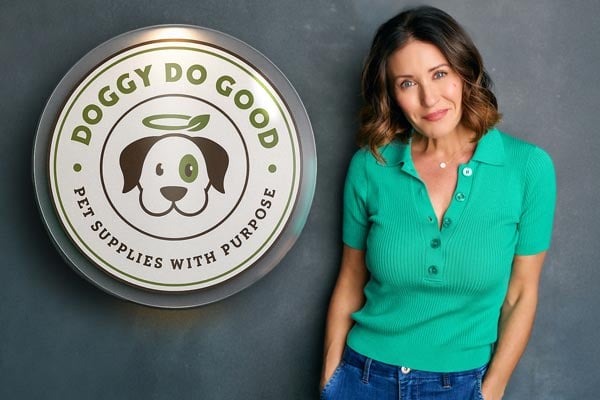
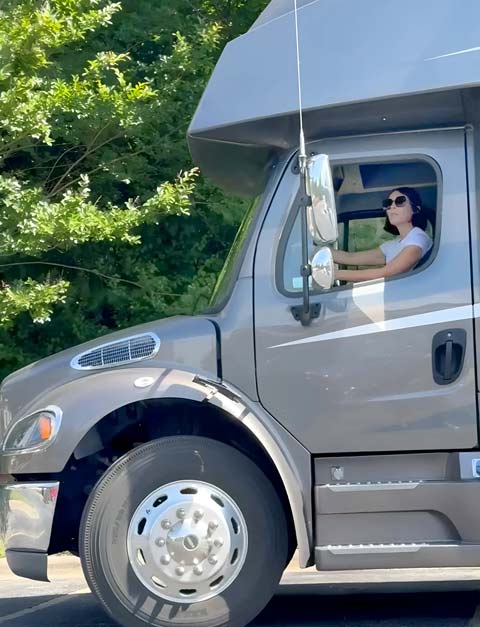
Finally, actress and entrepreneur Cara Ann Marie—known online as “The RV Actress”—joins us to talk about filming Netflix auditions, running a growing pet brand, and raising a young family all from the road. Her story highlights the creativity, flexibility, and resilience that RV life can inspire.
We wrap up this episode with RV electrical expert Mike Sokol, who breaks down a major upcoming safety change that will impact every new RV by 2026. His explanation of grounding monitor interrupters (GMIs) is essential listening for anyone who plugs into campground power.
Quartzsite, Mexico, The RV Actress, and RV Electricity
Top Reasons to Listen Now
- Go behind the scenes of the Quartzsite Big Tent and learn what makes this massive desert event so unique.
- Hear real-world tips for RVing safely in Mexico, including border crossings, fuel, and campground expectations.
- Discover how The RV Actress films auditions and runs a business while traveling full-time.
- Get inspired by real RVers embracing adventure, community, and flexibility.
RESOURCES MENTIONED
- Quartzsite RV Show
https://www.quartzsitervshow.com/ - Cara Ann Marie, The RV Actress
https://cannmarie.com/ - RVing to Mexico
https://www.mexicocaravans.com/
https://ontheroadin.com - RV Electricity
https://rvelectricity.com/
Be A Guest or Share Your Story!
https://podcast.rvlife.com/contact
Listen to the RV LIFE Podcast Episode 148
Listen and subscribe to The RV LIFE Podcast on Spotify or in your favorite podcast app. Or, read the full episode transcript below. Leave a comment, or contact us with any questions or feedback.
Connect & Learn More
- https://podcast.rvlife.com/about
- https://facebook.com/rvlifepodcast/
- https://instagram.com/rvlifepodcast/
- https://www.facebook.com/groups/rvlifemovement
Got a great story or tips to share with listeners? Leave us a voice message!
(NOTE: Audio submitted may be published on the podcast unless specifically requested otherwise.)
RV LIFE Podcast Full Episode Transcript:
Quartzsite, Mexico, The RV Actress, and More
KIMMY: It’s a free for all. People say it’s like Burning Man meets an RV show.
PAUL: In some ways, I think you’re actually safer down there.
CARA: This lifestyle is an adventure. It’s so wild.
RV LIFE: RV life, RV life RV life RV life, RV life, RV life podcast.
RENE: Welcome back to the RV Life podcast. This week we’re diving into one of the biggest gatherings that you might have heard about quartzite. John has a great conversation for us all about the Big Show, as everyone calls it the Quartzite Sports Vacation and RV show.
JIM: The Big Show. Indeed, if you’ve never heard about quartzite, you’re probably not an RV, and I think it’s actually mandatory written somewhere that if you’re a full time RV, you got to go at least once. I remember our first trip to quartzite and all of the exciting gadgets. I was so overwhelmed by all the new rigs and what’s going on under the tent, but what really struck me the most and what really stands out, was the connections I made. I love the boondocking in the desert and the free camping and the sunsets and all the parties, the rallies, the gatherings, the get togethers. Quartzite is really about community.
RENE: And the flea market. You can’t miss that.
JIM: But let’s not get too sidetracked here. If quartzite isn’t far south enough for you this winter, how about Mexico? Today we’re going to hear from a long term traveler to Mexico and share what you need to know about RVing south of the border. Spoiler alert it’s safer than you think.
RENE: Oh yeah, it is. We’re going to talk with our friend Paul, and he’s going to share what it takes to RV through Mexico safely and have fun doing it. He has a lot of must know tips for first timers, so pay attention.
JIM: You know, speaking of Mexico, Renee, when I spent the winter in Alaska with you, you promised that we’d spend the following winter in Mexico. And here we are. Another winter is almost gone by.
RENE: I guess I owe you one. Let’s go.
JIM: It’s definitely still on my list. But hold on, we’ve got much more in store for you here. For our working on the Road Income segment, we meet a Hollywood actor who balances filming and entrepreneurship from her RV. Then Bob wraps things up with an important RV tech update that affects every future RV owner.
RENE: Alrighty, let’s get things rolling here and kick it off with our RV travel segment with everything you need to know about quartzite.
JIM: Right? The Big show. Every January, hundreds of thousands of our peers roll into Arizona desert for what many call the Super Bowl of RV shows.
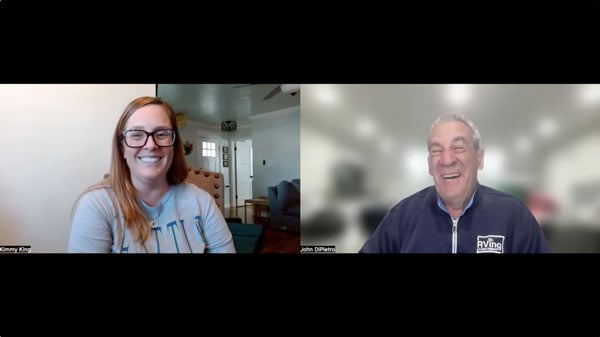
RENE: John DiPietro is going to talk with Kimmy King. She’s the woman who runs it all, the quartzite RV show celebrating its 43rd year.
JOHN: Hey everybody, and welcome once again to the RV Life Podcast. And you know that when you talk about Super Bowls, granddaddy of them all and big events in any category, if you’re talking RV, the big event, the big, big one is quartzite. And with me today is the. I’m going to use a I’m going to call you a director. I know you’re much more than that. You’re the chief cook, bottle washer, your direct traffic. You put the tent up, you you direct the camels all around there and and everything. Kimmy King, who is in charge of quartzite. And, Kimmy, welcome to the RV life podcast.
KIMMY: Thank you so much. I’m very happy to be here. And yes, I have many hats I wear, so I’ll take director that works for me.
JOHN: That’s the easiest one.
KIMMY: Yeah, I’ll take.
JOHN: It with the least responsibility.
KIMMY: Yeah. Oh, I’d like to direct. I will tell people what to do. Don’t worry.
JOHN: Okay, okay. And then there’s times when you end up doing it yourself when there aren’t others that do it. But, um, you know, when we met a few years ago, when I was out there, one of the things that I noticed is that you are very down to earth, very focused, uh, and very approachable to the attendees. In fact, I think I recall an opening day. You wanted to be right at the gate to welcome people there as they came in. Um, tell us a little bit about the show. I know your dad started it, but he really didn’t start it as an RV show. He, um, had a really kind of roundabout route to get to where quartzite is today.
KIMMY: Yeah. So my late father, Kenny King, um, he was he was in the RV industry. He sold RV awnings for an awning system. Yep. Um, and so he was actually going in. He lived in Southern California, and he’d go to all the Surfside RV parks. I guess you could call them then, too. And, uh, was kind of going literally door to door selling RV awnings. And someone mentioned quartzite to him, and he made his way out to quartzite, and he was actually at the show across the street from us, which is the Tyson Wells. Um, and he started selling RV awnings there and essentially outgrew it by making his own show within the show and ended up getting the kicked out. And, uh, him and my mom kind of put together this cool plan of, you know, we have this Mecca, we have this small town, quiet town, lots of rivers, lots of snowbirds. What can we bring to quartzite? Um, that would be unique. And he thought, why not an RV show? And that was a 1983. And him and his late partner, Mal Mallory, which is the other founder of of the Quartzsite RV show, sort of built this, this thing. Right? They they kind of melted it into what it needed to be each year to find its groove, which is sports, vacation and RV. Um, and then here we are almost 43 years later, and my husband and I are the, ah, who run it now.
JOHN: Um, you know, I was trying to do the math. Thank you for saying 43, because I was going to have 42 down but 4 to 3 years. I mean, when you go to the show, if you’ve been to another show, if you’ve been to Hershey or if you’ve been to Tampa, um, or, uh, any other regional show that takes place throughout the country in January, February, March, this show is totally different. Um. Totally different. Talk about what makes quartzite. Quartzite.
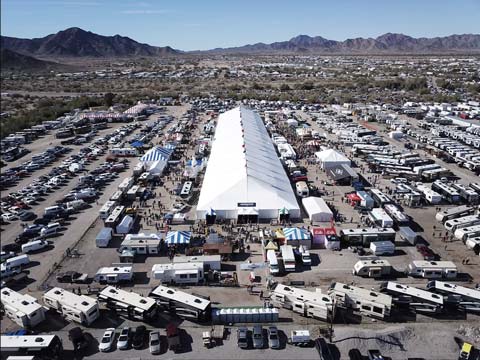
KIMMY: So it’s quartzite is is different in the fact that we are direct to the consumer. So we are a consumer based RV show. So we’re not you’re not going to see, um, tens of 20s of dealerships or manufacturers there with all the new layouts. We it’s our own property that we own. It’s only 17 acres and we only use the showgrounds is about four acres. So we had a problem with not having enough manufacturers at one point or not having enough room for the manufacturers. So, um, we are a direct to the consumer sports vacation parts accessory home show. So if you are an rver that loves to RV or even is just what I call a weekend warrior who just likes to go out on the weekends with your family and you’re looking for the newest, latest and greatest in our living things. Right under our big tent is where you’ll find them. You know, we don’t have all the room that we have for the manufacturers, but we do have RVs for sale. So we’re a little bit of a of a combination of a show. And we’re definitely not your typical RV show. We’re in the middle of the desert. Most people come. They stay. They’re there for sometimes days, weeks, months. Um, you know, it’s kind of a Mecca of of a diverse group of people that, that, that conjoin in quartzite. And they all find something for someone under the big tent.
JOHN: Talk about the vibe of quartzite. Because when it’s when it’s not during show time. It’s, what, five, seven, 8000 people? 3500, 33,500 people.
KIMMY: So quartzite tiny come to.
JOHN: Okay. We’re going from 3500. Okay. To the heart of the season.
KIMMY: I would say the heart of the season, which is January. Um, I there’s been so many numbers thrown out there, but just based on being able to look at the BLM land, I mean, there’s got to be at least a quarter to a half a million people in quartzite. Not necessarily coming to my show. Right. So those numbers get a little bit skewed. People think that I have that many at my show. You know, there’s people come to quartzite for the weather. They come to quartzite for the quietness. They come to quartzite for the BLM to be alone. Um, there’s such a diverse group of people. So quartzite only 3500 when the season isn’t going on. And then it blossoms during, you know, November, December, January really being the heart of it because there’s a couple other shows going on in concurrence with my show. Um, and then they stay all the way into March until, you know, the snow melts back home or they’re ready to go to the next place. Um, but we really it’s it’s just this beautiful thing that happens where it’s just all these people come together who maybe wouldn’t normally mix. Um, but they come together because they’re the heart of the RV, or they love to RV, and they love what quartzite brings to them.
JOHN: Mhm. I told you I might drift. And I’m drifting from the show to the, uh, to the neighborhood. But the show itself. Um, buy tickets in advance. How do you get in?
KIMMY: We are free. We are probably the only free show still standing. I want to say, like in the world. Um, we are free entry. We are free parking. Uh, my dad tried to charge a quarter on the first show in 1983, and it just did not go well. So he pulled the sign down and said, put a huge sign up that said free for all. And and people came pouring in. You know, um, I would have a much bigger house if I charged to get in. I’d have a lot of things. But, um, I think quartzite is quartzite because you have that experience you don’t have, you can go in and just experience it and not have to drop a dime. Right. And you can be the person looking for something for two, for one deal. Or you can be the person looking to buy the $500,000 motorhome. And it’s just kind of a, um, everybody comes to the show. Um, you know, there’s parking courtside. It’s a free for all. So there’s no, you know, there’s it’s not a big metropolitan area. We’re not going to go. Hey. Hey, hon, do you want to go down to Phoenix to pop in the courtside RV show for two hours? People come, they camp, they bring. They bring family, they bring friends, they go. They do the big rallies, the circles. So there’s it’s it’s an experiential thing. I’ve always say courtside is an experience. It’s not just let’s drop in and say hi. It’s something that you have to come and you get to experience it all.
JOHN: What are people going to see at the show? What are they going to see? I mean, I know they’ll um, we’re going to get into seminars in just a minute, but you have some unique vendors there. I know the food people that you introduced me to were as unique as you could find. And, um.
KIMMY: Yeah.
JOHN: You sit at tables with people and, and you have new friends.
KIMMY: Yeah. It’s very. We try and make quartzite like a meeting space, right? Like a ground where we can, um, break bread together, so to speak. You know, it’s not we’re not trying to have you go sit by yourself in a corner or feel unwelcome, you know. We have all of our major food vendors that all have tables and chairs out there that people come. We have we’re going to have live music playing all week at our barbecue vendor. Um, it kind of just brings a fun vibe. Um, you know, quartzite isn’t. It’s different. It’s like I’ve heard it. People say it’s like Burning Man meets an RV show, right? Minus maybe the drug use, but it’s true. You know, you get everyone, you have the nomad travelers, the people that are the travelers that come, are coming through, that are just trying to make a dollar. You know, our our crew that we hire every year is seasonal. You know, we have our couple staple crew, but a lot of them are people that are just traveling the world trying to figure out where they fit in. And they have they find a place with us in quartzite. And that’s the beauty of quartzite, is you find your place there no matter who you are, where you come from, you kind of find a place there. And, um, you know, we are a little bit different that we have. Um, we have full, full fledged RV service spots. So I know you said what you’d find in Quartzsite that’s different than some other places. So we have Redlands RV truck, we have Blue Ox, we have Roadmaster, and those are our staple guys that you can come in and you can get work done while you shop. You know, you can make your.
JOHN: Money back there. Yep.
KIMMY: You can go through and get your appointment in in the, in the tent. But you can get things done. You can get your rig worked on while you’re there and it’s all on spot. You don’t. Somebody doesn’t have to come find you. You know, you just come to us.
JOHN: Yep. Um, and you can learn too, because our friends Tony and Peggy are your your seminarians. It’s probably not the right word, but there.
KIMMY: They are. Our Peggy and and Tony Barthel from Stressless. Campers are are really who who make these seminars happen. These workshops and seminars that we have. It was my father had them back in the early 2000s. We had seminars, we had some live music. It was more of a stage presence. Um, but we didn’t have anyone to run the seminars besides my dad. If you all don’t know, we are a mom and pop shop. We are not a big RV fmca or anything like that. It’s just myself, my husband and a seasonal crew. And so back when my dad was here, he didn’t have anyone to run him. He couldn’t be a places at once, you know. So he had to had to phase him out. And then, um, we decided, hey, like, what if we could bring those back in and, and I can’t be a places at once. And so, um, the barthel’s run it for us, and we have heavy hitter lineups. We have people that are in our show. We have people that are content creators that are coming in to share what they do and share their knowledge and experience. Uh, Big Beard Batteries is who our sponsors are. Um, and they have daily seminars, uh, two a day to talk about all the knowledge that they know. Um, so it’s just a very cool space. Again, free. There’s no cost to get into the seminars. It’s all educational. Know. So it’s it’s a really neat part, right.
JOHN: You know, you alluded to a little bit before a combination of Burning Man and whatever. I throw Woodstock in there somewhere. Yes. Yeah.
KIMMY: Well, but yes.
JOHN: The thing is this. And I want to talk to you about repeat visitors, because I just thought of that question that I forgot while I went on to the next question. But, um, it’s really a little bit of everybody. I mean, you’ll see the people that that, you know, Gillette razors are not their friend, but yet you’ll see well-heeled people in their prevost’s. Yes. Um, pulling into park. Yeah.
KIMMY: It’s a convergence demo imaginable. It is. And I think, um, I think that so for so long, um, before maybe, maybe ten, 20 years prior to me coming in the show, it was definitely the snowbird, a little bit older crowd, the big motorhomes, the full hookups, you know, and there’s been this surge of of maybe a bit of a younger crowd or a bit of more smaller units, more mobile, more self-contained, off the grid. And that’s another thing that brings quartzite different than you’d see in Tampa or Hershey. You know, I’m learning that Tampa is very RV park based. And so if you’re if you’re an RV company or an, you know, anybody coming in the show and wants to get demographic information, we have such a different demographic. You can walk out to the BLM land. I mean, mind mind you, you’re going to be walking, but you can you can interview all these people that have such a different lifestyle than you would find in the bigger cities. You know, we have tens of thousands of BLM land that are right next to our our RV show. And so people go there and they, you know, it’s most of it’s self-contained. You have to dump your own tanks. If you if you’re not self-contained, you have to dump your own trash. You have to fill up your water. So it’s just a different type of demographic than you would really see. That’s not to say we don’t have full hookups. I mean, we have over 40 RV parks in and quartzite, and those get very much used. But it shows the diversity of of quartzite and who comes and the things that you can do, you can try and go off the grid for a week. And no, I’m not for that. Let’s go over to, you know, the next, next town over and let’s get some full hookups. So it’s it’s neat.
JOHN: What would you say the percentage of return visitors is that you’ve had, you know, since you’ve been running the show? I’m sure I saw a lot of people come up to you and give you a hug and and that type of thing, but, um.
KIMMY: I’d say it’s a lot because I love, as you mentioned in the beginning of the show, is, um, my dad always liked to sit at the, at what we call the North gate. Um, and watch everybody come in. That is our busiest.
JOHN: Gate where we were, the north gate.
KIMMY: And that’s where, um, it’s it’s our busiest gate. And I have gotten now into the habit of actually getting on either a social media platform or just videotaping and going through and asking people, you know, where they’re from, uh, how long they’ve been coming to the show, if they’re new. And Honestly, in the last I want to say like 5 or 6 years, it’s been an upheaval of new faces. You know, we do have the returners who have been coming for years. I have one gentleman who comes every year and says hi to me, and he’s I think this will be his 30th year. His name’s Keith. Um, and he always says hello and how much he loves to come to quartzite. But you have this new, uh, surge of of younger families that we definitely see on the weekends. And now that kids can learn from home, learn from home, and you can work from home because of beautiful platforms like zoom. Um, you have more flexibility to be on the road. And so you really see that dynamic changing in the attendance at quartzite, you know?
JOHN: Yep. So it’s been and where they’re coming from.
KIMMY: And where they’re coming from.
JOHN: When I forgot to mention I made my cardinal, um, error in introducing you. I’m assuming that everybody knows where quartzite is, but, um, not everybody does. Give us, give us some parameters as to where we are. I mean, we’re in Arizona.
KIMMY: So quartzite is in Arizona, and we are a very it’s it’s a very tiny little town. And we’re about 20, about 22 miles away from the California Arizona border. So we’re definitely more on the west side of Arizona. Um, your biggest town or city is going to be, um, Yuma or Phoenix. So to put it in perspective, quartzite has two small little grocery stores. It’s the Roadrunner and oh, I’m blanking on the other one, the Roadrunner and the coyote. Fresh. So Roadrunner and the coyote. Um, and there are small little mom and pop shops, and that’s where people shop. So if you really want to go to, like, there’s no Starbucks, there’s no Marshalls, there’s no.
JOHN: Target.
KIMMY: There’s no wall like, you have to you have to drive. And coming from a girl who lives in Southern California, it’s a change in pace. It’s a beautiful change in pace. It’s a slowdown. It’s a it’s a town that really enjoys their peace and quiet. Um, but they do really welcome us with open arms to bring in this revenue to the to to the small town for the winter months.
JOHN: Yeah. Any, uh, new features this year that people should be looking for when they get ready to go?
KIMMY: So we the seminars are packed up. Um, we are doing a content creator meet and greet this year. Uh, the Barthels are hosting it for me, and we’re going to have live music by the border hookups. And then our barbecue vendor is, um, going to graciously donate food for us, and we’re going to have content creators who want to who are in the area, who want to meet each other, um, public are welcome. And then we’re actually bringing in our vendors to see if we can maybe have some business relationships made between the content creators and the vendors, because the way that marketing is happening through social media is such an outlet that I think they could take advantage of to make some, you know, business relationships. So that’ll be a fun one to see how that goes this year.
JOHN: You know, and my other, um, cardinal sin that I committed is I never even asked you the dates.
KIMMY: I was going to say I should have a cardinal sin as a show promoter, as I haven’t been saying it. Every two minutes.
JOHN: We’re going this we’re doing this interview in reverse. Uh, so.
KIMMY: The 43rd, the 43rd annual Quartzsite RV show is January 17th to the 25th of 2026. We open on a Saturday and we are.
JOHN: Open on Sunday.
KIMMY: And we close the following Sunday. We open. We’re in banker’s hours 9 to 5. Um, we close on closing day at 3:00. So, um, it’s it’s, you know, if you’re not one for crowds, don’t come the first four days. Just avoid it. Come during the week because it’s it’s a little quieter. Um, you can be a little bit more one on one. You can see more if you love to be in crowds and like, cattle herding, you know, herding cattle through the tent, then opening weekends, your jam. Um, we’ll have some live music. Um, there’ll be food. Um, you know, we’re right next to, like I said, the BLM land which has Arizona Peace Trail. So we have off road, I mean, so many off road routes that people love to come out there. So the amount of people that I see getting out of, um, side by sides and places that are the age 50 and over is amazing. Like, I had no idea the demographic that that actually pertains to. And so that’s a really cool thing to see in quartzite as well.
JOHN: And when they get out of those things, they’re holding their back.
KIMMY: Uh, they’re holding like, let me just oh, and I forgot to mention beer bellies, the adult daycare. So after you come and shop at our show, you can go to the adult daycare, which is our the local bar. It’s called Beer Bellies. They’re fabulous.
JOHN: They have right by the.
KIMMY: Right in the middle. Yeah. So it’s really cool. We have our show across the street from us. Uh, Kim Scott is the promoter over there. It’s called the Tyson Wells Orama runs concurrently with my show. So you come to one of the shows, grab a cold beer, you know, watch some live music, and then you come over to the other show and shop, and most people stay for days. I mean, quartzite, you can’t do in 1 in 1 shot. You’re there for a couple days.
JOHN: Yeah. Although it is feasible if you’re if you’re an adventurous person to fly into. This is what I had to do a couple of years ago because of time constraints. I flew into Phoenix, rented a car, came down, found a hotel, I think in Parker or somewhere around there, and was able to do the show for a couple of days. But, um, you know, even if you don’t have an RV and want to see what the RV lifestyle is. Oh, yeah. Um, quartzite is the place to really get a, um, baptism under fire to.
KIMMY: Get a first hand view. You really can. There’s plenty of hotels, motels, I mean, even quartzite. Starting to have Airbnbs, which is a new thing for them.
JOHN: Okay.
KIMMY: Um, I think there may be like, uh, Uber in town, but.
JOHN: Um.
KIMMY: But, yeah, they’re starting to slowly creep up with the times. So it’s really fun to see it all change and grow and be a part of it.
JOHN: Yeah. And we know you have a yacht club, too, in the middle of the desert.
KIMMY: We do, we do. You can find the yacht club. You. You can be an honorary member. I have a hat and a t shirt and you can be a member.
JOHN: So, uh, website Kimmy.
KIMMY: Quartzite RV Show.com is where you’ll find all the information. You’ll find all of our seminar schedules, our content creator meet and greet. You can find out about our service bays, hotels, motels, all the things. Um, our Facebook page is going to be another great resource, um, to find anything that’s new and upcoming or any announcements.
JOHN: There we go, the Quartzsite RV. But that’s not the real name. Give me the official name.
KIMMY: So it’s the Quartzsite Sports Vacation and RV show, and we are proudly sponsored by Progressive Insurance, and we are just really grateful to have this opportunity. And we look forward to seeing everybody from on January 17th, 2026 on Opening Day.
JOHN: There we go, the Quartzsite show with our friend Kimmy King. Thank you for being with us. This is the RV life podcast.
RENE: I love how Kimmy took us behind the scenes at quartzite. Half a million our viewers live music seminars and a yacht club in the desert. Let’s go.
JIM: Let’s go indeed. Get all the details and dates for the 2026 show in our show notes on the episodes page at podcast Life.com.
RENE: From the Arizona Desert Southwest. It only makes sense to keep driving south of the border so our next guest knows how to do it better than most travel guides.
JIM: Paul Beddows has led RV caravans all across Mexico, so let’s find out what it takes to explore safely and confidently. Paul, thanks so much for joining us today.
PAUL: Yeah. You’re welcome.
RENE: Hey, Paul, it’s nice to nice to chat with you again. Um, I, I consider you a huge expert on Mexico RV travel. So it’s really an honor to have you here for our discussion about this in today’s episode.
PAUL: Okay. Um, speaking modestly, I guess I am sort of an expert.
RENE: Do tell, tell, tell our listeners about how how you got into it and what you’ve done all these years by traveling.
PAUL: Well, I started traveling to Mexico on my own. I guess about must be 15 years ago now in my RV, and I set up a, um, a website to kind of provide information for people. And that attracted the attention of a guy named Gabriel Romero, who, um, is a tour guide down there. And he was doing contract work for various RV caravan companies, and he wanted to set up his own. So he asked me if I’d help him, and I said, no, I don’t want to help you. I don’t like caravans to use up all the RV spots for me and everything else. And then about one year later, um, is when the drug stuff really started badly. And, um, I’d made friends with a few campground owners and they were really suffering. So when he approached me the next time, I said, yeah, okay, I’ll do it. As long as you use this campsite and that campsite or run by friends of mine. So he said, yeah, no problem. So we actually saved a couple of campgrounds from going under in the process. So that’s how it started. And then I, um. I’d already led caravans in North America. You know, I’d done it for an RV club before, so I had some experience in it. And, um, then I started leading them down there, and I took over his website and it sort of went on and on and on. And now I’m trapped. I can’t quit because he’s a good friend of mine. And if I quit, it’ll leave him in a bind. So I’m still doing it. I’m not leading caravans anymore myself. I had a very bad RV accident in British Columbia about, uh, five years ago, and I’m not really comfortable driving an RV much anymore. I’ve done it, but, um, I’m not really comfortable at it. And, um, so I basically to the point where I’m, uh, flying into Mexico and renting and I’ve done that now for about 2 or 3 years.
JIM: So when was the highlight of, like, this journey of yours, you know, leading people in New Mexico? When did it begin? And when you know about how many trips have you made?
PAUL: I started doing it about, I’d say about ten years ago, and I’ve probably led about 7 or 8 trips in Mexico. The only place I haven’t led one is through Baja, but I’ve done the rest of Mexico. You know, all through the northern part, down through the Yucatan and Chiapas, places like that, you know. So I’ve pretty well driven. I’ve driven a heck of a lot more of Mexico than I have in the United States or Canada, actually.
JIM: So you probably know, um, how has being in Mexico changed since you first began, or has it?
PAUL: Um, it hasn’t really changed that. The RV parks down there come and go, you know, some some closed down new ones. Open up the highways. The roads are still pretty bad. Um, they are building an awful lot of toll highways in Mexico over the last few years. And, um, some of those are pretty good. There’s a lot of them are better than California, but some of them are god awful still too. So. And they’re expensive. I mean, I’m not going to kid anyone. You know, they’re probably the most expensive toll highways in the world. Wow. But you don’t have speed bumps all over the place. And you know, they’re safer and they get you there faster. You’re not stuck behind some sugar cane truck doing 30km an hour for three hours, you know, that sort of thing. So there’s some big advantages to using the toll roads, for sure, especially on an RV, especially if you have a large rig.
RENE: Oh, yeah. Oh, yeah. And there’s two things that I think of because this is always what gets talked about when whenever the discussion of RVing in Mexico comes up, it’s the roads and the drug problem. And I’d like you to tell our listeners more about what your experience has been with those two things.
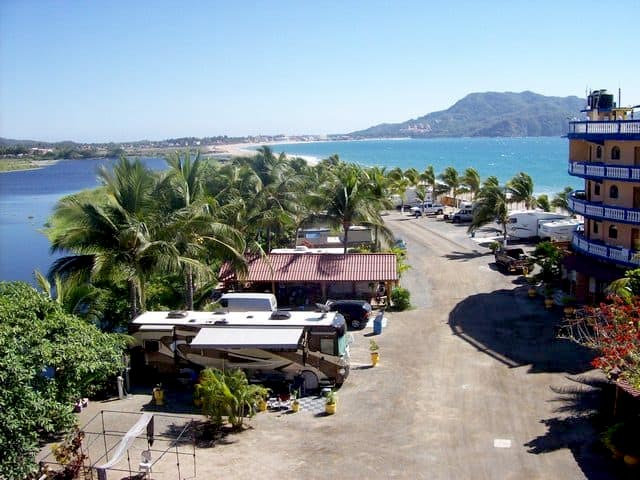
PAUL: Well, I’ve never seen a cartel or run into one. I know we’re down there, uh, the town I live in in the wintertime, which is, um, on the coast just north of Manzanillo. I’m pretty sure that the cartel is around that area. In fact, I think they protect the tourists in the town. Um, because there have been a couple of incidents where there’s been some bad people who have suddenly disappeared that have bothered tourists. So it’s kind of, you know, it’s a bit of a protection racket in some ways. But on the other hand, they realize the town depends on tourists and, um, you know, if nothing else, they’re patriotic. Um, I’ve never had any problems with them. I bought a car down there, actually, and I didn’t realize at the time, when you buy a car in Mexico, you’re responsible for the, um, unpaid taxes or unpaid fines, everything else of the previous owner. So when I went to register it, all of a sudden I got nailed for like 600 extra dollars. And I told that story to the lady who was teaching me Spanish, and she said, oh, do you want my friends to go pay the person a visit? And I said, who? He says, oh, the cartel. I said, no, I don’t want to go there. You know, so so I know they’re around, you know, I, you know, if you’re a tourist, as long as you stay away from drugs or people that do them, and you don’t go bar hopping at 3 a.m. in the morning and stupid stuff like that, you’re probably never going to have any issues unless you’re in the wrong place at the wrong time. But that can happen anywhere you go about Mexico is that that violence down there tends to be targeted, whereas in the United States and even Canada, it tends to be random. So you can avoid being a target. It’s pretty hard to avoid being a victim of somebody that walks into a Walmart and starts shooting. So in some ways, I think you’re actually safer down there.
JIM: Interesting. I’ve heard that you’re not going to find trouble unless you go looking for it.
PAUL: Exactly. You know, I mean, you know, I have a relative who lives down there, and he took me to a bar one night outside of Puerto Vallarta. We drove out to the countryside. And, I mean, as soon as I walked in there, I knew it was a cartel bar. You know, I just, you know, they just gave me the most evil look, you know, as soon as they realized I was with him, I was fine, but I just I just said to him, I said, Ken, you know, you’re nuts, you know, how do you know somebody’s not going to come in here and start shooting, you know? And then he started going out with the girlfriend. Well, actually, actually the ex-wife of a cartel leader. So he’s my boss.
RENE: Well. That’s good. Well, you know, a lot of our viewers think of going to Mexico for winter. And I want to know because this is something I’ve always wanted to do. What makes it a different experience in winter than going there any other time?
PAUL: It really is. You know, I mean, if you go to the United States or you go to Canada, I mean, you don’t even know which country you’re in half the time because everything’s pretty much the same, you know, down there. Everything’s so much different. You, uh, you know, the culture is just just really special. You know, I really enjoy it. And, you know, the more Spanish you learn, the better, better time you have as well.
RENE: Yeah. How would you rate your Spanish skills?
PAUL: My Spanish. It’s intermediate. You know, it gets. It’s get better every year.
RENE: So in ten years you picked up a lot then.
PAUL: Yeah. Yeah, yeah I try. We had a couple immigrate from Colombia that lived with us for a while, so I picked a lot up from them. And, you know, I really try to use Spanish as much as I can while I’m down there.
RENE: It makes sense. You know, I think you get you get a lot more respect that way. And you also might get better deals on things if you, uh, you know the language.
PAUL: Yeah, I agree. But is it.
JIM: Necessary to speak the native language down.
PAUL: There, or.
JIM: Can you get by.
PAUL: If you speak. If you speak English, you can get by quite nicely. The people that have a lot of trouble are French Canadians. Ah, because even though French and Spanish are a lot closer than English and Spanish, hardly anybody down there speaks French.
PAUL: Interesting.
PAUL: So, you know. But nearly everybody, they speak English, they want to learn English because it’s a ticket to a better job in a lot of cases. Right?
JIM: Sure. So speaking of Arvers, what type of Arvier is best suited for the adventure to Mexico? Do you need to be the adventurous type or. Um.
PAUL: Yeah, why would you go.
PAUL: If you’re going to do it on your own for sure. You know, like, I mean, I, you know, I’m helping run caravans. And for somebody who’s not the adventurous type or is nervous, it’s certainly not a bad idea to do that the first time. But we found a lot of people that take a caravan the first time end up going down on their own later on. In fact, a lot of them do. You know, sometimes they make friends and go down with someone else. And once you get past all the hassles with the paperwork and you know and learn the ropes, it’s not too bad. But it is different. I mean, it’s a lot different to dealing with the insurance. For example, you know, if you’re in an accident down there, it can be a bit of a headache.
PAUL: Sure.
PAUL: And I mean, I got a Mexican car now when I was in an accident, uh, in middle of November last year, and I got rear ended at a red light. Mhm. Very nice. You know, insurance agents, the police nobody gave, gave me any fault for it. But they insisted I take it to the Nissan dealer in Manzanillo. And when I did that I asked him how long it was going to take. And they said oh, 2 or 3 months, you know, to get it fixed. So, you know, it happened in November. I got it fixed in March. You know, it was drivable just. But so don’t expect things to happen fast down there because they don’t.
JIM: But it sounds like a caravan might be a smart way to go if you’ve never even considered it before. But what can someone.
PAUL: Expect in a.
JIM: Caravan? Besides, aside from going alone, what do you mentioned? Insurance. What are some other benefits of going with a caravan versus going solo?
PAUL: Um, basically, you know, really the big advantage is knowing where where you’re going. The wagon master theoretically should know where it’s safe to take an RV. I mean, I went down on my own the first time. I mean, I’m that sort of person. I never even thought of going in a caravan. But, I mean, you know, things like ending up on one way streets where you have to back a trailer or a fifth wheel down a one way street, you know, for four blocks because it turns into a dead end, or there’s a low balcony overhead, you know, you know, you know, that sort of thing can really throw you. And it’s it’s definitely safer because you’re in a group, your chance of having an accident is a lot less. If you’re going to have an accident, chances are it’s with someone else that’s in the caravan. Oh, wow. So, you know, and and the main thing is having someone that’s leading it, who knows where they’re going and where the low trees are and the archways and, you know, everything else that can be a real hassle for your RV or danger to your RV, physically speaking.
PAUL: Yeah.
JIM: That makes sense. You mentioned a couple of different types of RVs. What rigs are best suited for the travel on these roads, or the trip to Mexico and back?
PAUL: I’ve come to.
PAUL: The conclusion you’re best off with a class C or class B, you know, I’ve had I’ve got a class C right now and I’ve taken it down twice. That was since my accident. And that kind of convinced me that, hey, you know, my RV days are almost finished because I was not comfortable with it to start. You know, I really wasn’t. But I’ve had towed a trailer down there. I’ve had a truck in a camper. The truck in the camper was the best, but that can cause you some some issues with getting it into the country. They don’t know how to classify it and there’s some hassles like that.
RENE: Oh, really?
PAUL: But, you know, a fifth wheel, you know, you’re trying to tow a 40 foot fifth wheel with a triple axle behind you. You know you’re going to have issues because the RV parks down there don’t have the same sort of infrastructure you’re going to find in Canada or the US for sure, you know. You know, it could be difficult to get in there to park it. And, you know, getting, you know, most services, RV services and campgrounds in Mexico, they haven’t really thought out where they’re going to put them. So chances are it’s going to be at the very back of the campsite. So you’re going to need to strap 2 or 3 sewer hoses together to get sewer, that sort of thing, you know? So the longer RV you have, the more headache it is.
PAUL: Sure.
RENE: You know what? What is the ideal length, you would say for an RV?
PAUL: Um.
PAUL: I would say, um, you know, if you’re talking about a class A, I would probably say you don’t want to go much over 36ft.
RENE: Okay.
PAUL: You know, um, a trailer, maybe 25 foot, something like that, 28 foot tops. I’ve got a 28 foot class C right now. It’s a rental return. Um, you know, and it’s a little long, but it’s adequate. You know, I have I’ve managed. Okay. I mean, the trucking camper was great, but that has some disadvantages, too, because you can’t use the truck, you know, without taking it off and all that sort of thing, you know? So I don’t usually advise people tow a car behind them down there because it really adds to the cost of your tolls and your fuel and your insurance and everything else. Unless you’re going to go to one place and stay there for, you know, for three months, then it makes sense.
JIM: You briefly mentioned accommodations. Can people expect the same amount or distribution of campgrounds and places to go?
PAUL: Quite a few.
PAUL: Campgrounds down there, but most of them are not up to what I was I would call American standards. Okay. You know, there are a few of them, um, I know about three of them that actually have 50 amp hookups, but that’s pretty rare. And, you know, you’ve almost got to treat it like you’re camping in the 1950s. You know, most of the campgrounds will have a 15 amp hookup. Sometimes there’s only a common water supply and a common sewer. That sort of thing. So it’s a lot more inconvenient. So, you know, you gotta, you know, don’t go down there expecting a thousand trails because you’re not going to find it.
JIM: So you won’t find this network of COAs and thousand trails. But it sounds like if you go with an open mind and a sense of adventure, you really do get to experience Mexico.
PAUL: Yeah, exactly. You know, you know, go, go with a sense of adventure and you’ll have a great time, you know? But if you’re going to be inconvenienced because you can’t get a 50 amp hookup or a 30 amp hookup, you know, then you’re then you’re going to be disappointed. That also brings up another, um, fact down there is the the electricity is not reliable. So you really want to protect your electrical system? I mean, the easiest way to do it is to get an EMS power protector. But, um, what a lot of people do is they buy a voltage regulator and you can buy those in Mexico. They’re kind of like the Hughes auto former, but the Hughes auto former only corrects low voltage. It doesn’t correct high voltage.
PAUL: In.
PAUL: Mexico. You’ll find both. So you know you can you can source ones in Mexico that’ll correct both of them. And uh, the advantage of that is to when you go back into the United States, a lot of campgrounds and RV parks won’t let you use a Hughes Auto former, but they don’t know what this is, so you can get away with it, you know.
RENE: And we’ll, uh, we’ll try to find a link to that in the show notes, because that’s something I hadn’t heard about.
PAUL: Yeah.
PAUL: The one, the best one is called the ISB solar basic solar basic 4000. It’s a 30 amp one. Okay. And, um, it’ll correct up to 20% either way. Wow. And it fits nicely into a milk crate. And what I did, if I don’t have the storage I tell people to do if they don’t have the storage room is just throw it in the door when you’re on the road and push it up underneath so it’s not in the rain when you’re camped. You know, it was very difficult to get last year because they had a part shortage. Um, they’re starting to become available again now. They’re about $300 us and you got to do some wiring yourself. So there’s a little bit of a hassle with that. There’s another one out there called a Clinostat or something like that, which is 20 amp. And you don’t have to wire that one. But I haven’t found anybody yet that’s tried it to see how it works. And that’s available on Amazon Mexico.
PAUL: Okay.
JIM: Well that sounds like an important tip for anyone preparing to go and want to protect their equipment there. But what about the water everyone hears nightmares about? The water. Is a good.
PAUL: Filtration.
JIM: System necessary.
PAUL: For campgrounds.
PAUL: That have that, you know, you know, have water that’s portable. But I mean, the trouble is people say, oh, it’s portable. So they fill your tank, you know, and they, you know, they forget they already have contaminated water in there. And it doesn’t matter, you know, if there’s an ounce of bacteria, you know, the 40 gallons. You know, after a couple of days, that bacteria is going to be through the entire tank. So I never trust it. I mean, basically, I use bottled water. I fill my tank with Mexican water. I run it through one of those blue filters you can buy at Camping World, you know, just to keep the sediment out. And maybe it sanitizes it enough. So if you forget and brush your teeth, it won’t make you sick. But I use bottled water for everything else, and I just use the water in the tank for showering and washing dishes. And then when I get back into the United States, they’re pretty. Pretty. You know, I put a good dose of chlorine in there and let it slosh around while I’m driving and drain it a couple of times to, you know, to sanitize it.
PAUL: And then then you’re good to go. But the, you know, you can buy the big five gallon bottles of water anywhere in Mexico. All the gas stations in Mexico usually have a convenience store attached to them. And you can you can do an exchange there or you can just take it outside. Being a big you know, you bring a funnel and just transfer the new one into the old bottle. You know you want to look for one with a screw top cap. Of course. And if you’ve got a pickup truck, it’s no big deal to throw it in the pickup truck. You know, some people, I’ve seen people carry it in their showers, but that’s actually not a good idea, because if you hit a bad bump, you know, you could crack your shower pan. So. But it’s so cheap, you can actually pour it out and fill it up when you get where you’re going. And most RV parks, you’ll find the water truck comes around.
RENE: Oh, so you have so many of these fascinating tips that I haven’t seen in other places.
PAUL: It works the same with propane too, you know, because you don’t, you know, you can’t just stop at a gas station and top up with propane like you can in the United States or Canada. You know, the propane dispensaries are usually separate. They’re on the outskirts of towns. You’ll see them. The big one is global gas is the most popular one. Some of them can handle the onboard tanks. Some of them can just handle the portable tanks, or some of them handle both. Um, but once again, you’ll find if you’re in a larger RV park of, they will bring the truck around and fill you up. You can go talk to the RV park owner, and if there’s 3 or 4 people in there that need it, you know the truck will come in and do it. So it’s really not a problem. The only thing you got to be careful of is if you go into southern Mexico, you’re getting butane, not propane.
PAUL: Oh.
PAUL: Which is which is okay, except it’ll freeze if you take it home. So you want to make sure you’ve, uh, you know, you’ve gone back to propane before you get back into the United States. You know, unless you’re in the middle of summer or something, then it’s not an issue.
RENE: Right.
JIM: Our gas and diesel equally accessible, or is one more popular?
PAUL: Yeah.
PAUL: Actually, the actually they’re more accessible than they are in the United States. Um, the only difference is the pumps are reversed in color.
PAUL: Ah. Good tip.
RENE: So I thought I thought Canada had, uh, reversed color when we were out there, actually.
PAUL: Well, you know, in Canada you’ll see diesels quite often. Yellow. Yes, but in Mexico, in Mexico, you’ll find gas is green and diesel is black.
JIM: Very important.
PAUL: Tip. The only.
PAUL: Saving grace. Yeah. The only good thing about it is nearly every single gas station has them on separate islands.
RENE: Ah, okay. So you just have to know which island to.
PAUL: A good idea to get a locking gas cap, because, you know, if you don’t pump your own gas in Mexico. Right? Okay. You don’t want to pull up to the gas station. You accidentally gone to the wrong one, and the attendants are already pumping fuel into your tank before you get out.
PAUL: Mhm.
PAUL: And you also want to make sure they’ve zeroed the pump too before they start pumping.
PAUL: Lots of good tips here.
PAUL: Yeah. If you don’t have a locking flap on your gas supply you want to put a locking gas cap on there.
RENE: These are things I hadn’t heard about. This is so fascinating.
PAUL: Well, the biggest the biggest trick at gas stations. And it still happens. And I got caught by it two years ago, even though I was watching for it is in Mexico. Um, right now, the $20 note in the $500 note are both blue in color. And some of these attendants, they should be on stage, literally. You know, you give them a 500. And all of a sudden it’s a 20 in their hand. And like I said, there’s one gas station. I was actually watching for it, and he did it to me. And I didn’t see him do it. And I was actually sitting there really watching closely. So I’m in the habit now of trying to pay for fuel only with $200 notes, because they’re green. They’re the only ones that are green. I learned how you learn how to count in Spanish in 200. No dos Santos, cuatro cientos de Santos, you know, go up to a couple of thousand and hand them to the guy one at a time, and then you won’t have that issue.
PAUL: Sure.
RENE: Well, what about electronic payments? Do you get to do that at gas stations, or is it still in cash?
PAUL: Um, they.
PAUL: Well, they do take credit cards now.
PAUL: Okay.
PAUL: You know, they started doing that about 3 or 4 years ago. Once again, you gotta be careful. You know, I always keep the receipt. Um, I was leading a caravan, and one customer got billed for the semi that was filling up next to her when it came through on her credit card, and fortunately she had the receipt, so the credit card company covered it.
RENE: You know. Wow.
PAUL: You know, it’s sometimes it’s an honest mistake, you know.
PAUL: Mhm.
PAUL: And you know, there’s there’s a few tricksters out there too. They’ll tell you the machine is broken or something like this, you know. So you do have to be careful of it, you know, make sure you get a receipt. If the machine’s broken, get them to write out a receipt, you know.
RENE: There you.
PAUL: Go.
JIM: And it’s not necessarily a cartel that might be giving you trouble. It might be the smaller players out there.
PAUL: I mean, I mean, I mean, the gas station attendants, they pay them really crappy. Right. Yeah. In fact, I always tip them, you know, I tip them like $50 or, you know, which is like $3 or something like this. And the more more gringos that do that, you know, the less chance of, you know, that they’re going to try and cheat people, you know. So you try and be friendly to them and give them a tip and they really appreciate it.
RENE: Oh, that is so nice, Paul. So, you know, one of the things I really like about your travel style is that you’ve led caravans into some of the lesser explored areas of the country, and, you know, I’ve always thought Baja was just California light. It just it has never really appealed to.
PAUL: Me to go there.
RENE: California light. So you have gone I.
PAUL: Mean, we’re running caravans. We’re running caravans down Baja and the mainland. Baja is the most popular, there’s no doubt about it. We have no trouble filling caravans to Baja. I don’t know why that is. People seem to think it’s safer, I guess. I don’t know, you don’t need the vehicle permits, which is the one advantage.
RENE: Okay, okay. But the mainland.
PAUL: In my opinion, is a lot more interesting, you know.
RENE: And that, would you say, like for a new, new person to New Mexico, that the mainland would be your first choice to, to take them to.
PAUL: Um, most people do Baja first. Like you say, it’s Baja light. You don’t. Especially if you got a, you know, a pickup truck that’s like a three quarter or one ton. You don’t have to sit there and deal with the the pyramid headaches that they can give you and that sort of thing, you know, so it is easier, you know, but it’s all desert pretty well. If you like beaches, the Baja is better, you know, you just want to go there and sit on a beach. It’s great, you know. But I mean, most of the interesting archaeological sites and places like that are on the mainland. You know, one advantage of the company I’m working for is it’s Mexican based. So the owners, the Mexican tour guide as well, he’s been one for years. So he knows places to take people that they would never, ever dream of going on their own or on an organized tour, you know, like remote ruins on the Guatemalan border, that sort of thing, you know?
RENE: So that sounds fun.
PAUL: There are some advantages of a caravan in that way. You know, you’re going to get to places and they don’t have big parking lots for RVs like they have. You know, it’s not like going to Mount Rushmore, right? They all got to go to a campground and rent a taxi. If you want to go to some of these places, because you’re not going to find parking for your RV. So. Okay. You know, it’s you know, it is definitely a little different.
JIM: Paul, you’ve provided some excellent tips here. And I wonder for the person out there who’s just considering it, never been down there. What should someone ask themselves before looking into this? And then what are the best resources to go find out more?
PAUL: Um, you know, to tell you the truth. Oh, God, it’s really hard to say. You know, the first thing you want to do is figure out where you’re going to cross, you know, and most people, I would say the majority of people cross over at Laredo. And if you’re crossing at Laredo, you want to use Columbia Bridge. Do not use downtown Laredo. And the other option is, um, Nogales. And in Nogales you want to use the Mariposa Truck crossing. Do not use the downtown one in that case. And if you’re going to Baja, um, your best crossing is Tecate.
RENE: Good. Good to know. I you know, I didn’t even know there was going to be that big of a difference between where you go over, Um, and as far as like.
PAUL: Well, you want to look and see, see where the closest campground is to after you cross, you know, because you’re gonna get held up at the border with all the paperwork and everything else. So you want to make sure that you’re, you’re in range of, of a campground, you know.
RENE: But that.
PAUL: Is smart. Lesser Texas crossings. You have to go an awful long way to, to get to an RV park, you know.
RENE: Oh, that is smart. Are there any groups that you would recommend talking to, uh, other than the caravan group that you work with? Like, what about online? Uh, any Facebook groups? Um, discussion forums.
PAUL: I mean, we run a Facebook group called RV Mexico, and it’s run by the it’s owned by the caravan company, but we’re not there to sell caravans. Um, a lot of independent people go on. Travelers go on there to for information too, and we have no problem.
RENE: Nice.
PAUL: You know. So so that’s probably your best resource. And the other good resource is a site called On the Road in Mexico that’s run by a guy named. There’s two of them out there. Um, the one you want is one that’s run by Bill Bell. It says, it says right on the site that it said that it’s operated by Bill Bell. And that’s a really good one as well, especially the people that are driving with cars.
RENE: Okay. Not necessarily.
PAUL: Rvs.
RENE: Right, right. Um, yeah. A lot of people go over in their vans or just a regular vehicle.
JIM: Um, well, you’ve provided so many tips here and some great resources we’re going to add to the show notes here. So, Paul, any final words for people considering moving to Mexico?
PAUL: Um, no. Just make sure you have all your paperwork. You know, the the big thing is to make sure you have all your vehicle paperwork, and that means your registration or your title or both. You know, some some jurisdictions, they keep the title. So you may only have the registration and make sure you have, um, copies of everything your passport page, your credit card, the titles, you know, like like make two copies of everything, even if you think you don’t need them. And the other tip I would give you, if. If you’re crossing with a pickup truck, towing a trailer or a fifth wheel is. Take a photo of the truck hooked up to the trailer or fifth wheel and print it out on a full sheet of paper. You’ll probably find you have a little less hassle bringing it across, because there’s an issue with three quarter and one ton trucks, and without going into it deeply, it’s actually a misunderstanding between SAT, who sets the regulations in Battersea to issues the permits, and people with the heavier pickup trucks. To be quite honest, you may find you have to pay a bribe. Okay, well, get it in.
RENE: Good to know. I’ve learned so much from you today. Thank you.
PAUL: Yeah. If you’re in a motorhome, there’s no problem at all. You know, you can be. It can be a tank. You know, they don’t give you any headaches for that.
JIM: And finally, the name of the caravan expedition group that you work with is.
PAUL: Caravan Estate Mexico, which is Mexico caravans. Com is the website and actually there, um, mentioning that particular website. There is a lot of information on there that’s useful to independent travelers as well as people going for a caravan. And if you go to go to any page on that site and look at the black, um, bar at the bottom of it, it’ll I think there’s a thing there. It says, um, other websites or other sites or something like that. If you click that, there’s a whole list of stuff there, like information about crossing the border, you know, you know, um, there’s a fuel conversion chart there and, you know, all sorts of things like that that are, you know, have nothing to do with caravans per se. All right. So you can get a lot of useful information off it.
RENE: Oh, nice to know. I like it one stop shopping. Well, thank you so much, Paul.
PAUL: You know, you know, you know, the thing is we’re trying to get people to go down there. We don’t. Yeah, we sell them a caravan. All the better. But you know what? We try and help independent travelers as well.
RENE: Fantastic. You’ve been very helpful to the RV life community. Thank you so much. We hope you have a great season.
PAUL: Yeah.
RENE: Wow. I learned so much from Paul. Mexico by RV is definitely back on my bucket list.
JIM: Just remember cash in small bills, lots of bottled water and watch out for those crafty gas station attendants.
RENE: Oh, yeah, those are good tips. All right. Now let’s switch gears to our latest RV entrepreneur profile with Rose and Glenn. They’re talking with a working actor who’s figured out how to keep the cameras rolling while living on the road.
JIM: Meet Cara Ann Marie, aka the RV actress.
ROSE: Hi, Carol. Welcome to the RV life podcast.
CARA: Thank you. Thank you for having me. This is so much fun.
ROSE: Yeah, we’re really excited to have you on today. You have such a fun and unique story, so why don’t you just fill us in a little bit? Tell us a little about yourself and what you do.
CARA: Sure. Well, I am an actress. Um, I started performing at a really young age, and, um, I started out in musical theater. So I lived in New York City, and I traveled a ton during that time of my life doing tours, cruise gigs, um, regional theater. I mean, I was always traveling. And then, um, eventually I kind of moved into more on camera work. So now I’m pretty much exclusively working a lot on Netflix. I’ve done three different Netflix shows, um, Cobra Kai being the most prevalent of those. I was also in Detroiters, which is a great show. And, um, Florida man and I have a number of different credits. That’s kind of what I do. I also co-own, uh, eco friendly Pet Company with my husband. We started that in 2025 called Doggy Do Good. And that all came because, uh, before we started RV life, I rescued a senior dog, and she came with a lot of health issues. And we kind of just realized there was there was a lot of dogs and like, a lot of dogs and rescues, a lot of senior dogs and rescues, and we wanted to do something in combination together. We wanted to work together, and we wanted to build something that we felt really good about that was giving back. And we love dogs. We sat down and really just spitballed about what what could we be doing? And that’s kind of what we’re doing. And now we’re doing it from an RV. We’re doing all this stuff from an RV.
ROSE: That is awesome. And you’re doing it part time, right? You have a home base? Yeah.
CARA: Yep. So I can feel us getting more and more full time. I know that there will be some years for sure coming up. Especially. We have a almost five year old, especially in these little years, I think. I mean, I can’t tell what’s going to be more interesting the older years, being on the road with him because of the educational value, um, or the younger years. But right now we’re we’re really in the mix of it. So I know we’re only getting more into it, which is a funny thing. I couldn’t tell if we would love it or not. And we’re only getting more and more deep into the community and the lifestyle. I mean, we’re we’re we love it.
ROSE: Yeah, I would say get into it now. We started when our kids were a little bit well, they were seven and ten, right. But for us, I feel like maybe we should have started a little earlier with them.
CARA: We got our first RV when he was three months. I mean, a lot of it was the world’s too. The pandemic was going on. We had a new baby, which I think everyone’s going to respond to that differently. We responded by not wanting to feel home bound. We didn’t want to be stuck in in this one house. We wanted to keep moving. Uh, and I just I attribute a lot of our ability to live the way that we do to his. He’s a very go with the flow. Resilient. He he loves getting back in the RV. And we do, even though we are part timing right now, I would say 6 to 8 months. We’re full time, so we will leave all winter. Uh, like this winter we will. We’re just a week away from getting it down to Florida. And then we’ll do we’ll come back up for the holidays and then we’ll go back, spend some time down there. We’re actually going to spend a month in Austin because we really fell in love with Austin last year. We did a month there last year, and then we’ll make our way to the West Coast, and we’ll be pretty much on the West Coast for the rest of the winter.
ROSE: Fun, fun. Well, let’s dive right into what you’re doing on the road. When you’re on in your RV and you are the RV actress, you’re you’re in your RV. How you know what inspired you to take that on the road?
CARA: During the pandemic, all of our auditions switched from in-person to self-taping.
GLYNN: There it is.
CARA: Which is wonderful. Now things are starting to readjust again, but I still think that that initial audition will remain self-taped. It’s just everyone realized everyone’s busy. Even if they’re not traveling. You know, you’re working with actors that might be working on another show and you want them on your show like you don’t need them to roll into your agency in LA. And if they can’t, then they’re totally eliminated. Like I think or maybe you’re looking at someone that lives in London like this just opened up. Being casting was is able now to see everyone from wherever they’re interested in submitting to. So right now how it works, and I actually have an audition that I’m working on right now that will tape on Sunday while we’re doing this Halloween camping trip, but I just can’t. I open up my email. I get an email from my From an agent with the project, with the deadline, with the script that I need to record. And we have a self-tape set up in the RV, which I did make a little reel on my social media to show people kind of how we juggle that in the RV, and it really works.
CARA: You know, the only thing that I would say, and it’s so crazy, even when you think things are maybe the not ideal circumstances, I did just get, uh, like on hold for a movie. And we had done it was such a quick turnaround or something, and we were actually driving. My husband was driving the RV while I was trying to edit the audition, and then I upload, I mean, and it was bouncy and I’m like, I can’t even tell. I hope they can hear. I mean, it was such chaos, but at the same time, it just was. I wanted to do it. It was like we were moving. It had to be what it was. And if I, you know, and then I couldn’t even believe it, then I get a thing that they want you to hold for this movie in Nashville. And I just thought like, that was that crazy audition where I was by my laptop was bouncing all over because we were driving. It was crazy. So I feel like that.
GLYNN: Added some real that was like real novelty to the audition. Yeah, I mean.
CARA: It.
GLYNN: Could be what you’re telling me. I, I understand from what you’re telling me is that the landscape has completely changed. Now, the world of auditioning and movies and television, that’s totally foreign to me. So in my mind, I pictured you going to a casting call, but now in.
ROSE: New York or L.A.. Right.
GLYNN: Right. But now you actually get to video yourself and send and submit that. That’s really cool.
CARA: Because the the the thing that didn’t stop during the pandemic was entertainment. I mean, everyone really was desperately hanging on to new shows. And actually, season four of Cobra Kai, we did shoot during the pandemic. I mean, that was shooting in 2020. So it was right after I had my son. So it was just really kind of heavy. We were all masked. Everyone was distanced. You know, that’s the other thing about film and TV that’s so interesting is you can shoot people in a way. You can film people in a way that it looks like they’re standing very close, talking to each other. But we were actually none of us, and we’d all been tested for everything. And, you know, they were really making sure that no one was coming in sick and trying to regulate as best they could. But people were desperately needing entertainment. They were needing new TV to come out, and that’s what everybody was doing. Or baking breads. I will self-tape for something. And then if we if I do get called back, which is really what’s I’ve had 2 or 3 things recently that I do show up in person and am in front of the producers and directors when it’s getting to the end, and there’s only a couple people that they’re looking at. That’s pretty common for us to be in person.
ROSE: I bet the RV life helps with that flexibility. You can just go.
CARA: I love it. And even this, the first time it happened, it was pretty quick and I was like, you know what, I’m just gonna hop on a flight and I’ll be back tomorrow. The second time it happened, we had a little bit more turnaround. And I did say, like, can I want to pack up the RV? It’s down in the south. We could see some friends in Nashville. Then we went to Mammoth Caves. Then I took my guy to the Louisville Slugger Museum. Like we we will turn something. It almost guides our adventure a little bit. You know, um, sometimes it hijacks it, but other times it just it makes us really. And I hope that this is what our little guy is picking up, is that it just makes us resilient and kind of like nothing’s really a problem. It’s always something that we just have to figure out how to tackle this new idea that’s been presented to us, and we’re gonna figure it out. You know, it might not be what we thought was coming, but we’ll figure all this out. Even when the RV breaks, we will figure this out. You know, we’ll get.
ROSE: Mindset.
GLYNN: Yes. I like how you keep using the word resilient, because that’s one thing that we learned on the road was resilience. Because like you said, everything breaks. Everything changes. You know, you don’t find the boondocking spot that you wanted. So, you know, for you to teach your son this at this age, it’s permanent.
ROSE: Yeah. It’s permanent.
CARA: I hope so. I really hope so right now. You know, it feels still that we’re very new parents. So I still there’s some times where I’m like, are we just messing all this up? But I think we would have that if we were in a house too, you know? Yeah. And him seeing us juggling all this stuff, and I know he already is a very interesting little guy.
GLYNN: And he will continue to be so. Do you mind if we sort of pivot and look more at, uh, doggy do good.
ROSE: And your entrepreneurship? Absolutely.
CARA: Yes.
GLYNN: You mentioned how that came about. You know, you adopted the senior dog, and but this is a really unique company. And you’re you’re using, like, totally compostable products to clean up something that is compost. Basically, when I first read about it, I thought it was smaller than it is. And then I went online and I started to investigate and like, wow, this is really big.
CARA: You just don’t know when something’s gonna catch fire. So we started this in 2015, and that was a time where people weren’t really thinking about plastic and they weren’t as conscious. You know, there weren’t paper straws and there weren’t all this stuff or even bans on plastic bags within grocery stores and things like that. So when those things started happening, people really began to understand that, like, oh gosh, I’m using this plastic constantly to pick up after my dogs, and then it’s going into landfills and we’re just getting bigger and bigger. So the first product that we ever came out with was the. It was a vegetable based compostable bag, and we had a zillion sizes that you could do. We even have a lot of, uh, we make an extra large bag and that was perfect for people that did garden composting. We actually have a lot of friends, some friends in Brooklyn that do it. Um, but we got a lot of cats families as well, because they would scoop up from the litter into our extra large. And then we also ended up doing, um, bamboo pet wipes, which I love, love, love and use on all of the humans, especially in when we’re in the RV. Sometimes you gotta cut down on the water usage, so everybody’s getting the, you know, washcloth baths today, but they’re great. So it’s it’s been awesome. And then we have a shampoo bar. And right now actually we are just launching a brand new product that I really believe will be the the future of hopefully all of our Plastic bags on all of our plastic. I’m using this drinking out of.
CARA: You know, we all have. We’re surrounded by plastic. So we are. We’ve just launched, uh, a landfill friendly bag that uses 60% recycled plastic. So we’re trying to reuse up some of that plastic. And it has a pretty nerdy science aspect to it. It has a additive that’s sprinkled within the plastic that breaks this down. It basically attracts microbes to decompose the plastic within five years inside of a landfill. So it’s going to just decompose like any other dead item, uh, within the within those landfill confines. So, uh, that bags called next, but we’re actually switching all of our bags over to that. And we’ve had a ton of interest to private label for some big. We were running around yesterday because there was interest from like a pretty big pharmacy to try to get us to private label for them. It’s awesome to work together with my husband. I think we make a great team, and to be doing something that I just think so much about having a four year old and we, my husband and I grew up on the Great Lakes, and I’m sure you guys appreciate and respect nature in where you are. And I want him to swim in the Great Lakes and not have it be filled with garbage. That’s important to me. So if we’re actively doing that as a company, and I think that that just sets a good, a good role model for him to understand that we’re trying to fight pretty hard to keep mother nature as gorgeous as we experienced it, if not better. I mean, if we can do better, I think we should.
GLYNN: We can all do better, Kara.
CARA: Yeah, yeah. I mean, sure.
GLYNN: Such a large business like this. When you’re on the road, who is running it for you? Do you have management in place? How many employees do you have?
CARA: It is my husband and I. We are.
GLYNN: Really.
CARA: We are running it. We’ve structured so that my husband full days. He takes two days a week where? That’s where all of his calls are. And then we have a handful of contractors that are actually close friends of ours that have come in because the business just became obviously out growing us a little bit, and we needed help. Um, and they’ve come in and been really, really great to assist us. And but it’s really just he and I at this point, which I was talking to him this morning, I mean, the thing that we do do a pretty good job with is prioritizing what is the immediate need right in front of us. What business needs us right in this moment, and who can address that? Because we have other businesses and we have a child, and he’s his own little business that we’re always somebody’s got to be doing Legos or somebody’s gotta be, you know, writing letters with him, and it gets imbalanced. You know, that’s the thing that it’s just understanding. You know, there was a couple days where my husband was needed so much for doggy do good. And then I needed my own stuff.
CARA: And then I was a little grumpy because I wasn’t getting to address, you know, like, I’m going on this podcast and I have this interview coming out and like, you need to give me the time sometimes. That’s not always, you know, as a husband wife team, sometimes we just it manifests in just getting grumpy. But on the whole, I think we’ve been doing it long enough that we understand like that grumpiness isn’t me just being annoyed with you. It’s actually because I have. I need some space for my own stuff. And I’ve been doing a lot of just, just momming. And now I need to switch back into addressing my acting roles or whatever it is. But we do. My husband actually is my reader in my audition, and he is not an actor, and he’s become wonderful at just reading these sides for me and taping me. Uh, so he even gets a little out of his comfort zone to help make sure that that aspect of my career is still moving forward. Um, but again, it’s easy to get out of balance and, um, especially when it’s just the two of you for sure.
ROSE: But I love how you guys balance each other out and kind of work together. And you’ve got a lot of, uh, good, good values that also are running across your, you know, your doggy do good business. And then with, you know, how you’re traveling and your lifestyle, it’s just, um. I think it blends really well. Don’t you think?
GLYNN: Certainly seems to. Yes.
ROSE: You’re growing a platform called the RV, right? And so what inspired you to kind of share your behind the scenes life with that?
CARA: This lifestyle is is an adventure. It’s so wild. It’s it’s kind of unhinged sometimes. There was a time when we were driving our first RV, so the first one we bought was a 25 foot sprinter and had a full wall slide. It was the Bellagio and it was made by Renegade Beautiful. I loved it, but it was basically like a studio apartment. Oh, it was so wonderful. I still miss some things about that, but it was great for a couple and a baby and a dog.
GLYNN: Love renegade. Um.
CARA: Oh, I really do too. If we could. Now, we’re now we’re in, uh, Tiffin. Allegro Bay, super sea, 40 foot.
ROSE: That was good.
CARA: We flat toe, um, our blazer. We’ve always flat toed, but I remember when we had the little one, we were driving it down to Florida and we stopped. We pulled over just to get gas in rural Florida, and it would not turn on again. And it was nighttime. I had a baby and a dog and a thunderstorm was rolling in. So we tried to call triple A or whoever we called. They sent over Tweedle Dee and Tweedle Dum. It was the craziest thing. They just pulled in in a jeep to fix. We told them we have a truck that needs to be towed. These guys show up. I don’t know what they’re doing. You know what I mean? I just thought, like, where are the cameras? Where is it? Has. This is the craziest TV show I’ve ever seen. And it’s only been kind of a continuation. And it’s not all just disaster. You know, so much of what we’re doing, I think is, is really just spectacular. And we don’t get that just staying in one place. So and a lot of what inspired me, you know, I’ve only honestly been trying to share more in the last couple months. Maybe it’s been like six months that I’ve been like, I need to really try to document what’s going on. But we would meet so many people at RV parks and just share all the stuff that we’re doing, and they couldn’t believe it.
CARA: You know, they were just like, what’s what’s happening over there? Also, some of the time there’s crazy audition things happening, like, we were in Long Beach and I had booked this sci fi web series, and the woman was like screaming. And I was trying to practice it. And I just thought, like, I have to say something to the neighbors so they don’t think. I mean, they’ll never be able to look at my husband again, you know, like, I’m sure they’re concerned. I went to the office finally, and they had this, like, empty kitchen space in the office in the RV park. And I just explained, like, could I use that? Like, I’m going to be screaming, this is crazy. I don’t want people to get upset, you know? So it’s always an adventure. And I think we’re doing some fun and positive things. Like that’s what I really hope we can get a lot of just documenting how we, we really try to, to just put good out into the world, no matter which direction we’re going, no matter where we are, whether I’m working to be on a show or we’re working on the pet company, like just pursuing in the pursuit of good stuff is is our agenda, and I want to share that with other people. I also want to build a community so that when we are traveling and we are at the pool or wherever we are, that people do feel like they know us and can be like, oh, I saw this thing that you’re doing or whatever, you know, I, I love having a community.
CARA: And sometimes when you’re on the road, you can get a little isolated. And, um, sometimes when we’re at repeated RV places because we do like to stay in resorts, um, or I’m going to get us a little more off grid. That is my mission for this year is to be more off grid. But I think because we are doing so much, we’ve just wanted that to be less wild a little bit and more like, oh, there’s a restaurant up front that we could go to, and there’s a pool that I can take my little guy to, and I’m not sure, I wonder if someone has done has shared a lot of it’s not always, you know, national parks and boondocking. There are people who built some really spectacular RV resorts that you can go to, to, and that might be a fit for someone. It doesn’t. People would always say, you guys must love camping. And we would look around like, uh, I don’t know that this is camping or glamping. Yeah, we just happened to be in an RV.
GLYNN: Um, so we.
CARA: Live, but yeah, yeah, yeah, you’re.
ROSE: What you’re doing is great, and it’s working for you right now, and you’ll evolve into whatever else works in the future. So we could talk forever about all this. I love our conversation, but we do need to wrap up. So where can everyone find you and learn some more about you?
CARA: We are all over the internet, social media, Cara Anne Marie on all the platforms RV actress you can find me at doggy do good doggy do gooder on all the social, but I actually just redid my website to kind of encompass everything. So that’s see Anne Marie com if you just go to my website, I’ll have a link to Doggy Do Good. I’ll have a link to kind of what we’re doing on the road and, you know, staying in touch with what I’m acting in next or whatever’s going on next with us. But I’m all over the internet.
ROSE: Awesome. We can’t. We can’t wait to keep following your journey.
CARA: We’ll have to do a part two and three because I could definitely keep talking to you.
ROSE: Oh yeah. For sure. This has been fun.
GLYNN: I’d like.
ROSE: That. Yeah. Thanks so much for joining us today.
CARA: Thank you guys for having me. Be well.
RENE: Oh, I love how Cara makes her creative life work so well. She auditions. She’s a mom, and she runs a pet industry business all from the road. Pretty impressive.
JIM: And you just gotta love doggy. Do good. That eco friendly business of hers is proof that it’s possible to turn your passion project into a paying business, even on the road.
RENE: All right, now let’s hear about a topic that impacts every arvier electrical safety.
JIM: Oh, speaking of which, remember that time you smelled smoke when we turned on the AC? As we were about to leave our dog Wyatt, all alone in the rig? It could have caught fire.
RENE: We don’t say the F word in the RV.
JIM: Finally, Bob sits down with RV electrical expert Mike Sokol to explain a major upcoming industry change that could affect how every RV connects to power.
BOB: All right, welcome back to the RV. The new RV life podcast, everybody. And my guest tonight is Mike Sokol, who is the number one expert on RV electricity in the RV industry. Does that sound important, Mike?
MIKE: It sounds really important to me. It is a heavy mantle to bear. Let me tell you.
BOB: Yeah, well, you know, there’s been, you know, lots of times we don’t get a chance to report on news until it’s already news or it’s a tight deadline. But in this case, you’ve been kind enough to share with the community and with the industry, uh, your expertise relative to GMIs, which are grounding monitor interrupters. Why don’t you give us a little overview of that, just to start off with?
MIKE: Well, I’ve been working on this for several years, and this also is part of my project for the last 15 years of safety for the RV industry. So I happen to know a lot about it from the people that are actually doing it. This is not hearsay. I talked to the guys that are writing the code. So grounding monitor interrupter, it’s its main job is to help keep RV owners safe. Safe from shock. And it does it a little bit differently from a couple of the other ways they tried to do it. You know, it’s not really a GFCI which kind of works after the fact, after you’re getting shocked to try to disconnect you before it kills you. That’s how a GFCI works. This is a proactive unit. It the three basic things are it’s a grounding thing. God’s first name. The G in it. And it’s worried about your RV being properly grounded. The second part is the monitor. So it is constantly looking to make sure it is grounded continuously. It’s not like it checks it when you first plug in. It does it all the time.
BOB: No matter what you interrupt, no matter when, when and where you plug in.
MIKE: No matter when it happens. Right. And then the interrupter part is, if it doesn’t like something in the ground of the RV, which could potentially allow you to be shocked, it will interrupt, it will disconnect your RV from the shore power completely. That’s the grounding monitor interrupter.
BOB: That and that’s very understandable. So there’s two components to it, one being the RV, one being the campground. So what do we have to look forward to from the RV manufacturers.
MIKE: Well the RV manufacturers are not actually building the box. The big companies that make the advanced surge protectors are building these, uh, and it’s a box that will be then installed in new RVs sometime late 2026. We’re not sure the exact date yet, but it’s going to be third quarter around that or there or so. Um, so it’s.
BOB: A so it’s a supplier provided product.
MIKE: A supplier is going to provide it, and I know of at least 4 or 5 different suppliers that are working on these. And again, you can just go down the usual suspects that anyone that makes these advanced surge protectors and the RV manufacturers, the builders will be adding those in. And it basically hooks into where the shore power goes into your RV. And then it goes back and talks to the pedestal and says, pedestal. Are you giving me good ground? So that’s the thing. The RV manufacturers are just installing this literally a black box that will go confirm that the grounding is okay from shore power.
BOB: Now the manufacturers lots of times won’t do something that is not required. But this is required by an industry standard, correct?
MIKE: It is in fact this is part of the latest you know, Nessie. The the National Electrical Code states that in 551 I believe it’s five 51.40 that all men, all RVs. New RVs that are manufactured will have this grounding monitor interrupter and it must comply. They say it must be listed, which means it must comply with something that’s called UL 2299. So the specs are written there. We know it’s going to be have to be installed in new RVs sometime late 2026. There is nothing that says it has to be installed retrofit, although there will be units eventually that you can retrofit if you want it.
BOB: For the for the aftermarket.
MIKE: Aftermarket stuff. Right. But right now they’re struggling just to get enough units for the how many RVs do they make? Do they build a year 500,300.
BOB: Now we’re back to about 300,000, but still a lot.
MIKE: Still a lot.
BOB: And then this would be everything from a pop up to a $3 million bus. Right.
MIKE: Anything that has a 30 or 50 amp connector. Now, if it had a 20 amp, which is very, very rare nowadays, you it would not be. It’s not required on the 20 amp connectors, but if it has a 30 or 50 amp short power cord, it’s required.
BOB: I don’t know anybody that’s doing a 20 amp at this point in time.
MIKE: I know a couple little people that have built their little retro stuff, but again, that’s not brand new one. I have never I have never encountered a new RV that’s 20 amp.
BOB: All right. We got a couple minutes left. Talk about the campground side of the equation.
MIKE: Well, the campground side means, um, you’ve got to make sure that your pedestals are properly wired and properly grounded. Now, you don’t install a box in there, but if somebody pulls in with a GMI equipped RV, it doesn’t matter what it is and plugs into that pedestal. If your pedestal is not properly maintained and wired, they will get no power and there’s no workaround. I mean, there’s no disconnect. Um, so that means campground pedestals are going to have to be tested in advance of this. Uh, the last thing you want is a bunch of people showing up on a big weekend and they can’t get power for their RVs. So I think we need to start this winter testing them in.
BOB: Very interesting. So and you you’re going to be developing some of the testing modules. Correct.
MIKE: Right. I’m developing a test protocol, what we would call an SOP standard operating procedure. And and also working on a couple of of ways that would be simple for campgrounds to begin testing these. But also we’re working on how to train RV technicians or mobile technicians, how to actually maintain pedestals, because there’s a lot of them out there that are just really worn out. They’re going to have to be fixed or replaced.
BOB: Okay. So again, just to recap, we’re talking about something that’s going to take place for the RV manufacturers late 2026 with full implementation both on the manufacturing and the campground stuff coming into 2027, so there’s plenty of time for the industry to address it. There’s plenty of time to get education out to the consumers.
MIKE: That that is true. But one of the real bad parts is there’s an awful lot of AI written stuff or creative stuff, and it’s just plain wrong. I look at it and I start laughing about how incorrect the AI generated press releases have been. Wikipedia stuff is wrong. Everything’s wrong. I know how it works because I have these guys on speed dial, um, that are writing, writing the code for it.
BOB: Yeah, that that is, that is that is an issue, you know, with all the incorrect information that we see out there, um, about AI. So how do we combat that? To give you last 30s here.
MIKE: Um, if you go, if you go to my website, my news sites, RV electricity. Com I’ve got sections on there that I’m creating that are all about this. If you’ve got questions about this thing, you want to know more about it? Um, email me directly. Mike at RV electricity.com and put in GMI in the subject and I’ll get back.
BOB: To you directly to RV electricity.com or.
MIKE: Go right to go to RV electricity comm. I’ve got sections on there. That’s my new site. I’ve just transferred a thousand articles over to in the last month, so I write a lot.
BOB: All right. You, uh, you are the number one electricity guy in the RV industry. Mike, thanks very much for joining us on one of our initial broadcasts.
MIKE: Bob, thank you so much for having me.
RENE: Hey. Thanks, Bob. That’s so important for our viewers and campground owners alike. All these new safety standards are coming in 2026. And Mike’s got the full scoop at RV electricity.
JIM: Com you’ll find all the links in the show notes along with today’s travel, lifestyle and income resources.
RENE: And remember the RV life podcast is powered by your stories.
JIM: That’s right. This is a community effort, folks. So share your tips and Campfire stories. For our RV insights segment, just visit podcasts and record us our message.
RENE: We may feature you in a future episode.
JIM: Next week we’ve got more stories and expert advice to help you live your best RV life.
RENE: Thank you so much for tuning in! Please subscribe and rate the RV life podcast wherever you listen. Your ratings are what helps us get found, so that we can keep bringing you all the best info in the RV universe.
JIM: Until next time.
KIMMY: Quartzsite is an experience.
Speaker13: Bid farewell to the stress of travel planning with RV Life Trip Wizard. This feature allows you to customize your routes, avoid potential hazards, and even discover the best campgrounds based on real user reviews. It’s not just about reaching your destination, it’s about enjoying the journey. And with RV Life Trip Wizard, every journey is effortless. Learn more about this game changing feature at RV life. Com.
FAQs About Quartzsite, Mexico, The RV Actress, and RV Electricity
Quartzsite is free to attend, set in the open desert, and blends vendors, seminars, community gatherings, and boondocking into one massive event that feels more like a festival than a typical RV show.
According to veteran caravan leader Paul Beddows, yes—when you travel smart, stick to recommended routes, and avoid risky situations. He notes that most issues are avoidable with basic precautions.
Cara Ann Marie is a working film and TV actress who travels part-time in her RV with her family while auditioning for roles, filming self-tapes on the road, and running an eco-friendly pet brand called Doggy Do Good.
Expert Mike Sokol explains that all new RVs will require a Grounding Monitor Interrupter (GMI), a safety device that ensures proper grounding and disconnects power if a dangerous condition is detected.
The RV LIFE Podcast is presented by RV LIFE – Tools that Make Camping Simple
https://rvlife.com