
At a Glance: RV Shows, Holding Tanks, and Working on the Road
Join the RV LIFE Podcast crew for RV show season tips, a deep dive into holding tank care and common myths, and a powerful story of redefining success through full-time RV life. Plus get industry insights from one of the country’s most respected campgrounds. Practical, honest, and surprisingly entertaining, this episode delivers real-world advice all RVers can actually use.
Thinking about attending an RV show, staying parked for the season, or figuring out how to make life and work on the road actually feel sustainable? Episode 151 covers the questions RVers really ask — and the answers most people don’t hear.
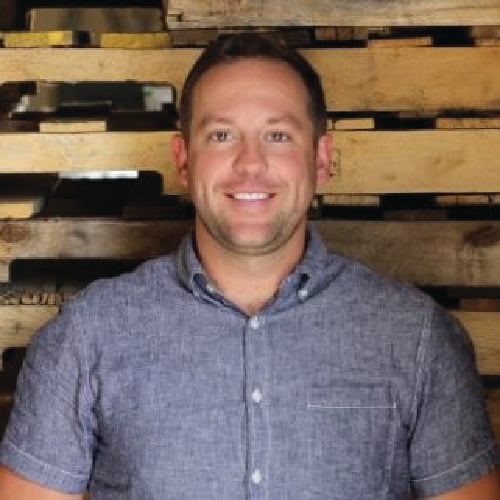
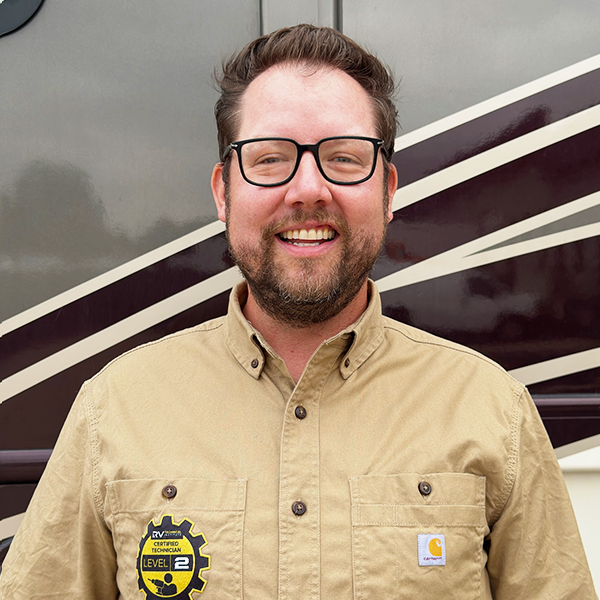
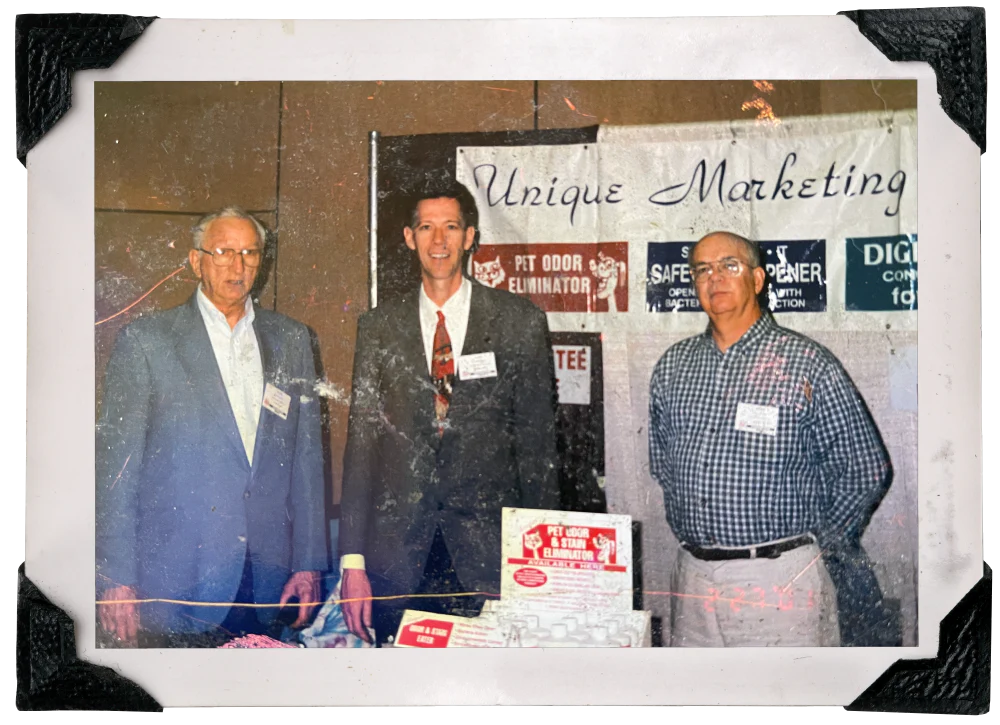
John DiPietro kicks things off with practical tips to help you survive — and thrive — during RV show season, from planning your visit to avoiding overwhelm on the show floor. Then Jim and Rene sit down with Ricky and Chris from Unique Camping + Marine for a candid, sometimes funny, deep dive into holding tank care. Yes, the conversation runs long — and yes, it’s worth every minute if you want fewer odors, fewer myths, and better tank performance.
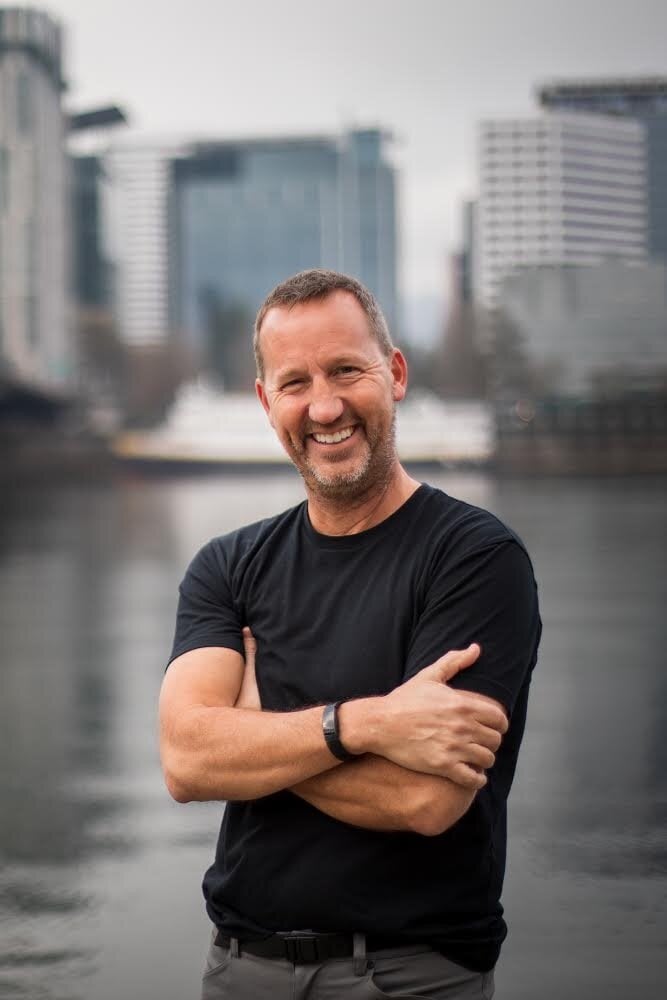
In the RV Entrepreneur segment, Rose and Glynn talk with executive coach Tim Winders, who shares how losing everything led him to full-time RV life, a redefined view of success, and a healthier mindset for entrepreneurs building businesses on the road.
Finally, Bob checks in with Marsha Galvin from Normandy Farms Resort, one of the country’s most well-known campgrounds, to reflect on the season, evolving guest expectations, and what campgrounds are focusing on next.
Whether you’re shopping for a rig, parked for months at a time, or building a life that travels with you, this episode delivers real-world insight to help make RVing simpler — and more enjoyable.
Buying Smarter, Smelling Less, and Living Better on the Road
Top Reasons to Listen Now
- Learn how to get the most out of RV show season, without feeling overwhelmed
- Finally separate holding tank facts from myths with expert advice every RVer should hear.
- Hear how losing everything led to a healthier definition of success and a sustainable business on the road.
- Get a campground insider’s perspective on what guests want now and how parks are evolving to meet those expectations.
RESOURCES MENTIONED
- Unique Camping + Marine — tank care products and education
https://uniquecampingmarine.com
Socials: @uniquecampingmarine - Tim Winders, Executive Coach & Author
https://timwinders.com/ - Seek Go Create podcast by Tim Winders
https://seekgocreate.com/
Facebook @SeekGoCreate - Normandy Farms Family Camping Resort
Foxborough, Massachusetts
https://normandyfarms.com
Be A Guest or Share Your Story!
https://podcast.rvlife.com/contact
Listen to the RV LIFE Podcast Episode #151
Listen and subscribe to The RV LIFE Podcast on Spotify or in your favorite podcast app. Or, read the full episode transcript below. Leave a comment, or contact us with any questions or feedback.
Connect & Learn More
- https://podcast.rvlife.com/about
- https://facebook.com/rvlifepodcast/
- https://instagram.com/rvlifepodcast/
- https://www.facebook.com/groups/rvlifemovement
Got a great story or tips to share with listeners? Leave us a voice message!
(NOTE: Audio submitted may be published on the podcast unless specifically requested otherwise.)
Buying Smarter, Smelling Less, and Living Better on the Road
RV LIFE Podcast #151 – Full transcript
RICKY & CHRIS: Think of your holding tank treatment as your daily routine brushing.
TIM: Sometimes the American dream can become the American nightmare.
MARCIA: You know you have to have multiples of everything.
JIM: And we’re back for another trip with the RV Life Podcast crew. I’m Jim.
RENE: And I’m Renee. This episode is one of those you’ll be so glad you listened shows. Whether you’re shopping for a new rig parked for the winter or trying to make RV life work financially, we’re going to cover topics that affect just about every RV out there at some point in their journey.
JIM: That’s right, we’ve got guidance on navigating RV show season, a no nonsense conversation about holding tanks and odors that every RV needs to hear, and a powerful story about redefining success while living on the road. Plus, we take a look at what’s happening behind the scenes at one of the country’s most well-known campgrounds.
RENE: In today’s episode, we’ve got four great segments for travel. John shares practical tips for making the most of RV show season. Learn how to plan your day, what to bring, and how to avoid getting overwhelmed. Then, in lifestyle, we talk with Ricky and Chris from Unique Camping and Marine about holding tank care, odor myths and best practices, especially for our viewers who stay parked for long stretches.
JIM: For our RV entrepreneur segment, Rose and Glenn sit down with Tim Winders, an executive coach and full time RV, to talk about redefining success after losing everything and the mindset shifts that can help entrepreneurs on the road. Then, in industry news, Bob talks with Marcia Galvin from Normandy Farms Family Camping Resort about what the 2025 season looked like and what they’re adding for 2026.
RENE: You can find complete show notes and all past episodes at TV.com. So let’s dive in.
JIM: Got any RV shows on your calendar this year? Whether you’re shopping for your first rig, upgrading, or just daydreaming, it helps to have a strategy when attending shows.
RENE: John walks through how to get the most out of any RV show without burning out. He’s going to share some helpful tips like doing your research, budgeting, and knowing the best questions to ask dealers.
JIM: And even why you should bring a tape measure. Here’s John with tips to help you work your next RV show and have fun doing it.
JOHN: Hey everybody, welcome once again to another edition of the RV Life Podcast. My name is John DiPietro, and you know, one of the segments that we provide on this RV life podcast is a segment on interesting travel destinations, and I’m sure everyone has a great destination in mind. But in order to get to that destination, you first have to buy an RV. Whether it’s your first RV or second or third, or no matter how many you’ve already bought. The RV show season is here, and there are shows all over the United States, and what we want to do during this segment is to let you know how you can get the most out of an RV show visit. Keep in mind that RV shows are fun, but they’re also work and we want to make it fun for you. So what we want to do is give you several tips on how to get the most out of an RV show and enjoy it at the same time. So keep in mind one thing you want to go in with a game plan. You want to find out as much in advance about the show as you can. You want to find out how many models there are going to be. There. Is it is it a small show with just 25 or 30 units, or is it a huge show with with well over 1000 units that you can look at? And, um, you know, that’s very important to, to consider.
JOHN: Also keep in mind that shows can be huge and overwhelming, so be prepared. Somewhere along the line to be overwhelmed. So you’re going to see hundreds of models. You’re going to see several vendors, and you’re going to do a lot of walking. So we want we want to tell you to do is, um, prepare for at least 4 or 5 hours for a show. So the first thing you want to do is find out about the show as much as you can in advance of the show before the show even opens. Find out who the dealers are that are going to be there. Are they near you? Are they coming from a greater distance? Can you visit that dealer in advance of the show? And can you call the dealer to find out what types of units are going to be at the show? Now, keep in mind one thing. Many of the larger dealers have several hundred units available on their own lot, but they can only bring a small number of units to the show. So find out what units they’re bringing and then do your research on that beforehand. So what kind of RV are you interested in? This is a very daunting question. If it’s a first time purchase for you, you’ve got to decide between is it a towable unit? In other words, something that you hook up to an SUV or a pickup truck? Or is it a motorized unit? And if you choose motorized, then you have the decision to decide whether you want it to be a class A, which looks like a bus, a class B, which is a smaller van, or class C, what is a combination of A and B where you get the big back, but the front end is a standard vehicle, whether it be a Ford or a Mercedes.
JOHN: Um, so keep that in mind. Also, if you are looking at a towable unit, you’ve got even more decisions to make. Do you want it to be a pop up? Do you want it to be a hybrid? Do you want it to be a fifth wheel? Do you want it to be a traditional travel trailer? Do you want it to be a toy hauler? All these decisions have to be made before you buy your first RV. The other question you want to find out is what is your budget? Keep in mind one thing with RV pricing is that there’s no rhyme or reason to it, because you can pay $250,000 for a small class B with a lot of lot of expensive features in it. Or you can pay $50,000 and get a beginner style, a entry level class A, so don’t think that class A is going to be the most expensive.
JOHN: B is less expensive and C is the least expensive. Not the case at all. So bring your wish list with you and keep it focused and, um, keep in mind you will be overwhelmed. So when I say come prepared, I say come prepared because you want to find out all of those things in advance before you go to the show. So I said, we’re comfortable walking shoes. Bring a notebook, okay? Or bring a camera or your phone to take pictures and lots of notes. And you might also want to bring a backpack with water. And you might want to even bring some snacks with you, because these events are usually held in large either arenas or convention centers or conference centers. So you’re going to do a lot of walking and generally, you know, plan on spending 4 or $5 for a bottle of water. But if you bring your own water with you and maybe even bring a sandwich, you can save some money. Uh, but one thing that we tell people to do is if they’re going into a big city for a show, um, don’t necessarily buy the snacks at the show, but figure out a good local restaurant that’s nearby that you can make a full day of it. So you get there early, you go to the show, you spend time with the show in the afternoon, you find that restaurant that you might not go to, uh, on a on a daily or weekly basis.
JOHN: The other thing you want to do is bring a tape measure with you, a tape measure. Why? Because you want to find out how big the unit is. You want to find out how, um, how long it is, how wide it is, how high it is. Will it fit into the, um, uh, garage that you have? All those questions bring that tape measure. Because there are so many things that you want to, um, need the dimensions of. Okay. The other thing you want to do is bring your kids. Why do you bring your kids? Because when you bring your kids, you can kind of find out what is the unit that is most interesting to them. And if they’re young kids and are not in a crib, there are bunk bed opportunities for them and you want to find out if the kids will, in fact fit in those beds and you don’t want to buy something and then find out after you’ve purchased it and brought it home that it’s too small for the kids to sit in. So with that being said, kids are great to see all the features. Keep control of your kids because there are people that let their kids run wild at a show, and you don’t want to be that parent where everybody is looking at your kids and saying, hey, stop standing on this, or jumping on the beds, etc.
JOHN: now kids are great for seeing the features, but when it comes to negotiating with the salesperson, um, have the kids stay with one of the other adults that you have with you. Um, because they can wreck a negotiating session real quickly. And, um, so keep in mind kids have their place at the show because you want to buy the show to take the kids on vacation. You want to buy the unit to take the kids on vacation. Um, but you want to buy the right unit. Okay, here’s another point. Talk to the dealers. Make a walk through the show. Do a quick walkway through the show when you get there. Don’t spend time right away with the first dealer that you see. In fact, I know dealerships that want to be placed in the rear of the hallway, because then everybody who’s gotten to them has already talked to the other dealers. So but talk to the dealers. Now, you say I’m going to get there early. And when you get there early, there are generally crowds of sometimes hundreds of people waiting to get in. Most of the time when people come into an RV show, they go in the entrance and take a right. What I’m suggesting what you do is go the opposite way of the crowd.
JOHN: Go to the back of the building and start there. And then come back, because you’ll be against the traffic flow and you’ll be able to see a lot of units before people get there. So come in, go to the left, go to the back. Um, but talk to the dealers, talk to the sales reps, find out things like what is the show price? How long is the show price going to be? Um, honored. If you come back the next week, can you still get the show price? What are options are included. Many times during shows, dealers throw in extra features that, uh, would not be included otherwise. What warranties come with the unit? What is going to be covered if there is a repair, and are there any upcoming incentives that would change the pricing? So keep in mind you want to develop a relationship with the sales rep because they are your information source. Okay, this is your chance to gather insider information fast. Now The other thing you always want to do is to come prepared with your paperwork. If you are going to trade something, you already have another RV. Bring your loan papers, bring your warranty papers. Bring any kind of paperwork that you have on that, because there might be a financing company that is working with one of the dealers that you’re talking to, and they might be able to offer you a better financing deal if you already are working with them.
JOHN: So have your trade material ready so that you know how much you owe, what you’re paying for interest rates, how much you’re month, how much your monthly payment is. When you show this to the sales rep, they know that you are serious. So always have your paperwork with you. Now, when you’re looking at these units, we don’t want you to just look from afar. We want you to go inside. We want you to sit in them. We want you to stand in them. We want you to lie down on the beds. Okay. Stand in the shower. Because many times there are people that are of a certain height that can’t fit into a shower. There are some showers that look like a certain height, but they don’t have, um, a place on top that gives you extra headroom. So don’t rush through the units. Take your time, sit on the furniture. Everything looks great when it’s new. Try that recliner, see if it works. Try that, um, table. Can you sit behind it and still fit your legs comfortably? Okay. Stand in the shower. Lie in the bread. Pretend you’re cooking dinner. It’s the closest you’ll get to a test drive. Um, at the show. Now, there are some dealers that will have test drives available before the show or after the show.
JOHN: And, um, you want to find out about that? I have yet to see a dealership that has test drives available at a show. Although some of the major outdoor shows which are held at different times of the year do have test drives available, so find out if that is a feature that you can take advantage of. The other thing is, there are going to be seminars that take place during the time that the show is being held. Go to these seminars. Many RV shows offer free seminars from industry experts. Topics like boondocking, solar towing, safety, maintenance and so many more topics. They can save you thousands of dollars and countless headaches. But keep in mind, beware of the seminar that is merely a sales pitch to buy something. Make sure that you’re getting good, pure, clean information that doesn’t steer you down a certain avenue without giving you information on its own that you can decide whether it’s good for you. Okay. When it comes to buying, don’t buy on impulse. It’s very important because many times, you know, it’s like if you went to the pet store, you weren’t planning on buying that dog, but that puppy looked at you with those wide eyes and you said, well, we’ve got to take this puppy home, or you saw that RV and you said this would fit in our yard perfectly, or this would fit on the back of our SUV perfectly.
JOHN: Okay. Don’t be swayed by signs that say, this deal is only good for a couple hours. It’s the last one. I’ll tell you folks, there’s no such thing as the last unit. There’s always another unit being built. It may not be the exact same model, but it will have many of the same features. Okay, as I said to you before, take pictures of everything. Because by the time you have walked through that show, you are confused. I don’t care if you’re a veteran or the owner. Um, Most RVs today. Well, again, whether they’re motorized or whether they’re towable, they all look alike when they’re new. Okay, you want to have fun at the show? The show is not the end of the road. It’s the beginning of the road. It’s where you go to buy the unit that is going to give you hours, months, weeks, and years of family fun. And if you’re still confused, go to another go to another show the next week. Maybe you might have to drive 50 miles for it, but there are shows January, February, March and mid April. You can find an RV show in just about every major city and metropolitan area in the United States, regardless of where you live. The other thing you want to do is if you’ve found a unit that you are comfortable with and you, um, talk to the sales reps and you found some good pricing, go to the dealership right as soon as the show ends.
JOHN: Okay. Or go to the. If the show is like a Thursday through Sunday or Friday through Sunday, and you go on the first day of the show, go to the dealership the next day, and they may have 3 or 4 of the same units that you have. And sometimes it’s just a feature of, you know, I like the kitchen on this side, or I like the bedroom in the front, or I like the bedroom in the back, or this refrigerator is a little bit different or bigger than the prior one. Always visit the dealership because you’ll be visiting them for service. You’ll be visiting them for parts, and you’ll be visiting them for your next purchase when the time comes, or for exceptions and and that type of thing. So those are a few tips that will, um, take you to an RV show and take you through an RV show, take you away from an RV show with the ultimate goal of buying your first or next RV. We hope you enjoy this. Keep in mind that there are several other tips that other experts have that, um, you know, may differ from what I’ve said, but we’ve found over a 20 year period these tips work for helping you, um, buy your first or next RV. Have a great day, everybody!
RENE: John is right. Rv shows are fun, but they can be a lot of work. If you go in without a plan, you can get overwhelmed fast.
JIM: And if you go with a plan, you leave with better notes and way fewer moments saying, wait, which one was that?
RENE: Now, speaking of things you want to understand before they become a problem, let’s talk about a topic every RV is intimately familiar with.
JIM: As all our viewers know, when we gather around the campfire, at some point the conversation is going to turn to poop.
RENE: It’s true. And today we’re going there in a very helpful and practical way.
JIM: Spoiler alert this conversation runs a bit long. We take a deep dive into the holding tanks with some experts who really know their sh[BLEEP].
RENE: You. But that’s okay because it is one of the most important topics in RVing. And honestly, we could have talked a lot longer.
JIM: Yeah, I had to cut out a lot of crap.
RENE: Huh?
JIM: See what I did there?
RENE: Haha.
JIM: For our lifestyle segment, Ricky and Kris from Unique Camping and Marine join Renee and me to talk all about tank care. These two work in RV and marine wastewater systems and they break down the biggest myths RVers believe about TennCare. From toilet paper to ice tricks, staying parked for months at a time. Get it. Break down.
RENE: Are Ricky and Kris share best practices for odor control, sensor issues, deep cleaning, long term storage, and the little details that make a huge difference when you’re stationary for a while.
JIM: Here’s our conversation with Ricky and Kris from Unique Camping and Marine.
RENE: Ricky and Kris, it’s so nice to have you here. Thank you for joining us today.
RICKY & CHRIS: Thank you for having us.
JIM: Yeah, totally glad to talk to you guys, especially since, um, we’re kind of snowbirds ourselves and jump around and we’re going to be talking about tank care kind of specifically for people who don’t move so much. But you guys are in RVing and marine wastewater storage and disposal. We know quite a few RVers who have either migrated to a boat or have both. Can can you kind of talk to us briefly about both audiences? What are the similarities and differences in storage and disposal of wastewater in the two different types of vehicles there?
RICKY & CHRIS: Yeah, yeah, they’re very different. You know, the concepts are similar holding tanks. You know, waste goes into the holding tank kind of remains there until it is removed from the holding tank. So similar concepts in the way that the functionality works. But man they really couldn’t be more different. You know, with a with an RV you have a gravity situation where you go use the restroom, gravity takes it into the holding tank. And then gravity is what allows you to dump the tank, right? You open the valve and out it goes by gravity. Whereas with a boat, your holding tank might actually be above your toilet. So you’re having to use macerator and pumps and things to kind of move this waste about. Space is very tight in a boat, so there’s a good chance you’re holding tank is under your bed or under your couch or something like that. So having non permeating tanks and non permeating lines is very important because the last thing you want to do is, you know lay your head down for the night and then smell everything in the tank below you. Um and then when it comes time to, you know, evacuating that waste, there is no gravity. Situation. So you have to use pumps. And these pumps then suck all of the way up and out. So with a boat, if your boat is manufactured well, odors are not as much of a problem because there’s a manual protection around those odors where the biggest problem with boats is more of like the complete digestion of the waste, so that when they are pumping out the waste, you’re getting complete evacuation of the waste.
RICKY & CHRIS: It’s very easy to leave some waste behind. And with a lot of boats because of the size, you might have several tanks that are actually linked together and you have horizontal lines. You’re having to kind of like get a suction on and get things out. Whereas with an RV, I would say more of the problems from the experiential side for the consumer are actually odors, and the waste is actually less of a problem. It can be a problem, don’t get me wrong, but odor control is kind of the more clear and present problem for an RV. So very similar. You know, inside the holding tanks, we attack them the same way we use bacteria, enzymes to kind of control odors, break down waste. But the actual steps and processes are very different between the two, which is something we talk about frequently. We talk about how there’s a kind of a crossroads using the right products and using the right process. And if you don’t use the right process, the right products can’t do anything. And they’re very different processes between the two.
JIM: Interesting. Thank you so much because I thought there were a lot more similar, except I did wonder about the pumping. So there’s obviously additional hardware and storage considerations. You mentioned permeable tanks. There’s a lot there we’re going to dive into. Not literally hopefully. But I also mentioned earlier we’re snowbirds and we tend to stay hooked up for, you know, months at a time. So for our viewers like me, what are some of the bigger myths that RVers tend to have or beliefs they might have that might not necessarily be right about holding tank care? Things like, do you have to have RV toilet paper? Or oh, is it good to drive around with ice in the tank? I guess? Ricky, would you kind of address that for a minute?
RICKY & CHRIS: Yeah, yeah, I would say much like everything on the internet, take it with a pretty heavy dose of skepticism. There’s a lot of, uh, you know, old wives tales that when you really understand kind of how these things work, the logic behind these wives tales doesn’t really pan out. So a couple things. One of the things I think people don’t think a lot about when they’re full time and when they’re hooked up in the same place, is the fact that your unit is not moving, and you might just be the tiniest bit out of level, even if it’s just one degree or a half a degree, you can’t even be guaranteed that your holding tank is installed perfectly correctly, and being out of level for two, three, four months when you’re using gravity to empty your tanks means you’re going to have low spots. And when you have low spots, it’s very common for people to find that they get more odors when they are in the same spot for a long time. And a lot of that is because these little low spots can start to build up waste. Even when you do a good job of dumping and rinsing your tank, there’s just little bits that stick behind, and when those little bits stick behind, they start to accumulate and stink. So I would say one of the things to really focus on is making sure you’re as level as possible. And also it’s especially important that you do good rinsing on your tanks, because as you’re rinsing, you’re hoping to lift up and out that waste in those low spots.
RICKY & CHRIS: So that’s one thing. The second thing is RV toilet paper. I would say this is a gigantic myth, but I will go back a few years and say it didn’t used to be. I talked to people who are older RVers and they are very convinced you need one ply or RV toilet paper. And I have to remind myself they grew up in an era of RVing that I did not. It was an era where the the holding tank treatments were dominated by formaldehyde and bronopol. These were products that could not break down waste. And now we’re 30 years more advanced, and our tank treatments are nothing like the tank treatments of the knees or the 1970s. And if you are using a high quality bacteria and enzyme treatment, you can use any brand of toilet paper you want with no issues. It will break down the idea that you still need to use RV specific toilet paper is a relic from years ago, and you just don’t need to think that way now. I will say if you’re using the wrong treatment, that might be the case. Sure, there are still some bad ones out there, and if you are seeing waste coming out in clumps, that’s not a sign that you should be using different toilet paper. That’s a sign you should be using a different holding tank treatment because you should not see chunks coming out.
RENE: Okay, I hope nobody’s eating or eating lunch right now. They’re listening. But you have just rocked my world. You have just rocked. So for we’ve been full timing for a long time and we’ve been using Scott toilet paper for nothing. Wait a minute. This is you. I am blown away. I had no idea.
RICKY & CHRIS: I will say this, I mean, so it’s kind of funny because, you know, without getting too graphic, if you’re using one ply, you just tend to use three times as much, so you’re not really solving a lot of problems when it comes to the amount of paper you’re using. And also the newer tank treatments use what are called extracellular enzymes. So the paper isn’t even sitting inside the tank. You know, again, different products are, you know, different results. But we can take our product now and you can put paper in it. And with just in a matter of an hour or two, that paper is already broken down. It’s not like it was back in the day. Yeah.
RENE: No.
JIM: Even those quilted.
RENE: Yeah. The like the Costco toilet paper that’s like super thick.
RICKY & CHRIS: Yeah. So you know little pro tip I would say our two favorite brands are Angel Soft and Kirkland, the Costco brand. They are the perfect mix of comfortable and usable and affordable. But they also break down really, really well. So if you’re looking for a brand, I go Angel soft or I would go Costco Kirkland Signature, but you can use any of them. I will say that the one thing you definitely don’t want to do is flushable wipes. Never never, never. Yeah. Of course.
RENE: Oh, yeah. Not even in a real toilet?
RICKY & CHRIS: No, exactly.
RENE: What about bamboo toilet paper? Yeah. You know what’s.
RICKY & CHRIS: Funny? We’ve done testing on bamboo. And the bamboo breaks down. It’s. It’s more expensive. So a lot of people don’t tend to go to it. We actually even looked at maybe making someone putting it out there because so many people ask for toilet paper for RVs. It’s kind of like. And we can talk about gray tanks a little bit too. A lot of the stuff that you can do inside your holding tank is free or very inexpensive. Yes. For some reason people just want to buy a product. So, you know, we explored toilet paper as a thing and we looked at bamboo. It’s totally fine. You can use bamboo. It’s no problem at all.
RENE: That’s so good to know. So, Chris, our listeners definitely want to hear from you because you’re the technical side of the business. Yeah, yeah. So what? Okay. I have a million things I want to ask you, but we were talking to our neighbors the other day and they have never used their toilet.
JIM: They choose not to.
RENE: They choose not to.
RICKY & CHRIS: Yeah, okay. We’ve met a lot of people at rallies and such who were who are in the same exact camp where they just choose not to use it. And that’s kind of that.
RENE: It’s it’s an interesting way to RV. I’m lazy. I like using mine, and I’m willing to put up with the occasional odor hazards that come from it. But, um, Chris, when people don’t use their toilet, what does that do to the valves and the system? Does it do anything at all? Does it dry it up or.
RICKY & CHRIS: Uh, that’s a very, very good question. And you are pretty much spot on with what you said there. It does dry everything out. And it’s certainly when it comes to almost anything mechanical that involves water, lack of use. And this goes for household things as well. Lack of use can really start drying things out. And if you leave something which is intended to have basically a relatively constant, not all of the time, of course, because we’re not always, you know, we’re not always stationary, we’re not always using the RVs, but like, it’s meant to be used frequently and frequently enough so that it’s able to lubricate everything. And when you go from storing an RV or not using a specific valve or something in your RV for years on end, when you go to use it, or you go to test it, or you’re going to sell the RV, which is a really common occurrence when you have somebody who’s inspecting these as soon as you apply water to it. All of those gaskets would have not seen water in years. Spring leaks, because they’ve all shrunk, they’ve all deteriorated, and they’ve all changed size or cracked. And it can definitely cause some significant problems as soon as you go to use them again.
JIM: So you mentioned it seems like you’re saying it’s better to keep some moisture in the tanks if you’re storing it. Where do you draw the line? If it’s winter, you don’t want water in there, but do you put a winter riser in there and keep it moist, or do you open them up? Long term storage. Talk to me about the best care for a tank, whether it’s winter or not.
RICKY & CHRIS: So everything when it comes to RVs comes in like what are the circumstances around it, right? So for long term storage, when it comes to winterizing an RV, if you’re not going to be using it just for those winter months, we are big fans of replacing as much of the liquid in the lines with Winterizing antifreeze. We always recommend to go non-diluted on this because they’re intended to be used at full strength concentration. Now with when we say this, not all antifreezes are created equal. The ones which we specifically try to like aim people towards are going to be ones which are made with propylene glycol. Because these are the safest ones and they’re food grade. Some of the other used ethanol glycol, which is a mixture of alcohol and that. And though they can be a little bit more robust when it comes to lower temperatures, most people are not going to be getting into those -50 degree and below temperatures. But for the most part, if you’re storing your RV just for the winter, you can leave both the black and gray water holding tank valves in the closed position and just kind of let them chill for the winter. Okay, longer term, if you’re I mean, life happens, right? If circumstances come up where you find yourself not having to use the RV for several years, that’s where we might suggest switching it up a bit and instead of storing it with Winterization, if you’re in freezing, maybe blow out the lines or have somebody come out and professionally blow out the lines so there’s no chance of any freezing going on inside of there. From there, you can also then leave the black and gray grey water valves open so that you can get air flow coming into it and out of the tanks. So you’re not creating like basically just a sealed off area. Now, this isn’t gonna 100% protect you from like, any kind of drying out of gaskets or anything like that, because, again, they’re intended to be used, but this is the best practices which we’ve experienced when it comes to storing RVs for longer and longer terms.
JIM: Excellent. So let’s get back to talking about using the RV for extended periods but not moving mentioned. Like snowbirds like us, we keep the sewer hose connected. Are there any regular maintenance things that or other myths like should we be leaving the gray valve open like a lot of us like to do, and then close it, let it fill up and then flush? Or what? What’s some good tips for the people that are using it stationary for a long time.
RICKY & CHRIS: So we are huge proponents of people having the luxury. And again, we’re kind of talking luxuries here, like using your RV, toilet and bathroom in the middle of the night. That’s a luxury. It was intended there on purpose. Leaving your gray water valve open is a luxury, because you’re no longer limited to shorter showers because you’re afraid of overflowing a tank. We love the concept of leaving the tank open when you’re at a full hookups campground, but we throw a couple caveats in there because it’s usually going into a sewer port. We always recommend that you put a p-trap bend in the sewer hose as just as it leaves the RV, so when it dips down from where the RV is connecting onto the hose, you can usually get it below where the hose support is located at, and then place it back on top of the host support and continue your run to the drain. When you do that, you’re oftentimes off the ground just enough to be legal in all of the campgrounds that don’t want your hose touching the ground. And that’s totally, totally acceptable. We get that for sure. But when you add some water to that p-trap drain, you’re going to be adding basically a p-trap like in a house, and you’re adding an extra layer of protection from sewer odors that might be coming up from there. So that’s one thing which we always recommend when it comes to leaving the gray water holding tank valve open.
RICKY & CHRIS: The other thing is check on it from time to time. If you see like evidence of sewer flies or something like that. Okay, maybe it’s time to shut off the valve and, you know, proceed that way. But by and large, a lot of the places that we have been to had no evidence of sewer flies, never really have. And we found it perfectly fine and acceptable to leave the, uh, the gray water holding tank valve open. Now, everything else which you stated there as well was spot on. You also stated that occasionally, like right before you’re getting ready to dump the black water holding tank, we always recommend closing the gray tank the night before to fill some water into that tank, so you can rinse out the hose after you dump the black tank. Spot on. That’s exactly what we recommend as well. And then when it comes to, um. Use after dumping a tank. The biggest thing which we have found especially we’ve got a. Lot of really cool tools at our disposal, including clear holding tanks. And the best way which we’ve been able to see how to rinse out a tank beyond any of the rinsing tools is simply by filling it back completely full with water, and then dumping that water after the initial dump. That creates enough pressure to pull everything which might have been left behind from the initial dump out and down the drain.
JIM: Good tip. So every once in a while, fill that thing all the way up again after dumping, and especially if you’re going to store it for a while, you might want to do that first.
RENE: And I guess that would explain why sometimes the longer we sit, the more we’re smelling stuff. Certainly coming up, um, if we’re not doing that.
RICKY & CHRIS: And Ricky brought this up briefly in just a couple minutes ago, but he was discussing level and level can be such a huge variable when it comes to staying in one spot for long term, because it’s not just the level of the leveling legs, it can also really come down to what surface is your RV parked on? Is it on a gravel spot? Is it on concrete? These materials shift. We’ve got a very heavy RV for our company RV, and I had it parked on asphalt. You would think that that would be perfectly fine over. Not a long time either. It was about a month and a half of letting it sit there on the jack stands. The jacks sank about an inch and a half into the asphalt. And so knowing this sort of a thing, we’re like, okay, well, we need to adjust. But it’s also something which is important to note that, like, it’s a really good idea to relevel your RV if you’re in one place for long term. I would say about once a month is a good practice to pull up the landing gear and put them back down again. Relevel everything. Because sometimes you find issues with your RV and that can cause like pretty significant problems when it comes to leaving waste behind inside of the tank.
RENE: That is something I never thought about. You know, I just got over the fear of having an unlevel RV because we used to have a gas absorption refrigerator and we finally have a 12 volt. I’m like, yay! We don’t have to worry about not being level. Well, I guess we do. And it’s really funny because we just got to our winter spot last week and the ground here is really soft. We’ve had a lot of rain, and I noticed when we were parking that the tires sank into the ground, which was like, wow, I’d never really seen that. Not a lot, but just enough. So I have a feeling about a month we’re going to need to wait till next week. Yeah, yeah.
RICKY & CHRIS: So thank.
RENE: You.
RICKY & CHRIS: It’s good practice and making sure that you’ve got good air pressure is just another way to make sure everything is in level and is going to be properly ready to go for comfort and for also functionality of plumbing these holding tanks have slight slopes on the bottom of the tank built that way from the manufacturer. But as with most plumbing, it’s designed to have a slight enough gradual slope to allow both wastes and solids to move down the line.
RENE: It is really good to know because last year we had a brand new RV and within a couple of months I smelled a funk coming from the tank and I’m like, wait a minute, there’s we haven’t had this long enough to build up stink in there. What is going on? So, Ricky, I want to ask you this. How do you feel about tank cleaning services? You know, the guys who come out and they steam clean your tanks? And do they work? Does that make a difference?
JIM: Or the built in whirligig or whatever’s in there when you hook up a hose.
RENE: To.
JIM: It? Are these things enough?
RENE: Is that enough to to make up for being unlevel or any of that stuff?
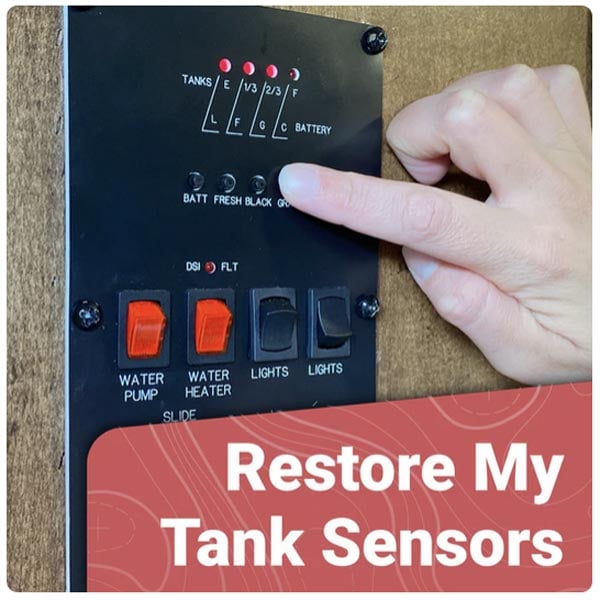
RICKY & CHRIS: Yeah, really good question. And I was actually going to touch on this. I’m glad you brought it up. We like to use a dental analogy around our offices. It just works. So we like to think of your holding tank treatment as your daily routine brushing, right. You’re going to brush your teeth every day, and that’s going to take care of the majority of the problems that your teeth might run into. If you’re using a high quality holding tank, that is going to help you prevent the majority of the problems that will come down the pike. Waste build up or odors or things of that nature. Misreading sensors. You still go to the dentist once or twice per year because you know you need an extra layer of clean. You know you want to get those teeth examined and looked at and cleaned and make sure things are in good shape. So there’s really two ways you can do that. We have a product that you can use where you essentially fill your tank completely full. You add this product, you let it sit for a few days, and it’s that deep clean that goes through and will clean every nook and cranny of your product. And it’s kind of like going to the dentist. It is that deep clean. It’s going to make sure everything is in good shape. The other option because quite frankly, sometimes you don’t have this option, right. You’re a full timer who primarily Boondocks. Good luck finding two days where you’re not going to use your tanks and leave them full and let them get cleaned. So in this scenario, we are huge advocates for getting your tanks professionally cleaned. That scenario, this is your dentist. I will say not all tank cleaners are created equal. We have actually worked with a number of really great tank cleaners to provide content and videos.
RICKY & CHRIS: I’m not sure if you guys have seen it, but on our YouTube channel we have these really cool clear holding tanks where we can see inside of a tank and we have their complete replicas, but they’re made out of plexiglass and we have sensors, we have all the valves, we have the ability to raise the temperature up and down. We can do all kinds of fun stuff. And what you will quickly learn is that if you have a person coming out who is jetting your tank, they call it hydro jetting and they are using like an electric pressure washer. The amount of power that it generates inside those things, they can clean. But you need to find someone who really knows what they’re doing, because it could take 2 or 3 hours of cleaning to really make sure you get everything right. And if you’re gonna hire a hydro jetter, we highly recommend you find somebody who uses kind of more of that commercial grade, gas powered pressure washer because they have the strength to really get in there and put the pressure that’s necessary to deep clean that tank. So big fans of having your tanks cleaned every year, but make sure you get somebody who has a gas powered, full strength pressure washer. You can still get the job done. They’re just going to have to sit there for 2 or 3 hours. And I can tell you this, most of those guys aren’t. They’re going to come in and come out an hour. And if you could peel back the curtain on your tank, you’re going to realize it’s not as clean as you thought it was. So that’s one thing.
JIM: Real quickly you could tell us what’s going on inside that tank. I’m guessing that, as you know, you’re flushing and keeping storage in there. Sensors are getting plugged up. Valves are getting clogged. What is it that needs to be cleaned?
RICKY & CHRIS: Yeah. So a lot of people don’t realize this, but your your holding tanks, most of them actually have ledges at the top. And that’s because they are made to basically hang from the rails of your chassis. So those ledges have two inches 2.5in of space. A lot of waste will get up on those ledges. And then it sits there. And, Renee, to your point, that’s where a lot of smells can come from. Because let’s say you used your toilet right out of the gate. You really filled that thing up. Now you got some waste in that top ledge over there. When you dumped it, it stayed behind up there. And now you’re just having this on this completely exposed waste that is, you know, wafting into your RV. So by deep cleaning or having your tanks professionally cleaned, you’re getting up into those ledges, as well as any potential kind of corners where things weights could get, you know, build up or accumulate. And then also, Jim, to your point, you still get this sensor issue that’s very common, where paper starts to cling to the sensors. And once it does, it creates essentially misreading sensors, sensors that read full all the time.
RICKY & CHRIS: And by using a cleaner, you can essentially get in there. What these things do, they’re basically a long rubber hose, kind of like picture when you’re at the car wash, it’s like a hose like that on the gun itself. And it has special little tips. And when those tips, they’re so powerful, the tips that spray backwards literally launch, they propel the hose up into the tank. And it’s not exactly rocket science that that thing is just whipping around inside there. And it’s doing its ability to kind of clean everything. And the guys who know what they’re doing, they know how to kind of manipulate it and move it to put it in that corner or that corner, or to get near the sensors. And when it’s done right, effectively, your tank should be almost like it’s been manually reset to where there’s no left behind waste. There’s no paper stuck to the sensor probes. Essentially, it’s almost like you roll it off a lot if you get it done correctly. Oh, I think you did bring up the onboard rinsers. Do not for a moment think that these onboard rinsers are doing that job.
JIM: Okay.
RICKY & CHRIS: Where it’s spraying. It might be hitting that little ring around that spot, but odds are it’s nowhere near your sensors, and it’s nowhere near the low spots where all the stuff is gathering. And, you know, if you think about the rinsers, they will tell you never do it with the tank valve closed, because they don’t want you to walk away and overflow it. Okay. Just putting it out there, you know, be smart about this. But truthfully, if you’re going to use a rinser, the best way to use it, close your black tank valve. Let it be the way you fill your tank. Keep an eye on it. Just watch down inside your tank. Make sure it’s not going to back up on you. Do not leave. Let it fill up, turn it off and then open your valve. That, like Chris had mentioned, that full water in that tank. And when you open that valve, what it tends to do is it creates this like double tidal wave that just goes back and forth and back and forth. It really as soon as you open the valve, that water gets majorly disruptive. And when it gets disruptive, it is splashing and shaking and it’s hitting all of those corners and it’s knocking all of that stuff through agitation out. So ditch the onboard rinser unless you’re using it to fill your tank. And then that’s your best way to rinse your tank.
JIM: You cleared up another myth there about not using the rinser with the valves open. I thought that had something to do with the pressure in the tank, but it sounds like that’s a good way to fill the tank. But make sure you’re watching it and rinse it out right again.
RICKY & CHRIS: That’s correct. Yep.
JIM: So many good tips here.
RENE: You know, I never thought I could talk to somebody all day about holding tanks, but you guys. No wonder you have such a great business built around this, because there is so much that our viewers don’t know, even people who’ve been doing it for a long time like we have. So I really, really appreciate all of your information here. You’re so generous with all these tips and I love your YouTube channel, by the way. I saw that and went, wow, there are some really good videos on there now. Yeah. And now unfortunately we have to wrap up this segment. I would like to ask each of you, what is your one essential skill that you think Snowbird needs to know for maintaining their holding tanks while they’re staying still? Yeah.
CHRIS: I’ll go. I’ll go first because I think I also know what Ricky’s is, so I’m gonna steal it from him. Um. Uh, it’s to always use more water. Water is usually the solution to almost any problems which are coming up. If you’re able to hold your flush pedal down for 10s every time, which you flush. If you’re able to keep water inside of your toilet bowl, you’re making another vapor barrier. When it comes to blocking odors, water is the key to making this whole system work great, and it also allows you the freedom to start using toilet paper and stuff like that in conjunction with the high quality holding tank treatment.
RICKY & CHRIS: He did steal my thunder, Chris. That was it. You could invest millions of dollars into holding tank treatments and it will do nothing. You have to get the water above the waist and then your smells are completely taken care of. So this is why water is so critical? Because it is a vapor odor barrier. And you need to keep your waste under water in the tank. And as Chris said, keep some water in your bowl because that’s another place for it to seep up into your RV.
JIM: Excellent. These are all great tips, guys. Can you remind us where people can learn more about your product line?
RICKY & CHRIS: Yeah, so feel free to visit our website. Unique camping. Com or you can find us on YouTube, Instagram, TikTok, Facebook, wherever.
RENE: Thank you so much Chris. Thank you Ricky. We loved having you here today and thank you.
RICKY & CHRIS: Thanks guys.
RENE: Okay, that was packed with why didn’t anybody tell me this sooner moments.
JIM: You know, my biggest takeaway for me was the water. More water solves more problems than most people realize.
RENE: Oh, and that myth busting was so helpful. Especially the idea that it’s not really about special RV toilet paper. It’s about using a good treatment and the right process.
JIM: Also, the reminder that sitting slightly out of level for months at a time, that can create low spots and build up, that’s the kind of real world detail you only learn after you’ve dealt with the stink.
RENE: All right, from tanks to something a little more philosophical. Our next segment is about income on the road.
JIM: In this RV segment, Rose and Glenn talked with Tim Winders, an executive coach, author, and podcast host who runs his consulting empire from the road.
RENE: Tim shares how he went from living what looked like the American Dream to losing everything, and how that experience reshaped the way he defines success, failure, identity and momentum, especially for entrepreneurs. Building a life on wheels.
JIM: Here are Rose and Glenn with Tim Winders.
ROSE: Hi, Tim. Welcome. We are so happy to have you here with us today. Your journey is quite remarkable and your story really lines up with what we love talking about on this show. And we really can’t wait to dive in.
TIM: Very good. You know, I love talking about the journey, and there’s nothing like a journey conversation for people that are RVers.
ROSE: So you are an executive coach, an author, and a podcast host of the Seek Go Create podcast, all from the comfort of your RV. But that’s not what life has always been for you. And like many of us, you once defined success as the way many people do. You had the house, the cars, the thriving business. So this leads us to our first question.
GLYNN: What was life like back then? Pre RV when you were living in my air quotes the American dream. Tell us about it.
TIM: Well, sometimes the American dream can become the American nightmare. And let’s just go and maybe get people’s attention. At one point, we had three companies, uh, two, seven figure operation type companies, one holding assets that would have been valued close to 20 million. And all three of those were in the real estate space. So heading into 2008, we thought we were awesome. By 2012, we were homeless and bankrupt and moving out of our 6000 square foot house. So, you know, that’s either going to encourage people or depressed people right out of the gate here that they’re going to go, huh? Where are we going? Here. Uh, a handful of years later, we were living in an RV, not necessarily out of necessity because things had changed. But, uh, the American Dream was awesome until it wasn’t. Glenn. And, uh, the cool thing is, is that we would have never gone into the lifestyle that we did if we weren’t forced to. So that’s part of our journey.
GLYNN: Were there warning signs before that crash happened? Gosh, did you know this was coming? I mean, you’ve got these massive assets. Do you even have time to prepare to buy an RV?
TIM: Well, you know, there was a gap between 2008 and 2013. And then 2018 is when we actually moved into RV life. So there’s some there’s some space in between there that we don’t have time to get into. My wife and I travel the world as homeless nomads. We we try to use the term nomad instead of homeless. Basically no nickels to rub together. I mean, you know, it was. It was a rough time, I won’t lie. And we were house sitting. We went to Australia and New Zealand for a while really all over the US. And we actually had this stint where we went to Bible school for a few years. And then coming out of that is when my wife said, you know, I think we should travel again. Maybe we should get an RV. And the joke is, is that I couldn’t even spell RV. I grew up kind of in the suburbs of Atlanta. I was in a country, you know, Rver type. But, uh, four months later, we had bought an RV. Sight unseen, we nicknamed him Theo. Gutted the whole inside. And by the end of 18, beginning of 19, we were living full time in our RV and been doing that really ever since. But going back to your question, the clues. Yeah, thanks for bringing it up. I’m sure there were clues that I probably didn’t pick up on. The real estate business was frothy. There was a lot going on. Uh, looking back, I wonder if I was really that good of a business guy. I mean, you know, something that will impact your ego and all is, you know, you think you’re good, and then you realize maybe I wasn’t that good. Maybe the market was just hyper and I was just riding along all of that. So, yeah, there were a bunch of clues. We knew it was coming. We knew it was coming. We saw it all in the way. We were buying properties and all that. However, um, we tried to fool ourselves into thinking maybe it wouldn’t impact us.
GLYNN: Like so many. Honestly, was it fulfilling? Was it was it these external expectations that maybe you thought people thought things about you, or that you’re expected to just buy the bigger house?
TIM: Maybe. Maybe. You know, I’ve had this conversation with a lot of people over on our podcast because we talk a lot about the journey and defining success in different ways because of the things I’ve been through. And I think what a lot of us do is we define success by what other people think, by, you know, comparing ourselves on social media, all of those things which I look back now and I believe they’re extremely superficial, and I’ve always been a man of faith. I would say that my faith is an important part of me, but I still had quite a bit of trying to impress other people. And I think a lot of people do. I think that’s a lot of where entrepreneurs fit in. Many people do what they do in entrepreneurship, not necessarily because it’s something that drives them. It’s something that they’re being driven by what other people think about them. And and one of the things I do as a coach is I try to dig into that a lot more, because looking back on myself, I was probably doing some things that I enjoyed. I liked doing them. But what I was really looking for were the results, so that other people might applaud me or think I was awesome, or I wasn’t even really chasing after the dollar. Truthfully, I was really just chasing after more because it was kind of the way I’d been trained in programmed.
GLYNN: Man, that resonates with me, I get it.
TIM: It probably resonates with almost every entrepreneur that’s listening in, because I asked this question a lot when I asked people what how they define entrepreneur. And a lot of people will say, oh, it’s this. Or they’ll use this term serial entrepreneur, which I’ve come to where I really hate that term. And one of the things I think entrepreneur, you know, I joke it’s probably French for you can’t stay focused very long or you don’t really know what you want to do, so you’re just going to do a bunch of stuff until you figure it out and hope you make a lot of money doing it. Or, you know, I could come up with, I could do this all day long.
ROSE: So true. So how did you rebuild and come to your next business opportunity? What did that look like?
TIM: Yeah. So so when you go through what we’ll call failure, I think just like we have to redefine success, we have to redefine failure. But when you live in a big house and you lose that house, you go through bankruptcy and you basically have no revenue coming in. You lose a lot of assets. I would think most people would define that as failure. So I’m okay saying that when you go through that, it makes you question your identity. Going back to what we said earlier, I mean, I joked about the definition of an entrepreneur, but are many people their identity is tied up in, oh, I’m an entrepreneur. Just sounds good when I like to ask more. Really? I need a little bit more than that. Tell me what you’re good at. Tell me what you’re not so good at. Tell me what you’re trying to accomplish. Tell me what you’re trying to achieve. Tell me what success means to you. And. And I really had to go through a lot of that. Uh, in answering your question, Rose, because I realized my identity was tied up in some of those success metrics that I really didn’t have a lot of control over. Uh, some I did, but a lot of them I didn’t. So we went for about three years, my wife and I just traveling around, not in an RV, maybe a small RV.
TIM: Let’s say a Honda van is an RV with about 300,000 miles on it, with almost everything we own in it. And we were just traveling around house sitting, which you notice a lot of people don’t have a house sitting Life podcast. There’s a reason why, but it is kind of cool to live in other people’s houses. They hand you the keys, they usually have a pet involved and it’s a way to be homeless in style is what I call it because most of them are very nice homes. And Australia, New Zealand. We spent three months on the South Island of New Zealand, six months in Australia house sitting. But it really allowed us to determine what’s important to us, Rose, and what how we were going to define what success meant going forward. And so in 2015, we felt like we should go to Bible school. We our faith was growing. We were people of faith and all. And and I think everybody’s people of faith, whether they would admit it or not, our faith was growing in that we realized that the world was bigger than just us. Because up until that point, I thought the world revolved around me. Um, a lot of entrepreneurs do that, by the way. But I realized it didn’t, and that was part of my journey.
TIM: And as I this is really important with what you brought up, Rose as I began relaxing, I guess with, you know what, we’ve gone three years pretty much without generating any revenue. And we’re okay. Um, I haven’t known what to do, and we’re okay. I haven’t really been hustling or grinding or whatever, and we’re okay now what? And it’s amazing. My wife and I made the decision to go to Bible school, and. And she was going to humble herself and get a what? What became an executive assistant job. And in March of 2015, uh, first three months of the year, we made, I remember because we did our taxes that year, $17 the first three months of that year and the remaining nine months of the year. We I don’t know the total dollar amount, but we had revenue streams or sources from 12 different sources because my phone started ringing off the hook from people maybe not ringing off the hook. My phone started ringing. Let me let me not exaggerate here like entrepreneurs or opt to do. Correct. I don’t want to promote anyway. I want to be real. And? And I had someone that I had known 15 years earlier that said, hey, Tim, listen, we’re doing this startup. We know you’ve got some business skills, marketing, etc.
TIM: can you do some work with us? Somebody else said, hey, we’re trying to grow our company. Can you coach us and just help us along the way? My wife got 3 or 4 gigs with doing what she was doing. And so it really began momentum. And basically we haven’t thought about money since that time. Now part of it is, is we maintained a lower lifestyle instead of what we were doing before, which is every time income going up. This is entrepreneur bad, bad stuff that we do is that we we are always spending ahead of ourselves and we’re, we’re, we’re spending future money bad formula, I’ll tell you. And so, uh, so anyway, we, we lived below our lifestyle and we started having revenue coming in. She got a job with a Silicon Valley company. I kept bringing and building out coaching clients. And so that’s that’s kind of how things started rolling again. And it and it happened. Rose, this is what people are not going to want to hear. It happened without funnels. It happened without doing a lot of marketing cold calling, things like that. It happened being somewhat still and relaxed and not being stressed or strained about our situation. And and I know that’s not a formula for some, but that was our formula.
GLYNN: That is a formula.
ROSE: That’s a tough one though. Like you said, for people to just be and just live your life and let it kind of happen.
GLYNN: Stop forcing it.
ROSE: Yeah.
TIM: Yeah, yeah. I mean, because I would because I can tell you the hustle and grind, I did it and I can show you the scars and the results for it. You know, I used to be about six five, and I’m just kidding.
GLYNN: Uh, that hustle. And that’s part of your identity, too. Like we talked earlier about that. That’s part of the identity. And and how hard was it to to shed that identity and have no idea really who you were once you came out of that, that situation in zero eight.
TIM: The reason it was so hard, Glenn, is because it was forced on me. You know, as someone who’s a coach, I say this often. I know that if Glenn and Rose came to me and said, hey, we want to make these adjustments and changes in our life, or we want to establish this as a business plan or we we want to do this. I absolutely, without a doubt, know that we could sit down and we could work on. We could work on that plan. I’m a big 90 day strategic plan guy. We could do 90 day strategic plans and we could hold each other accountable. I could hold you accountable to achieving and accomplishing things, to make those changes and adjustments in your life and and then to start applying them in business, and all of that is doable. But here’s the deal. Almost everyone that I’m aware of, myself included, who’s aware of this? We do not make significant change unless some catalytic event is forced upon us. And I hate that. I hate saying it. I hate admitting it. It’s just the truth. So someone listening in that’s sitting here going, yeah, I probably need to make this adjustment, this change, this is the unfortunate thing. This is the wake up call is try your best not to wait for financial collapse, health issues, relationship challenges, whatever. Uh, you know, earthquake, floods, winds, whatever attempt to make those changes on your own. Because oftentimes the big change comes when something like I talked about earlier with, oh, eight or Covid situations that occurred for a lot of businesses or things like that. But the change that Glenn, it was forced upon me. I had no choice. It was really, you know, you better make a change because you’re not going to go through this cycle again.
GLYNN: So yes. Yeah. Well, you had a decision. I mean, you could have gone you could have become negative about this, or you could have find you could find the positive and grow from that. I think you found the positive eventually.
TIM: Listen, let’s don’t let’s don’t say it’s all sunshine and rainbows and unicorns, man. It was it was an ugly time. And I want to say that for anyone who’s been through tough times, I mean, you know, going through bankruptcy proceedings, going through a sheriff, knocking on your door when you live in a very nice country club subdivision. Um, that’s a gut punch. Every morning was a gut punch. And so to say I was positive, I think I’m sorry to correct you, Glenn. I’m not sure that that’s the right description to say I was awakened and and my attention was grabbed. You know, I literally had something grabbing me by the neck to say, you’ve got to do things different. I had no clue what that was at the time. And I’m I’m the type guy that I like to say and think that I have answers. I didn’t have answers. And so but, you know, we look back on it and this is why I like to talk about the journey. That journey, we would not be where we are today. My wife and I say this all the time. If those events had not occurred, we would have not spent seven plus years traveling all over this incredible country, building our business from our RV. We would not have experienced some of the things we had. We would not have seen parts of this country or the world. Had we not been through that, we would have still been living in a nice little country club development with a bunch of holes of golf. But, uh, so we wouldn’t wish our journey on anyone. But we’re thankful that we’ve been through it.
GLYNN: That’s what I mean by the positive, because we we are in the same situation. We loved our business. We had everything. We loved our house. And when Covid forced us to shut our business down, you know, we were I didn’t know what to do with myself. My identity was gone. And it was it was very difficult to deal with, but we would not have had that travel with our kids. We would not have been in the RV world. We would not be interviewing Tim right now.
ROSE: Whew. That’s right. Let’s talk about the RV life. So from your RV now, you are coaching entrepreneurs and leaders on defining success and reaching their goals. So for these R RVers who are self-employed or building businesses on the road, what’s an annual planning or like a mindset strategy that maybe could help them fully embrace this lifestyle while still meeting their professional goals.
TIM: I think the biggest thing for me, and I can almost guarantee you that no one would say this. Really ask yourself, what are the things you’re thinking about more than you should be? And let me tell you what it was for me. The refrigerator. That darn refrigerator. I had a temperature gauge. We’ve got. Ours is a little bit older. I kept thinking about replacing it. I would oh, well, after the internet. Truthfully, I was. And I finally got the internet resolved and the refrigerator. And I just finally got to the place where I said, you know what? I got to stop thinking about this. The reason I bring it up is that my mind looks for problems and wants to fix it. And what I realized is that the more I thought about the refrigerator, the less I thought about productive things that helped me build my business. That’s what I mean by that. And so people think that RV life and I’m being really truthful with this, that it is awesome all the time. There is no such thing as awesome all the time. So the few things that I needed to be mindful of to make the refrigerator work short of replacing it was I wanted to be in places where it wasn’t so stinking hot or so stinking cold, where the refrigerator was causing me problems. And you know what? We live on wheels. I can control that. And if I can control that, my mind is less consumed and I can be more creative because I like to write. I’m writing a lot of books and things. I’m helping people. I like to have a clear mind when I help people. So what is consuming your thoughts? And because you lead a flexible lifestyle, do all you can to eliminate it. That’s my tip, and that’s probably different than anyone else would say.
GLYNN: That’s a great tip. Reduce the bandwidth that is saturated.
TIM: We can only do so much in our head. We only have so much space here and we need to be creative.
ROSE: I love that. I think you said it well. Great tip. So, Tim, is there anything else before we wrap up here that you would like to say to our listeners? Any advice, anything?
TIM: Yeah, I would just say embrace the lifestyle that you’re you’re looking at. We know there can be challenges, but just embrace it, lean into it. I think the level of creativity that one can tap into if they are living, what’s a different lifestyle from most? I think it’s unprecedented, so just embrace it. Have as much fun with it as you can and probably the big thing. Enjoy the journey. Just enjoy the journey.
ROSE: Heck yeah.
GLYNN: Absolutely.
ROSE: So, Tim, where can our listeners connect with you to learn more about Cocreate or your book, Coach Stories of Success Redefined? Where can they find you?
TIM: Best place is just do a search of seek. Go create anywhere on all the social platforms YouTube. And then if they’re listening to this podcast, just jump over and search it there. Do long form interviews there, and they can probably learn more about me by following along there than they would ever want to know.
GLYNN: Beautiful. Tim, thank you for coming on today.
TIM: Thank you. Enjoy the conversation.
RENE: You know, Tim’s story is a reminder that RV life isn’t always the result of some neat little plan. Oftentimes it comes out of a complete reset.
JIM: Right? And his mindset advice was surprisingly practical. Figure out what’s chewing up your mental bandwidth and eliminate whatever you can.
RENE: Because the whole point of building a life you love, especially on the road, is having the space to be creative, be present, and actually enjoy the journey.
JIM: Now let’s shift gears from personal journeys to what’s happening in the campground world.
RENE: In our industry news today. Bob sits down with Marcia Galvin, director of HR at Normandy Farms Family Camping Resort. It’s one of the most well-known destination campgrounds in the country.
JIM: They talk about what the 2025 season looked like, who’s camping right now? Why rallies really matter in the shoulder seasons and what they’re investing in for 2026, including new activities and amenities families actually use.
RENE: Here’s RV industry expert Bob Zagami with Marsha Galvin from Normandy Farms.
BOB: All right, folks, our interview today is with Marcia Galvin, director of at Normandy Farms Family Camping Resort in Foxborough, mass. Marcia, thanks for being with us. I wanted to get you on because it’s the end of the camping season for most of us in New England, and you’re closed up for the thing. But give us your campground owner’s view of what the camping season was like in 2025.
MARCIA: Oh, thanks, Bob, for having me on today. Um, yeah. 2025 was a I say it was a good year. Um, because, uh, guests were happy they were all looking for the same thing, to reconnect with their family, to have some good times, to make some good memories. Um, the, the clientele that we had at Normandy Farms this season were great. Um, you know, they were younger families for the most part, um, with younger kids. But we also have grandparents and things like that. But, you know, like I said, they were all looking to get away and really just experience some good times together as a family.
BOB: For folks that may not be familiar with you, you Nominee Farms is always in the top five, top ten of camping and camp resorts in the country. I don’t care if it’s USA Today or Forbes or whatever. Give us a little profile of Normandy Farms.
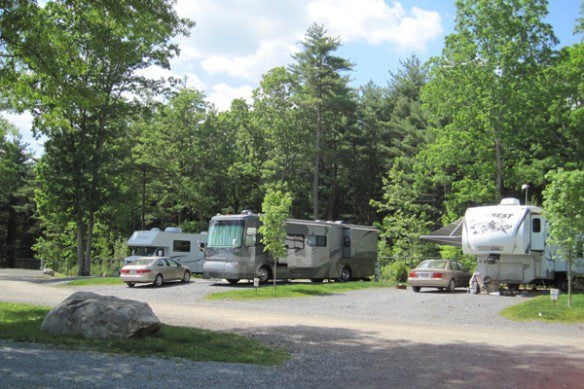
MARCIA: Sure. Uh, Normandy Farms Campground has been a family owned and operated park for 54 seasons. We started in 1971 as a campground, but prior to that, in 1759, the land was acquired by our ancestors who came over from France and they were farming this land for generations all the way up through six generations. Um, until my father, al, um, who’s the seventh generation, uh, and his siblings wrote a business plan for developing something on the farm that would bring some extra money. And that was to develop an RV park with a small amount of campsites, our backyard pool. And, um, you know, that was 54 years ago. So now we have 400 campsites on 100 acres. Um, we’ve got, uh, four swimming pools, a 20,000 square foot recreation lodge. We have a farm with trail rides, um, you know, all the activity fields that you can think of. An indoor heated pool? Um, yeah.
BOB: Uh, the dog.
MARCIA: Center. Correct.
BOB: The new splash pad this year?
MARCIA: Yes, yes, I could go on. There’s something for everyone, that’s for sure.
BOB: And you seem to do a great job at reinvesting in the park. That was one of your father’s goals when they had the campground? It’s well known with your campers and within the industry. So what types of things might you be looking for come 2026?
MARCIA: Sure. So we try to take a poll of our guests and what they’re kind of looking for, and also dig into the research that’s done, you know, nationwide and with the by the various RV, you know, leaders and, you know, like I said a little bit earlier, families are really looking to create memories within their group, within their group, their their family group, their friends group. Um, so we’re adding back into the park some more pickleball courts because we have one, and that’s not enough. So we’re adding three more. Um.
BOB: And then one is never enough.
MARCIA: No one. No. You have to have multiples of everything. Um, we’re going to be adding, um, we added some new bocce courts. Um, that seems to be a good hit. We we’re putting back in, Um, Gaga ball and redoing our RC track and making that lit at night so guests can use their RC cars during the day and night. Um, and we’re reinvesting in some new cabins. Um, we’re going to be putting in some more cabins so that, you know, inviting some new campers. Maybe there’s some folks out there that have really not bit the bullet and bought the RV, but they can come to Normandy Farms and stay in one of our glamping units.
BOB: Well, because you have so many sites and so many amenities. I know this is a favorite place for rallies, whether it’s Tiffin or the GMC nor’easters. Talk about your rally business and how important that is to the park.
MARCIA: Well, being a campground, you know, shoulder seasons midweek, spring and fall are when the kids are in school. So we really need to look to see, you know, how we can boost our occupancy. And rallies have really been successful. So we we reach out to groups that are going to be traveling across the country, and we’re blessed to be in New England, close to Boston, and all the leaf peepers that want to go to Maine, New Hampshire and Vermont. So we do get quite a few groups that will want to come stay with us for mid-week, maybe Sunday to Thursday, and sightsee in the area. Um, because there’s so much to do.
BOB: And it’s easy to get to Boston if people don’t want to take their RV or their their car. There’s there’s transportation right up at Gillette Stadium, right, right.
MARCIA: Four miles from here. You can catch the commuter rail. So you could Uber right up there and and go right into Boston.
BOB: That’s fantastic. Well, I appreciate you coming on this morning. We always like to talk about Normandy Farms. It’s by far one of the best farms that campgrounds in the country no question. And and you and now you and your sister Chrissy are eighth generation. But some of you must have kids. So what’s the oldest generation or youngest generation that’s working at the farm? At the campground?
MARCIA: Well, I would be HR. So I do have to say that my three year old daughter does work here. I mean, my three year old granddaughter does work here, but she’s not on payroll. Uh, she’s a member of the 10th generation. So that generation is growing. And, um, you know, we’re we’re we just spend our time here. So she enjoys the campground just as much as everybody else. It’s a big, big playground for her.
BOB: She spends a lot of time with families and cousins and. And friends.
MARCIA: Exactly. Yeah. And Grammy? Yeah.
BOB: And Grammy especially.
MARCIA: Yeah.
BOB: Marcia, thank you very much. Appreciate you joining us on the RV life podcast today.
MARCIA: Thanks, Bob. Have a great day.
JIM: And that’s a wrap for the RV life podcast number 151. From setting an RV show strategy to tanker truths, to redefining success on the road, and a behind the scenes look at one of the country’s most iconic campgrounds.
RENE: Hey, let’s give a big thanks to our hosts and guests today, John DiPietro for the RV show season travel tips. Ricky and Chris from unique camping and marine in lifestyle. Rose and Glen with Tim Winders for RV Entrepreneur Profile and Bob with Marcia Galvin from Normandy Farms and Industry News.
JIM: Remember, you can get complete show notes and links to all of the resources mentioned at podcast.com. And if you enjoyed this episode, follow the podcast so you don’t miss what’s coming next.
RENE: And if you know someone heading to an RV show or someone who’s battling mystery tank odors right now, go ahead and share this episode with them. Thanks for listening.
JIM: Until next time.
TIM: Enjoy the journey!
RV LIFE: Your RV adventures are worth sharing with an RV life profile, you can connect with a community of RV enthusiasts, engage in meaningful conversations, and inspire others on their journey. It’s not just about where you go, it’s about the memories you make and the people you meet along the way. Start sharing your unique RV experiences at RV Life.com.
FAQs About RV LIFE Podcast Episode 151
In most cases, no. The experts from Unique Camping + Marine explain that modern enzyme and bacteria-based tank treatments can break down regular household toilet paper just fine. The key is using enough water and a high-quality treatment.
Go in with a plan. Research which dealers and models will be there, wear comfortable shoes, bring a notebook or phone for photos, and don’t rush into decisions. RV shows are best used for learning and comparing — not impulse buying.
Level your RV carefully, use plenty of water with each flush, rinse tanks thoroughly, and avoid letting waste sit in low spots. Regular deep cleaning — either DIY or professional — can also help prevent odors and sensor issues.
Yes. Tim Winders shares that redefining success, reducing lifestyle overhead, and creating mental space can lead to sustainable income on the road — sometimes without the constant hustle RVers expect.
The RV LIFE Podcast is presented by RV LIFE – Tools that Make RVing Simple
https://rvlife.com
1 thought on “Buying Smarter, Smelling Less, and Living Better on the Road – RV LIFE 151”