
At a Glance: Adventure, Etiquette & Apps That Fix Camping
RV LIFE Podcast Episode 149 dives into what campground owners really want RVers to know, then discover the intentional travel lifestyle of “Where Is Ajax?” Learn the story behind the App My Community platform, and hear the latest RV industry trends from industry publisher Rick Kessler.
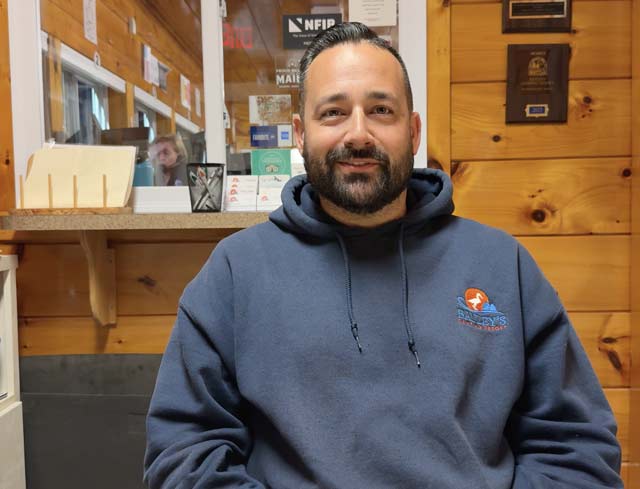
In this episode of the RV LIFE Podcast, we’re starting with a look behind the campground desk. Third-generation campground owner Galen Bailey joins us to share what makes an ideal camper—from check-in habits and speed limits to site boundaries, lighting, noise, and respecting the land. His insights offer a rare, honest view of campground etiquette straight from someone who sees it all.
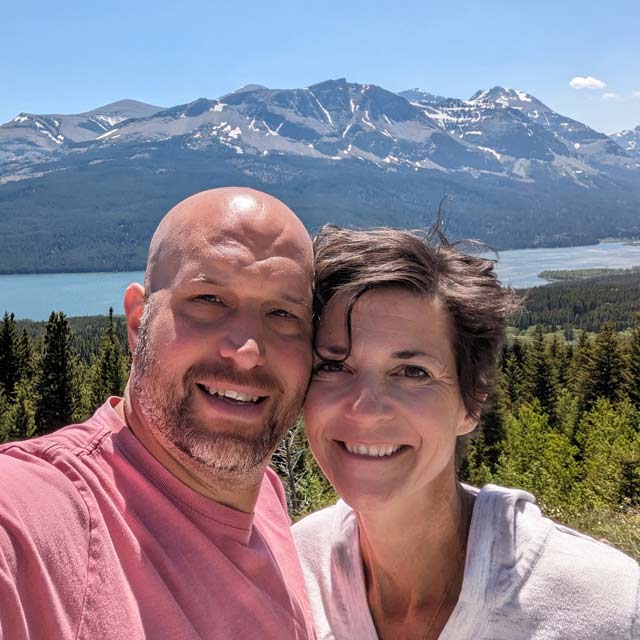
Next, Rose and Glynn sit down with Alex and Jackie of “Where Is Ajax?”, a traveling couple who achieved financial independence in their 30s and now explore life through intentional “seasons.” They discuss early retirement, the joys and challenges of slow travel, and the creation of Oh Hi Cards, their new tool for helping RVers build memorable, meaningful adventures.
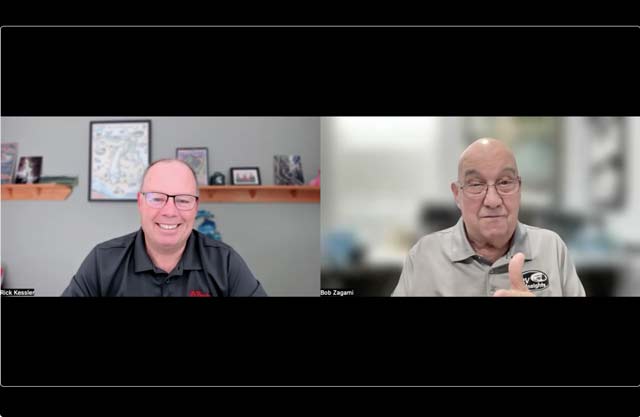
Jim and Rene then talk with the creators of App My Community, born from a single chaotic camping trip and now used by RV parks nationwide to solve communication and service headaches. And finally, John and Bob bring the latest industry news along with a conversation with Rick Kessler, Publisher and Executive Editor of RVBusiness and Woodall’s Campground Magazine, who shares what trends and market shifts RVers should be watching heading into 2025.

Adventure, Etiquette & Apps That Fix Camping
Top Reasons to Listen Now
- Learn what campground owners wish every RVer understood about etiquette and site behavior
- Hear how “Where Is Ajax?” built financial independence and created Ojai Cards to inspire better travel
- Discover how App My Community helps campgrounds deliver smoother, more connected guest experiences
- Get the latest RV industry insights from editor Rick Kessler on the trends shaping 2025
RESOURCES MENTIONED
- Bayley’s RV Resort: bayleysresort.com
- OH HI Cards: www.ohhicards.com
- Where Is Ajax? instagram.com/where.is.ajax
- App My Community: appmycommunity.com
- RV Business: rvbusiness.com
RECOMMENDED READING
- Your Money or Your Life
- The Psychology of Money
- The Simple Path to Wealth
Be A Guest or Share Your Story!
https://podcast.rvlife.com/contact
Listen to the RV LIFE Podcast Episode #149
Listen and subscribe to The RV LIFE Podcast on Spotify or in your favorite podcast app. Or, read the full episode transcript below. Leave a comment, or contact us with any questions or feedback.
Connect & Learn More
- https://podcast.rvlife.com/about
- https://facebook.com/rvlifepodcast/
- https://instagram.com/rvlifepodcast/
- https://www.facebook.com/groups/rvlifemovement
Got a great story or tips to share with listeners? Leave us a voice message!
(NOTE: Audio submitted may be published on the podcast unless specifically requested otherwise.)
Episode Transcript: Adventure, Etiquette & Apps That Fix Camping – RV LIFE 149
GAELEN: I have no trees. It’s gonna be a tough place to have a campground.
BOB: You’re gonna have trouble picking out products going down the highway this year.
JACKIE: Craft the intentional life that is right for you and make it happen.
JIM: For RV life I’m Jim and this is the RV life podcast.
RENE: And I’m Renee. Our mission here is simple. We are going to make Rv’ing simple for you. However you roll.
JIM: We hope you’re enjoying the new format, so please let us know how we’re doing or share your story at podcast.com. Today’s episode is packed. Here’s what’s coming up for our travel segment today, John chats with third generation campground owner Galen Bailey about what makes an ideal camper from the campgrounds perspective. In our RV lifestyle segment, Rose and Glen sit down with Alex and Jackie. From where is Ajax to talk about financial independence, sailing truck campers, fifth wheels and choosing adventure over comfort.
RENE: For the RV entrepreneur. Jim and I are going to talk with Joe and Rose Domg their from the at my community about how a niche campground app business grew out of a really frustrating camping trip. Then John and Bob break down the latest industry headlines. You’re going to hear about big changes at the family RV Association, and Bob talks with Rick Kessler from RV Business and Woodall’s Campground magazine.
JIM: All right. There’s lots of ground to cover here. So let’s hit the road. First up, we’re going to Maine.
RENE: You know, campers are constantly raiding campgrounds, but we don’t often flip that around and ask, what do campground owners think makes a great camper?
JIM: Exactly. So in our travel segment today, John DiPietro talks with third generation campground owner Galen Bailey at Bailey’s Resort in beautiful coastal Maine.
RENE: They’re going to dig in and check out etiquette, staying with your site boundaries, watching your kids, watching your speed, your noise, your lights and your trash, and even why out of state firewood can hurt the campground you love.
JIM: Plus, Galen shares his idea of the ideal camper and spoiler. A lot of it comes down to remembering you’re actually on vacation.
RENE: So here’s John with Galen Bailey.
JOHN: So welcome back to the RV Life Podcast. And you know, throughout the RV lifestyle, you read all over the place about, uh, polls that are taken by campers about where is the best campground and what are the features of Best Campground. Well, we’re going to turn the tables a little bit here today on the RV life podcast and talk to a campground owner about what are the qualities of a good camper. And we are here at Bailey’s Resort over 50 years in the beautiful state of Maine were with Galen Bailey’s second or third generation.
GAELEN: Third generation.
JOHN: Okay, so you grew up here?
GAELEN: Absolutely.
JOHN: You had no choice.
GAELEN: No, I did, but but it was it was too fun to to ignore.
JOHN: Too fun.
GAELEN: So.
JOHN: Um, what we want to do is talk about what a campground owner looks for in having a good camper. And one of the things that we talked about before we hit the record button is respecting check in time and checkout time. If it says check in time at 3:00 and you show up at ten in the morning. Why are the check in checkout time so important?
GAELEN: Galen, the biggest importance is that we want to provide the experience that you’ve paid for upon arrival, which which comes down to little things like having a very clean site, having your firing cleaned out, having your picnic table inspected. Um, just little things like that that start your vacation off on the right foot. And so we always want to make sure that we’re ready for you. And and when a customer shows up unexpectedly, especially a few hours early, it can make the experience a little difficult or or make us rush to have to get that site ready for them. And um, and yeah, yeah, yeah.
JOHN: And it’s important that they realize that, um, if the other person is late checking out, which is the other second part of the same question, check out time. Respect that. Because, you know, maybe you can go an hour late if it’s a if it’s a Tuesday or Wednesday checkout, right? Um, that type of thing. But if it’s a.
GAELEN: But yeah, you know, a typical Saturday or Sunday here in the summertime, we’ve got 250 sites leaving and coming back in to fill that day. Uh, so when you’ve got, uh, 1 or 2 that are taking their time to check out, it starts putting a wrench into our process of making sure that we’re ready for everybody coming back in.
JOHN: Okay. So number one is stay within your time time periods of check in and check out. Yep. Make it a lot easier for you.
GAELEN: Uh, that. And, uh, if you’re looking to get to us early, communicate with us, because oftentimes we are ready for you. Um, so just give us a heads up that you’re trying to come early.
JOHN: Even if it means changing the site.
GAELEN: Yeah.
JOHN: Um, well, you know what, uh, site S22 is not ready, but S27 is ready. Mr. Jones or Mrs. Jones, if you want to go in there, you can.
GAELEN: Absolutely.
JOHN: Do that.
GAELEN: Yep.
JOHN: Okay. Point two stay within your own site. Now, at your facility, you’ve got pretty generous sites.
GAELEN: For the most part. Yep.
JOHN: But there are people that, um, think you know. Well, I got the slide out, and then I’ve got two extra cars, and then I’m going to put, you know, I’m going to bring my own picnic table and talk about why it’s important to, uh, stay within the boundaries.
GAELEN: Well, uh, a couple reasons come to the top of my head on that. One is you don’t want to bother your neighbors, you know, especially in campgrounds like ours. Uh, it’s not your spaced out state park deep in the woods. So we’re all sharing the amenities and the grounds together, and it’s important not to agitate your neighbors by leaching over a little bit onto their site. The other part is, and I’m sure this goes a lot, goes along for a lot of New England campgrounds, is that if you’re starting to leach out into the road a little bit now, you’re making it tougher for people to navigate through back into their site, causing a little traffic jam or something like that. So it’s very important with the boundary of the sites.
JOHN: And most sites are clearly marked as to where you’re.
GAELEN: Absolutely. Yeah.
JOHN: Demarcation is that type of thing. Okay. Let’s move on a little bit. Responsibility for your own kids now? Yeah, I’ve been camping for 20 years, and I have seen people that have the attitude that once they enter the campground, we’re not responsible for the kids until it’s checkout time. And you know what? The kids might be young. They might be on a bicycle. They might be on an electric bike today, which are even more dangerous because they’re quiet.
GAELEN: Or those electric scooters. Yeah, right.
JOHN: Yeah, right. Those things that you don’t even, uh, some of them you just stand on. It’s a wheel.
GAELEN: Yeah, that’s a solo wheel. Yeah. Right. Yeah.
JOHN: So be responsible for your kids, right?
GAELEN: Yes. Um, I do like to look at it as a compliment to our service and our property that people feel comfortable enough that they can let their kids off without having to, to keep an eye on them all the time. And I appreciate that as a as a possible, um, uh, you know, nice thing for us to offer. However, that’s that’s not our job. Our job is not to babysit their kids. And, um, you know, it can be tough because you may have a child who is breaking rules, and you need to go speak to their parents, and the kid is denying it. And then now parents are getting a little upset. And, uh, so, yeah, the ideal customer is just someone who’s at least knowing where their kids are or knowing what they’re using, as in a bicycle or an e-bike and just just letting them know, hey, be cautious out there. There’s a lot of traffic, a lot of people.
JOHN: Yeah. And, uh, do you ever get situations where people are letting their kids go when when you, as a parent would say, that kid’s way too young to be.
GAELEN: Oh, yes.
JOHN: Off by him or herself.
GAELEN: I remember, uh, it was either this year or last year. There was a four year old by himself on an e-bike for hours going around the campground. No no, no. Uh, not having the wherewithal, especially at age four, knowing that, hey, there might be a big diesel pusher coming down the road, and I’m not going to stop at the stop sign. Um, so yeah, it can be. As a parent myself, it’s frightening sometimes to see, um, you know, the the kids that young, they don’t know any better. And, and, uh, it’s tough to see sometimes.
JOHN: Okay. How about, um, responsibility for speed limits within campgrounds?
GAELEN: That’s a tough one, too. And I can say that with especially in our place, we have a couple, you know, we spread out on a on about 200 acres. So, you know, sometimes it takes a few minutes to get from the entrance down to the the back of the resort, where we have a lot of other sights and amenities. And one of the roads that takes you down there is a road with no sights on it, so you can naturally just accidentally speed and and not not be paying attention. But speed is absolutely an important thing in a campground because campgrounds are smaller. You have a lot of kids, a lot of bikes. Um, and you just never know when somebody might fall off their bike right in front of you or come out from a side road not seeing the stop sign. And you got to be ready. You got to be ready to stop.
JOHN: Yeah. Okay. So that speed limits, um, noise limits. I know that when we talked during Covid, you had a lot of first time campers.
GAELEN: Um.
JOHN: First time people coming to the campground?
GAELEN: Yes.
JOHN: That, uh, didn’t know that. Um, you know, you don’t play the radio or not even radio. You know, the the boombox Bluetooth speaker.
GAELEN: Bluetooth speaker. Yeah.
JOHN: As loud as you want. Because your choice of music may not be the same as the choice of the person next to you. How do you deal with that situation?
GAELEN: We. So we do have quiet hours that start at 11:00 at night. Um, however, we do phrase it to people that, hey, you know, again, we’re sharing resources, we’re sharing the property with everyone. So we want to make sure that there’s some common courtesy going along as well. And you’re not agitating people, you know, two roads away, and they can hear every word of the song that you’re playing. Um, so we do speak to people often about, hey, let’s just keep it a little bit more manageable, a little bit more personal at a personal level. And, um, we don’t we don’t tell them to shut it off because it’s not technically quiet time, but we just we just ask them to have some respect for their neighbors.
JOHN: Yeah. And then they’re now with, you know, with all the big TVs on the side of the units, um, you could get a situation where one family has got the Red Sox game on as loud as it can be, and the people next to them are from New York, and they’re not a Red Sox fan, and they’ve got the Yankee game. If you run into that at all.
GAELEN: We’re we, we do. But it’s more so I would I would say it gets louder when it’s playoff time. Right. Yeah. Yeah. So you may collectively hear the campground roar when a Bruins goal is scored or a Red Sox home run is hit. Um, we give a little nuance to that too, especially if if everybody in the area is listening to the same game that, you know, they’re not, they’re all up anyways. But, um, you know, we try to bend a little bit on playoff nights, you know. Exactly, exactly.
JOHN: Um, the camper that handles their own trash properly and doesn’t necessarily just leave it there, um, outside overnight in a plastic bag because campgrounds sometimes have wild animals.
GAELEN: Yeah. I mean, we’re in a little bit more of a dense town, so we don’t get as much, but we we still see the occasional skunk, raccoon, fox. Yep. That that will come by. Um, so it is important. It’s important. And we talk to people about making sure, hey, keep it in the bin. You know, if you’ve got a bag you’re going to leave out. We have dumpsters throughout the campground that make it pretty easy for people.
JOHN: Most campgrounds do have.
GAELEN: Yeah.
JOHN: Um, you know, whether they’re, they’re metal containers or the dumpsters that you just put the trash in your car when you’re when you’re heading out? Yeah. Um, so trash is an issue. Another point that, um, bears repeating is respect lighting issues today.
GAELEN: Galen, that’s become a bigger problem over the last five years.
JOHN: With these LED lights.
GAELEN: And portable. You know, everything now can slide a DeWalt battery into it to power it up. So everything is even more convenient to light up your site nowadays. Um, but I think what people don’t realize is when they have a floodlight, they’re not aiming it straight down to the ground. They just are illuminating their area. And a lot of times you can you can light up the person four sites away with that.
JOHN: Exactly. I mean, there’s some amazing LEDs that are um.
GAELEN: And again, you know, a lot of these things are people enjoying themselves on vacation, and we absolutely want to see that and allow that. But it’s got to be within reason, common courtesy, you know, just respect for your neighbors.
JOHN: Yeah. Parks responsibly. What do you mean by that? I mean by that by saying, um, you’ve got your unit in there, you’ve got your your travel trailer or your motorhome, and many times you might have a another tow vehicle with you, um, kind of keep that on the site. Don’t don’t put it out into the road and don’t block the road.
GAELEN: Yeah, yeah we do. Uh, we do ask for people to make sure, especially if they’re going to have a second or third vehicle, um, outside of their normal vehicle that they’re towing the rig with. Just make sure there’s enough room on their site to be able to squeeze the whole vehicle in. If not, we have three different auxiliary parking lots that allow people throughout the campground to park their extra vehicle if they’re on a smaller site. However, we I feel that we do a really good job of being realistic on what size rig can go on each site along with a vehicle. So we really aren’t stuffing rigs into sites and they don’t have any room for their vehicle.
JOHN: You won’t put a 40 foot travel trailer onto a site with 41ft clearance.
GAELEN: Exactly. Yes. Yeah. We I generally try to measure the site where the rig plus about eight feet for a vehicle to sit sideways on it, especially like a dually to be able to sit on it without being out in the road. That’s that’s generally how we measure our sites. Yeah.
JOHN: One other issue that has come up, uh, all over the country in recent years is out of state firewood. If you live in a rural area and, um, you’ve got access to firewood, a lot of people like to fill the back of their truck up and take the firewood with them to the campground to avoid, you know, having to purchase it locally. Yep. Um, what are the what are the issues with that today?
GAELEN: Well, the biggest issue is, you know, bringing a species out of its habitat into a new habitat. Bugs? Yeah. Bugs. Yep, yep. Um, so if you’re if you’re bringing something that has devastated Western Mass, you know, up to Maine, you know, that that that could potentially be a problem. Um, trees are important to the state. Trees are important to our business. And, uh, so we do our due diligence just to ask people, you know, if they come in with a truck full of firewood that, uh, you know, are you able to prove where you purchase it or did you purchase it locally? You know, just just to cooperate with us, just to make sure that they have a place to come back to each year. Because if I have no trees, it’s gonna be a tough place to have a campground.
JOHN: Right? And shade and quiet are two of the things that people look for.
GAELEN: Yeah, yeah. It’s not Florida here. It’s not Florida here where people like to be out in the sun. It’s it’s it’s, uh, you know, people people like to have that New England feel in the, in the woodsy feel. Yeah.
JOHN: And one of the other points that I wanted to bring up that we what we try to do, and we’ll be doing it as soon as we’re done. This taping is patronize the food Establishments on site in the camp stores and that type of thing. Um, number one, it’s it’s good business. Uh, it helps the campground owner out, but it also saves you the, um, as the camper, the hassle of, you know, packing up if it’s a motorhome and driving off site to get something when your camp store has virtually everything from from food to, um, you know, beer and wine to T-shirts and even, uh, stuff to make s’mores.
GAELEN: Yeah, yeah. And we carry, uh, the most common, uh, parts for RV accessories, too. So, you know, the things that commonly break on any rig. You know, we like to carry that, too, all the way down to the little bulbs and fuses, just to keep it convenient for people so they don’t have to drive up to route one or figure out what store carries this, uh, certain part. Um, so anything from groceries to apparel to RV parts to even, um, games for families to play inside their camper when it’s raining.
JOHN: When it’s.
GAELEN: Raining.
JOHN: Out.
GAELEN: Yeah.
JOHN: Yeah, yeah.
GAELEN: Um, yeah. And then. And then with our restaurants as well. Our restaurant serves breakfast, lunch and dinner. So you have the opportunity if you want to skip a meal and not cook on your site, or you really don’t want to go pay DoorDash the extra 30 bucks of tips and delivery fee. You know, we’ve got we’ve got, um, food right on site and we’ve actually introduced, uh, in in campground delivery now delivery. Yes.
JOHN: Right there.
GAELEN: Yeah. From our restaurant. Yep.
JOHN: You know, because, um, I know in this particular campground, Bailey’s, um, you don’t use microwave food. I mean, you you throw your own pizza.
GAELEN: Oh, yes.
JOHN: Right. I mean, you make your own dough, and.
GAELEN: We even hand-cut our own fries here.
JOHN: Right. Okay. There you.
GAELEN: Go. Yeah.
JOHN: There you go. Um, we’ve got 30s for you to say. Uh, if there’s anything else that you say, give me, here’s the ideal camper. This is the one thing that makes that ideal camper that wasn’t scripted.
GAELEN: The the the ideal camper for me is, uh, is are people who don’t forget that they’re actually going on vacation. I think a lot of people forget to turn that switch off when they get here and not and slow down.
JOHN: Turn it down to.
GAELEN: 80. Yeah, I think they get up here and kind of forget that, hey, this is a form of vacationing and it’s okay, you know, just take a breath and we’ll handle it from here. And if you have any issues, come let us know and we’ll be able to resolve them immediately. But, um, just just remembering that you’re going on vacation and you’re coming here to have a good time. Good time. And, um, and then on top of that, uh, like I told you earlier, camping etiquette, which kind of covers what we talked about today. Um, just just knowing, knowing what the camping atmosphere is like. And, and the more you can contribute to the etiquette, the more you can be a part of the community that that is camping.
JOHN: This is the RV life podcast. My name is John DeVito. We’ve been talking with Galen Bailey, third generation manager of Bailey’s Campground Resort in beautiful Scarborough, slash, Old Orchard Beach, Maine. Have a good day everybody. Let’s go RVing.
JIM: I love that line from Galen. The ideal camper is someone who remembers they’re on vacation and just turns it down to an eight sometimes, you know?
RENE: Yeah, not a zero. Not an 11, just an eight. I feel like we’ve camped next to plenty of elevens.
JIM: Oh, yeah, the ones with the stadium lights, the two extra trucks on the road, and the entire playoff game on the outdoor TV at full volume.
RENE: Oh, yeah. That campsite that you can see from space.
JIM: After we’re camping last summer. The other big takeaway for me here was respecting check in and check out times. It’s easy to think, oh well, our site looks empty. We’ll just roll in. We don’t have to stop at the office. But you don’t see the behind the scenes cleaning sites. Campers may be relocating.
RENE: All right, all right, let’s shift from campground etiquette to lifestyle design. What happens when you decide you’re going to craft a very intentional life on a sailboat and an RV?
JIM: Intention in our lifestyle segment, Rose and Glenn talked with Alex and Jackie. From Where is Ajax? They followed the fire movement, but rebranded it as File Financial Independence Live early and used it to leave corporate life, buy a sailboat and eventually move into both a fifth wheel and a truck camper.
RENE: They talk about the books that helped them, why they chose adventure over comfort, the idea of living in seasons both seasons, RV seasons, hiking seasons, and how all of that led to their new digital greeting card app, O cards.
JIM: Here are Rose and Glenn with Alex and Jackie.
ROSE W: Hello, Alex and Jackie, welcome to the RV Life podcast.
JACKIE: Thank you. Thanks for having us here.
ROSE W: Yeah, it was going over your Instagram and man, you guys look very similar to us. And what we were doing and boondocking and similar truck. And yes, we have kids. You guys don’t. But it makes us really miss what you guys are doing. You guys are young. You are retired and you’re living the dream, which is what this segment is all about. So give us a little bit more about yourselves and what you guys are doing.
ALEX: Well, a little bit about ourselves is we followed a pretty typical work corporate life sort of path. Um, but we started hearing about people who were chasing their dreams. For us, the igniter was people living on a sailboat. And once we heard about that, we thought, let’s push ourselves to live a little bit. Uncommonly, and save a little bit of money so that we could really go for what we felt like was the life we wanted to live.
JACKIE: Yeah. We asked ourselves, what would we regret not doing? And that ended up being living on a boat which is ultimately turned into traveling. And, um, wanted to do it while we were still young enough and able. So that led us to the early retirement life. And we worked as hard as we could to make a plan so that we could retire early. And here we are.
GLYNN: Wow. Here you are. You know, it’s I think Rose mentioned something about you followed the the acronym Fire, but you have repurposed, purposed it into file, you know, financial independence live early, which not only jives with both Rose and I because that’s the path that we took, but also sort of jives with this segment. What drove you to realize that? Was there an epiphany during that corporate lifestyle that you thought to yourself, I’m going to be on my deathbed, and if I don’t get on this sailboat, then I’ve completely missed out. Was there a time that this happened?
ALEX: Yeah, there was an epiphany for me. I read the book Your Money or Your Life, and it was like a lightning bolt to my brain. I remember reading it and telling Jackie about it, and being so excited that I felt like I had to meter my excitement and sort of dole it out so that I didn’t oversell it, but that that was the, the the spark that really, for me, it felt like life was never the same after I read that book.
JACKIE: Yeah, we didn’t have any kind of I know some people have a death in the family, something that hits really close to home and illness, things like that, that really, um, shove you into, oh my gosh, we need to do this now. We didn’t have anything like that, but we did want to live an intentional life. I’ve been inspired by, um, the quote by Mary Oliver that says something like, uh, what is it you plan to do with this one wild and precious life or something like that? And that led us to let’s be intentional about how we live this one life that we have. And Alex was fired up about this book and saving money. And I got on board, and it’s worked out pretty well for me.
ROSE W: Were there any other books that you read to help you prepare financially for this? How did.
ALEX: You. I have a list. Oh my goodness. I have a list of books I would encourage you to read. But yeah, the ones I typically, um, refer to people are the psychology of money, which is another really good one. And the simple path to wealth is sort of a no nonsense how to invest. Those are those are the three that I typically recommend, but I could go a lot deeper if you’d like to go deeper.
ROSE W: We’ll save that for now. Those are very interesting. Those are good. That’s a good start for people. So how long did it take you guys to gain this financial independence, where you felt like you were ready to take that leap?
JACKIE: It ended up being about eight years. We set a plan in 2012. Alex had taken me on a sailing vacation to kind of show me what it could be like to live on a boat, and that kind of made me go, oh, okay, yes, I’d like to do this. And kind of gave me the encouragement to buckle down. So for eight years, we buckled down and we ended up leaving in 2020. Just so happened to be the pandemic. It was not pandemic induced, but, um, eight years to reach the goal.
ROSE W: That’s awesome. That sounds like a good plan, good time frame. And so you started on the sailboat, which is kind of a lot like boondocking, which is so cool. And then you jumped into RVing. How did that come about? How did you decide to get into RVing?
ALEX: Well, for us, we knew that we were going to sail as long as it was fun. Sailing is, um, it’s very difficult at times, and we knew that there was probably a lifespan on our sailing journey. And so we kind of knew in the back of our head we wanted to RV when we were done with sailing, and it just felt like at the end of three years we were ready for a break. We needed some time off of the boat, because you don’t really have a downtime when you’re living on the boat. You’re always concerned about whether or other boats or the hundred things that are breaking, that sort of thing. So we knew that we wanted to explore the US, and there are so many wonderful things in North America, um, that we just knew that that was sort of whatever happened after sailing was probably an RV.
GLYNN: How many RVs have you had now?
ALEX: We currently own two. We have a fifth wheel and we have a truck camper. We bought the fifth wheel after the sailboat because we wanted comfort after the boat. And I think we for us, we probably let the pendulum swing a little bit too far. It’s a little too comfortable for us.
JACKIE: And it’s a 35 foot fifth wheel. So it’s it’s nothing massive, right? Um, but once we were in it for a while, we started to learn the way we enjoy traveling and the places that we like to go. And we started to realize that it was difficult to take the fifth wheel to some of those places. We maybe identified that we were more adventurers than our RVers. Um, and that led us to maybe we should look at getting a truck camper because we already have the truck, and then the truck camper would enable us to go places that we don’t want to take the fifth wheel like crazy boondocking spots, but also Alaska and Baja and some of the national park campgrounds where we can’t fit the 35 foot fifth wheel.
ALEX: Yeah, when we did rim to rim last year and being able to park our truck camper on the North Rim when we finished and sleep in our truck. Camper was was really great. That was one of those moments where it was like, oh yeah, this, this is the right house for this moment.
JACKIE: Yeah. So we swap in and out depending on the adventure that we’re going on or the type of places that we want to visit.
ROSE W: Yeah, I love that you get that flexibility. And you learned, I guess in that first year or however long you had the fifth wheel, kind of what type of adventures people you were and what type of campers you are. So what else did you learn about yourselves along the way?
ALEX: I think we learned that we if we had to sort of choose adventure over comfort, we probably choose adventure. Um, I think we want everybody wants some level of comfort, obviously, but I think our, our meter probably swings to the adventurous side, and we’re willing to be a little bit uncomfortable for that trade off.
JACKIE: Um, yeah. We also learned that we tend to take things in seasons. Um, and so it might be that this is a fifth wheel season or a truck camper season. Quote unquote. It might also be that this is a more adventurous season or a more relaxing season. So we’ve had periods of time where we’ve sort of bookended our travel, if that makes sense. Like Alaska felt like a season. And last winter we spent in Baja, and that was a season. Last summer we were all out west doing a bunch of hiking. Preparing for rim to rim, and that was like our hiking out west boondocking season. So, um, we’ve sort of taken things in chunks and, and that’s enabled us to, um, kind of look for the next adventure while we’re living, the one that we’re in and plan ahead for what we want the next season to look like.
GLYNN: I think that’s so well said, because during that season, you get to really explore yourself and learn about what that season is, whether it is true adventure camping, so far off grid or, you know, taking the fifth wheel out, but you really get to explore, and it’s like reading a book and reading it three times and then moving on to the next one.
JACKIE: Yes.
ROSE W: Yeah, I love that. Do you have a favorite place or two? I know that’s a loaded question because it’s hard for us to answer, but.
ALEX: Yeah, as fellow travelers, you totally get it, I think. Um, it’s always helpful to have the qualifiers of, you know, favorite place for hiking or favorite place for the national parks or favorite place for the scenery? Uh, I mean, the short list for us are Utah was amazing. We really loved Utah for all the reasons everybody loves Utah. I would say the biggest surprise for us was probably Idaho. We didn’t really know what to expect in Idaho. And it was like, uh, it was a it was a wonderful surprise about how much we enjoyed Idaho.
GLYNN: That’s so funny because people ask us the same thing, and I say, Idaho. Yeah, and they’re like, Idaho. Really? I’m like, have you picture the Tetons? Okay, now let’s get off grid in those Tetons.
JACKIE: Yes, yes. It’s beautiful. And of course, you know, we spent the summer in Alaska. We had some amazing experiences there wildlife encounters and beautiful scenery. We loved Baja. We spent the winter in Baja and, um, you know, we all we always find ourselves sort of pulled to the water, given our, our time on the ocean. So, um, parked on a beach, backed up to to the water is. I can’t complain about that.
GLYNN: It’s funny you say that, because I was going to ask if you felt compelled to revisit beaches and, you know, water escapes just because of their time on the sailboat. And with that being said, do you think you’d go back on a sailboat or buy another one?
ALEX: Yeah, I think we we would uh, yeah, we do feel ourselves pulled to the water there. I think everybody feels that a little bit. I think we’re not unique in that sense. But there is something magical for us about standing on the horizon, on on the beach and staring over the horizon, and we just feel pulled in a way that, uh, it’s hard to explain, but I would bet we end up on a boat again at some point for sure.
GLYNN: I don’t see any reason why you couldn’t have both. I mean, we have interviewed individuals who do exactly that. They have, you know, one season is boat, the next season is RV.
JACKIE: Yes. We think that is the probably the ideal scenario for us. Speaking of seasons, right. And then also the thing that we learned about ourselves on the boat was that boat breaks are good for you, good for your mental health and your physical health and just necessary, more so than we’ve found in RV life. And so if we were to have both, that would enable us to take the boat breaks that we feel like we need to take. You have to be out of a certain period for hurricane season anyway, so we could explore the country in the RV and then be on the boat in the winter. That’s that’s kind of the ideal scenario. So maybe someday.
GLYNN: Yeah, that makes perfect sense. No, I mean, you can even remove yourself from social media and all those other aspects that tend to haunt us that now are so available in the RV? Yes. It doesn’t matter where you are. Once you put your Starlink up, you’re still fully connected.
JACKIE: That’s right.
ROSE W: But Starlink on a boat?
GLYNN: Yes. You can. Yeah.
ROSE W: Yeah.
GLYNN: Oh, yeah.
ROSE W: Oh, there you go.
GLYNN: But during your season of being on the boat, did you have Starlink? Because that may not have been out by then.
ALEX: We did not. It was, uh, we were on the boat from 2020 to 2023, and it was really starting to ramp up. We started seeing it a lot on boats. 2022, 2023. We never did. Uh, but put Starlink on the boat. We just didn’t need internet at that speed. Um, but it’d be it’d be really? Now that we do have it on in the RV, it’d be very hard to not have it if we went back to a boat. You just get so used to it for the for all the good and bad. It’s it’s hard to to go without.
GLYNN: Well, that’s a great segue to go into the reason that you’re not really retired anymore. And you would. Absolutely. You need Starlink no matter what at this point, because you’ve started something new and I do want to get into it. I know this isn’t the segment for that, but I want you guys.
ROSE W: To touch on it.
GLYNN: We got to touch on this. I want to know more about.
ROSE W: Oh high carb.
GLYNN: Yes.
ALEX: Yeah. So we we while we were traveling, especially on the boat, it was really difficult to stay in touch with family and friends. Uh, it’s obviously also true while we’re traveling in the RV, but we just felt disconnected. And so we oh, I always wanted genuine connections, even though we weren’t there with someone. So I would record voice memos or look for for ways that I could send something more than just a text. While we were traveling in the RV, we had this idea that there there could be this evolution of the greeting card that was that was reinvented for today with our cell phones that we have available. And so we’ve tried to make this reinvention of the greeting card that felt like it had the soul of a greeting card, but was 100% digital and easy to send from anywhere, all chasing that idea of making the connection. We can we can keep with friends and family really genuine and meaningful. And so we set out to create this app and, um, we’ve we’ve launched it this summer. And, um, it’s been really fun. It’s it’s a passion project for us more than anything else. It’s just a way to to bring sort of a, a way to foster bright, meaningful moments between people. And we get a lot of pride in that. And so, yes, to answer your question, that is that we’re not not working. It is a job of sorts. Um, but it is as much a passion project as it is a business for us.
JACKIE: Yeah. I think that’s the beauty of fire. It creates space in your life. Um, and so because we didn’t we don’t have to have corporate jobs because of the saving that we did before we left. It created this space for Alex to be thinking and then go, you know what? I think I can build that thing, and wouldn’t that be cool? You know, we we made something that we wish we had, uh, and filled a gap that we had, thinking that certainly other people probably have that gap too.
GLYNN: You’re right. You know, I have to say this because we’ve interviewed so many people for the RV entrepreneur and all of the most successful RV based businesses or remote based businesses were passion projects.
ALEX: Right?
ROSE W: They had that space because either they were working there, their job, they had that money saved aside. They weren’t relying on this passion project to make money to live off of. So that’s when it flourished. That’s what it opens. Bandwidth. Yeah, yeah yeah, yeah.
GLYNN: And you guys had the bandwidth to do this?
ROSE W: Yeah.
ALEX: Yeah. Thanks. It’s been. And I also had permission I think it was one of those things where Jackie’s a really great sounding board. Like most couples, you know, sometimes you have the, the, the optimist and the realist or whatever dynamic you want, but, uh, I sort of ran with it, and Jackie would keep me in check. And it’s been a really fun, interesting working duo relationship for us.
GLYNN: I can relate. I won the wife lottery. Maybe you did too. So.
ALEX: Yeah. Yeah, we can fight over that later. But it is interesting dynamics when you work together. Those dynamics are so fascinating.
ROSE W: They really are. You learn a lot about yourself and. Yeah. Yeah. That’s so cool. So where where is this taking you next?
ALEX: Yeah. So so we we launched Oh Hi this summer. It’s very, very early. It’s available on iOS and Android. And right now we’re really just trying to get it in people’s hands, get feedback from people. What do you wish it did? Um, so we really would love for for people to try it out. We’ve got a promo code for your listeners. If you want to use podcast, you can have a free trial to test it out. Um, but we’re just really trying to figure out if this is something that people really love and want to use. Um, that’s that’s what’s first for us. We’re we’re trying to crawl before we run, I guess.
JACKIE: Yeah. We’re finding that you almost need to use it to see how easy it is to send One thing we were really specific about is we wanted it to be directly sent person to person. So nobody has to download a link to get some weird spammy thing to read your card. And so that makes it simple and and and quick and easy to send. And we’ve also gotten really great feedback of the people that receive cards. And so we feel like the power is in using the app not only to see how easy it is, but then also to get the response back of, oh my gosh, you know, that made my day sort of feeling. We just want to bring a smile to everybody’s face. And um, and, you know, spread spread kindness. We think we could all, you know, connect a little bit more. Um, you know, our phones enable more connection than ever before, yet we feel like we’re probably more disconnected than ever. So this is our effort to bring people together and put a smile on people’s face.
GLYNN: Spread kindness. You know, so many coaches in the, uh, the lifestyle coach space. Talk about sending gratitude texts. But I can see something like this of just sending your your gratitude or hi card just to say, hey, I appreciate you. I’m thinking about you. This means nothing about your birthday or anything like this. This is just me thinking about you.
JACKIE: Exactly.
ALEX: Wonderful. We love that and we want to encourage that. If we can play a part or get an assist in helping other people do that, that brings us so much joy. So yeah, we hope that we can find people that want to do that and we can make that easy for people.
GLYNN: The world needs more of this.
ROSE W: Very cool.
ALEX: Agree.
ROSE W: So Alex and Jackie, is there anything else you want to say to our listeners? Any advice or just anything on your mind before we go?
ALEX: Uh, people ask us a lot like fifth Wheel Truck Camper. I think my advice would be, just go do it. Give yourself grace to, like, uh, learn on the fly. I think we we penalize ourselves because we felt like maybe we would have done it differently, but our advice would be just go, just go. Now go with what you have. Try it out and then you’ll learn exactly how you like to do it and what you like to do it in.
GLYNN: And start inexpensively. Don’t go in with a huge or a huge amount of debt. Buy something used by something smaller than you think you need.
ROSE W: Start local. Start close camping.
GLYNN: Yes, we didn’t realize what a gym we had when we bought our outdoors RV bumper pool. It was 28ft total. We had a truck identical to yours, but it was a 250 diesel. Okay. Same color, same everything. Yes. And we were able to take that so far off grid into places that and and it taught us that a we can go in this debt free and we still sold our business. So we had the pile of money. It was the best thing we could have done had we gone with that big fifth wheel and financed it. Or, you know, we were looking at renegades, you know, super seats. I’m like, wait, I don’t make this kind of money anymore. So.
ROSE W: Yeah. And how how well you can live with with minimal stuff. You know, that was our whole point was get rid of all the stuff and collect those memories.
GLYNN: You guys learned that on the boat. You really figured that out on a boat?
JACKIE: We did. And that is a great lesson. Uh, you know, we have learned and, um, feel sort of empowered by the lack of things that we have. Um, it’s actually quite freeing to not own a lot of things, but that’s a difficult mental shift for a lot of people. So, yeah, go for it. Identify what it is that you want to do in your life. Craft the intentional life that is right for you and make it happen. That’s that’s our biggest advice.
ROSE W: Excellent, I love it. We’ll end there. But first, where can the listeners find you online?
JACKIE: We are on Instagram and Facebook at Where is Ajax and Post. You know, our whereabouts and our day in the life there so you can follow our adventures there.
ROSE W: Right. And your Oh Hi cards.
ALEX: That’s right. It’s available. Oh, oh. Oh Hi is available for iPhone and Android. You can also go to our website. Oh Hi cards. Com.
ROSE W: Excellent. That’ll be in the show notes. This has been wonderful speaking with you guys. We’ll have to catch up another time. And thank you. Thanks for coming on today.
RENE: Okay. I’m officially obsessed with that idea of seasons. Alaska season, Baja season, marathon season.
JIM: You and your marathons. I love how they admitted the fifth wheel was maybe a little too comfy after the sailboat, and that the truck camper let them get back to those more adventurous spots. It really sounds familiar.
RENE: Oh yeah, we’ve gone through our own version of that. There’s our Settle Down season in the trailer, and then there’s the let’s see how far off grid we can get season in the truck.
JIM: I really liked how early retirement gave them the mental space to build something like Oh Hi Cards as a passion project, which is a great bridge into our next segment, the RV entrepreneur, all about earning a living on the road.
RENE: So for this income segment, we talked with Joe and Rose from Amish community. Their story started with one confusing camping trip. Missed activities, no idea where the store was open and surprised weather closures.
JIM: So Joe has a development background. Rose has hospitality experience, and on a 14 hour drive home, they basically started building an app that would fix all those problems.
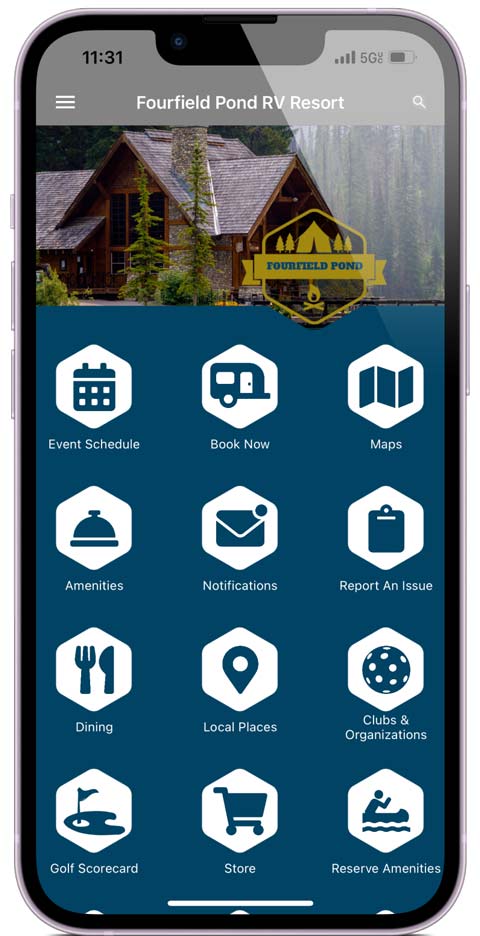
RENE: So today at my community builds fully branded apps for campgrounds. They also do it for resorts, chambers of commerce, and they offer push notifications, activity schedules, scavenger hunts, online ordering forms to report issues, and so much more.
JIM: Let’s hear it from Joe and Rose. This is our conversation about how Amish community was born.
RENE: Joe and Rose, it is so nice to have you on the show. Thank you for being here. I am such a fan of your work. I can’t remember, I think I read about you in RV business or Woodall’s or somewhere, but you have a really good story about how you got into this world of RV camping and hospitality. Can you tell us a little bit about it?
ROSE D: Sure. Thank you so much for having us. We’re really excited to be here. We always love telling our story. Um, but eight years ago, uh, 2017, actually 2017, eight years ago, uh, this time of year, we were never campers or RVers. We were visiting family at a really nice membership RV resort in South Dakota. And because we were guests of theirs, we didn’t get the folder of information that, um, they typically hand out. And so, because we had never stayed at a property like that before, we didn’t know what we didn’t know. And Joe always likes to say that we had four daughters at the time. And the kiddie train goes by and all eight eyes look at him like dad. What? Why are we on that? And you know, what are you doing to us? And so we found out about, um, that. Oh, there’s activities here. And then the two different times we went up to the the store to buy things. The hours weren’t posted, so we didn’t know the hours. And then the last thing was the weather, right. We’re in the mountains. So even though there had been storms and the pool was closed and the activity shed was closed, it had already passed over the mountain. So we had no idea. And so when we got up there, it was closed. So Joe has a background in development. My background is in hotels and hospitality. So on our 14 hour drive home, I’m driving, throwing out ideas, and Joe starts coding. So, um.
RENE: That is such a natural fit. Like, wow.
ROSE D: Absolutely, absolutely. So it was a lot of fun, um, how we began and to just see the evolution in the eight years.
RENE: You know. So having. Let’s start again. You know, having worked at a campground this summer, I can see where you’re coming from as, as the guest and and checking in and not knowing what to expect as far as weather and activities and things like that. So knowing that you’re out there building this app is super, super exciting because as a camp host, it would make my job a lot easier when I can tell guests, hey, we’ve got this really cool app you need to download right now before you even get over to your campsite. Use our wifi here at the building and see what we’ve got going on during your stay. So I really appreciate what you guys are doing out there.
JIM: And I love how the app actually pulls in. Community, man, it’s called App My Community, so it turns the whole experience into a community. But another thing that comes up on the show quite a bit is purpose, and you kind of fell into that niche relatively easily. It was like campgrounds and resorts need this tool. So the niche was there and you guys dove in and are serving that audience. But why do you think owning a narrow niche like that is important for startups, especially small businesses and solopreneurs?
JOE: Yeah. The reason I think so is it allows you to focus, right? So we were able to focus on our customer. We weren’t, um, you know, could we grow a lot faster? Maybe if we just threw it out there and said, here’s what we do. Which an app building product. That’s kind of what we are. Um, they exist. They’re probably cheaper than ours, but they are not experts at a campground. They’re not experts at chambers of commerce. That’s our two niches that we go after. Uh, and so because of that, we know, oh, I know that you guys are going to need to sell things from your camp store or from your snack shack. I know that you’re going to want to have scavenger hunts. You know, I know that you’re running activities and you have water aerobics every day and there in the morning. And if you don’t get that reminder, you might miss them. Um, so that’s kind of how we built that, um, with the push notifications. You have water outages, so you can’t be sitting behind a computer sending a push notification saying, hey, just so you know, the water is out for the next two hours. Most of our customers are doing that in the whole from their phone. Um, so those are the things that we get to know by focusing on a niche.
RENE: You know, I just today we had a red flag warning at, at the campground that we’re hosting at. And, um, I know that our guests did not get a text about that because we don’t have a system in place at our campground. So we are actually having to verbally go to campsites and tell people. So I just love how much time it could save if we could send out a push notification saying, hey guys, please don’t burn wood today. It’s going to be windy and hot.
JIM: So maybe we take a real quick step back and explain what at my community does look like. Who are you serving and what purpose are you fulfilling there?
JOE: So what we do is we actually make individual mobile apps for each of our customers. And so we’re not like, we’re at my community to the business world, to our B2B customer, to a guest. We don’t exist. Um, the most we exist is if you’re in the App Store and you look at the developer’s name, it’s going to say Armstrong Software, which is our formalized name. Um, but we make the liquid camping resort app. Um, we make the Krr hospitality app. And so it is completely branded to them. It’s theirs. They’re not going to forget what their, you know, their guests need to download. Um, there’s no instructions. Let’s go download our app. And everything’s there. Once they open it, it’s going to have all the features they need. Their activity list list that they can favorite. Get a push or get a notification 15 minutes before it starts so they’re not late. See the local restaurants in the area who delivers us? Get push notifications like I mentioned about the water being out. Or here’s a promotion that we’re running for the next season. Um, rent cabanas, rent um, kayaks, rent canoes. Um, you know, it kind of goes on from there. There’s a lot of little features that we add scavenger hunts, uh, custom forms, so they can say, this bathroom needs attention just by scanning a QR code in the app. Um, so.
ROSE D: But it’s very extensible. Um, whether I am a 50 site property or, uh, over a thousand site, um, we make it very flexible so that the information that’s on there is very customized to that property.
RENE: So this is something that you’re doing not just in North America, but I understand you’ve also just expanded overseas. That must be really exciting.
ROSE D: Yes, yes. So we, uh, are in, um, Canada and the United States. We attended the two conferences in Australia in May, that Queensland conference and their national conference in May, and in July we attended the New Zealand National Conference. And so that was exciting.
RENE: So now that you’re now that you’re branching out like this, how do you maintain a local flavor when you’re you’re building these apps for the system for so many different locations? How do you keep that community feel to all of these unique, uh, regions that you’re working with?
ROSE D: Uh, well, the first thing that comes to my mind is that we, we after we started the business, we bought an RV. And so we go around our RVing Ourselves very regularly. Um, our longest trip was for four months. Um, and we did the eastern half of the United States. Um, we went out for three weeks this summer. And what we make a point to do is visit both customers and prospects that we think would be a great fit for the app. When we’re visiting customers, we experience the app and the campground as a guest. And then we sit down with them and we say, okay, here’s our observations and give them our feedback that a guest would need there. But also we want to hear from them. Like from your perspective, what are your needs? We wanted to be equally valuable on both sides. So I think kind of quote boots on the ground traveling around, um, has been really great with us staying connected.
JIM: Has that been your primary outreach for business growth, like in-person saying, this is what we can do or what’s working for you to grow up my community business?
JOE: Yeah. So our primary outreach is trade shows. So between the RV, um, campground owner, uh, associations, uh, as well as chamber of commerce, um, associations, we’re probably attending about, uh, 35 trade shows this year. Um, so it’s a lot of in-person. Um, but it’s the it’s the best place to one target, that audience that we need. Um, and two to really highlight what we do. You know, if we send an email, say, oh, we make an app for your campground. Well, you know, they’ve gotten 20 of those emails in the past month. Most of them are from different types of products that, I mean, no one is doing exactly what we do in this niche. And so it’s not the same thing, but they’re going to couple those together until they actually see it on a screen that they have in front of them, that they can touch with a kiosk and things like that. Um, so it really allows us to, to highlight the product and show what they’re doing. In this last year, we’ve actually we brought on a new employee, a CMO, Bobby Sawdon. And one of the things that he has done is for every conference we’ve been creating them their own app, putting it in the App Store for the conference. It has nothing to do about RV, but it puts the our potential clients using that and seeing, oh wow, you were able to take your app and customize it completely to work for this show so I can do all of this type of thing. Yes.
JIM: What a great way to have hands on for that. Um, where the actual show exhibitors and then you show up and say, look, we did that and we can do it for you. But speaking of the campground owners, I’m wondering what features and functionality they love the most, or what features might be kind of curveballs that they’re throwing at you.
JOE: The feature they love the most, I mean, the two biggest features. One, they love being able to send out a push notification, um, to get information out to their guests. Uh, they don’t have to drive around site to site. We were at a campground that it was going to rain during one of the activities, so they wanted to move it forward two hours. So they drove to every site that had a chat and it looked like had a child. Um, luckily they weren’t in season, but normally it’s a 500 site park. They probably only had 150 sites available at the time, though aren’t used. Um, that’s a big one. Our custom forms so they can make a form for anything, whether it’s a chili cook off voting form, um, report an issue, visitor registration. Uh, you know, they can make whatever they would like. Well, we’ve had, uh, more than one of our customers talk about how by using those forms, they’re able to lead off or to stop their negative reviews. Um, because what’s happening is while the customer is still there, they’re able to report the issue in an easy manner to the campground. The campground can address it before they leave, and are steaming on the way home and say about how such a bad experience. The campground hasn’t had an opportunity to fix it before they leave.
JIM: Well, I can’t wait to get to a campground that has one of these. I envision there being a barcode instead of a little map they give you, or something that like on the door that lets just do that app and download it. And I presume you can also engage with other people within the app.
JOE: So not direct engagement between campers. We do not we do not do. We’ve had it requested a few times, but honestly, once we start talking about it with the manager or the owner, they realize that there’s a moderation aspect that they do not want to deal with. Uh, and so we can embed any website within our app. So if they have a chat product that they want to use for because maybe it’s a it’s a specialized group. It’s ownership. You know, things like that. Um, they can go in and link out to another product to do it, but when it’s camper to camper, you just don’t know what’s going to happen. And you don’t want to be the one moderating it or on the hook if something bad does happen.
JIM: Sure, that makes sense.
RENE: I can totally see that. Let’s say you have a noisy neighbor and, uh.
JOE: You you calls them out, but.
RENE: Yeah. Yeah.
JOE: In that particular case, we have a many properties that say in the report an issue. Some of the reports that they get are the nosy neighbor. And so it allows you to go and ask the campground to deal with the noisy neighbor rather than you doing it. And so they can address this issue, um, instead of you going up to that guy and getting an argument while you’re supposed to be relaxing.
RENE: I love that because right now where we’re working, you have to actually take home the campground phone with you at night And wait for it to ring at 1130 because someone’s complaining about a party going on next to them. This is so fun, I. Oh my gosh, I just I see so many ways this can be used. You have really scaled up from that first time camping experience. What are some of the lessons that you’ve been learning along the way? Because you’re still a pretty new company, so when you learn a lesson, I also want to know, like what? How do you pivot and change to to meet that need or that system that needs to be redirected? Um, you know, we all learn a lot in our first few years. I’d love to hear what you’ve learned.
JOE: A lot of it is flexibility. So we get a lot of requests for features. Um, we have to look at it and say, okay, is this going to benefit this customer or is it going to benefit all of our customers? How hard does this, um, when you put in this feature, how much harder does it make for them to administer their app? Is it a lot more questions that they have to answer? That was one I came from Oracle, um, at one point in time and, you know, you put in a feature request and it’s so slow to ever happen. And, you know, now that I’m, I own the product, I’m the product owner, the business owner and everything. When a feature request comes in, I say, well, yeah, that’s going to benefit you. And we might have 1 or 2 customers. But now if I put this in ten other customers or, you know, 50% of our customer base are going to be confused as to what this button even means. And so it just makes it harder for them to administer. So you kind of see why the company slowed down a little bit. Bugs. We fix them right away. We’re not like that. But in terms of feature additions, we have to really see how much they make sense and make sure that, um, adding them in a, in a certain way, um, doesn’t add to the mental load of the administration. Um, so one of the things we do is we build in a ton of flexibility. So if they’re by a beach, they have their own beach section and they can they can build it all out however they would like. We don’t have to have something special for that.
ROSE D: Right. And I’d like to jump in on this too, when Joe mentioned flexibility. So in the last eight years, we’ve seen such an evolution in when it comes to technology in this outdoor camping, um, industry. Right. And so we were looking ahead from the very beginning integrations. And so how can we integrate with other tools. Because that’s the natural next step. When we started in 2018 actually selling. Um, a lot of people were just then getting online reservations, um, you know, cleaning up their websites, things like that. And so we were asking the questions, can we integrate, can we integrate? Um, now they’re asking the question, do you, you know, are the integrations available, and a lot of the online reservation companies and other products are are bringing those capabilities. Um, but the the ask is changing. So we are always trying to look ahead to see, you know, for those value adds.
RENE: Yeah. This is a business where you really have to be thinking two steps ahead of everybody else. And I’m sure since you started, you’ve seen needs out there that maybe you’re not the best company to address those needs. Um, what are some things that you’re seeing that are really opportunities for other small businesses to, uh, to get off their feet and start start pursuing.
JOE: Well, some of it we’re seeing already. So, um, one of the questions that we would get all of the time was, you know, you get to the campground, they draw on the map and show you how to get to your site. They do that as a late check in. They might do it on your regular check in. Um, so what our customers always ask us for was turn by turn directions. Like, we got so many things asks for that. And it’s it’s not what our focus is. It’s kind of a heavy lift to actually get it done. And so, you know, we looked around and didn’t exist eight years ago. We thought about building something like it. We ended up just making it so you could draw on the map one time and reuse it via QR code through the app. Well, recently we know of some companies that are, um, adding that feature or not adding that feature. That’s what those companies do. They create the products. They do turn by turn walking directions, driving directions, big rig directions in the park using GPS. And so we’re already working with them to embed them into the app. So that was a big one that um, it’s already starting up. Um, that was a big request that we had another one. It’s a pretty common thing in exists in other places, but we’re probably not going to be the answer for is things like online ordering. So we can we sell things on the app.
RENE: Um, we.
JOE: Sell a lot of things on the app. What we aren’t the product for is a full service restaurant. You know, you have all of these different add this, subtract this, um, change this. There’s products that do that. There’s products that exist that do that. And we just embed them within our app. So we say go use this awesome POS system and put a link to it in the app. We might not solve every problem, but we want to at least be the conduit. So your customer doesn’t have five different products that they’re dealing with. Um, they have to remember. Oh, I scan this QR code to get to the TV channels. I have to scan this one to get the activity list, and I have to scan this one to get to online ordering. Put it in one place.
RENE: Oh, I love how exciting.
JIM: How your app kind of connects all the dots in the campground there. And you mentioned kind of next steps with integration and partnerships. But I wonder, before we got on the call here, you had you mentioned an exciting partnership coming up. What’s next for at my community, any any exciting partnerships or features coming soon?
JOE: Well, so.
ROSE D: Well, um, our feature that I’ll speak to is um, currently all of our apps go into Android and Apple Stores, and what’s coming soon is to have a web based version. And so people will be able to open the app on a tablet if, you know, even if it’s not connected to the App Store or just on their phone, um, and on their PC. I mean, so, uh, we have a lot of, um, properties that are really excited about that. And so that’s our next big thing.
JOE: Um, we also on top of that, we also have some integration, um, um, at initiatives that we’re doing, uh, so soon we should be releasing, um, gate code management through at least one PMS, possibly two, where we know you’re booked. We know you’re checked in. Here’s the gate code that you can use your phone to go through. Here’s the gate code to get into the fitness room. You’re not having to print those out. Remember those? All of that stuff. Um, and then integration into tasks was another one. Um, so when you fill out a custom form, it can go into your PMS and create a task that somebody needs to, to accomplish. Um, so those are, those are some things that just getting more and more of those integrations done because now the customers are asking for it. Like Rose said.
ROSE D: Um, partnerships to follow up with the question there.
RENE: Yeah.
JOE: And I don’t know I don’t know how much we should announce that part that I just don’t know if it’s a.
RENE: Oh, that’s okay. We can edit that out.
JOE: Can you talk about that?
RENE: Okay. We’ll keep it under wraps right now and speak. Speaking of wraps, Reps.
JOE: It’s not a secret.
JOE: But it’s also not something that I necessarily know that one published.
JOE: Yeah.
JIM: I’m gonna wrap.
ROSE D: It. Lots of exciting partnerships to come.
RENE: Yeah, and I’m sure we’ll be hearing a lot more about you in all of the RV trade magazines. And I am just so happy that we finally had a chance to connect Joe and Rose. Tell us, where can listeners and campground owners learn more about what you do?
ROSE D: Sure. So primarily come to our website, ww.com. Um, on that site, not only can you learn about our features, but you can actually build your own app and test it out the back end as well as seeing it on your phone. Um, and that’s through what we call our studio. Um, then we’re very active on Facebook and LinkedIn as well. Uh, via at my community.
RENE: Nice. Well, thank you so much. Thank you so much. It’s really great having you here.
JOE: Thank you both.
ROSE D: Great.
JOE: Thank you.
RENE: You know someone who’s actually worked as a camp host? I cannot even tell you how much I would have loved being able to send a push notification instead of hiking around the campground telling people about a red flag warning.
JIM: Right. I’m here to say you can’t have a campfire again.
RENE: And I like that Joe and Rose are so focused on campgrounds as communities. They know you need to know when the water might be shut off or when you’re running low on firewood. But they also know that you want scavenger hunts. You want news about family activities and things like that.
JIM: Plus, the idea of catching problems before they turn into one star reviews by letting guests submit feedback through the app while they’re still on property. It’s such a powerful use of tech.
RENE: Do you notice a theme with this episode? Yep. Good RV experiences are a mix of good etiquette, intentional life choices, and smart tools that make camping easier for both campers and campground owners.
JIM: And that ties right into our final segment. Rv Industry news. It’s all of these things that shape the RV world. We’re all traveling through associations, dealerships, manufacturers, and media.
RENE: So in this industry segment, John and Bob are going to pull some hot headlines and talk about leadership changes and a new direction at the family RV Association. You’ll hear them mention Camping World’s latest earnings report and the growing power of pre-owned RVs. Then they’re going to talk about Winnebago’s new thrive line of travel trailers with bright, modern interiors and a very different design feel.
JIM: Then Bob chats with Rick Kessler, co-owner of GNG media, publisher of RV business and Woodall’s Campground magazine. Plus, at the campsite, Rick shares how the industry is navigating a softer market, consolidations, lots of new products, and why programs like the top 50 Dealers Awards and RV Power Breakfast matter even to everyday RVers.
RENE: All right, let’s hear from John and Bob and then Bob’s interview with Rick Kessler. Hessler.
JOHN: Hey everybody, and welcome to another episode of the RV Life Podcast, the industry news section. My name is John DiPietro, along with my colleague Bob Zagami.
BOB: And we get that news and we get that news from RV business and Woodall’s Campground magazine.
JOHN: Yep. And as we scanned the, um, emails over the last couple of days, we have seen three very interesting stories that we know that our listeners are going to enjoy because so many of these stories have to deal with so many people. And our first story, Bob, is the family RV Association. Now they’ve got a new name. Now in the last couple of years, what did they used to be named?
BOB: It was the Family Motor Coach Association right now to be known as the family RV Association. Right.
JOHN: Because they’re not just welcoming motorhomes. And probably about ten years ago, didn’t you and I go to their leadership and say, you know, the, uh, the numbers of motorized products are not anywhere near the number of Towable products. Maybe you should consider your changing your focus. And what did they tell us?
BOB: They said they’re going to open it to everybody, but it didn’t actually work the way they intended because, you know, people had long memories and FMC was always motorized. In fact, the first couple of years they did it, they only got 5 or 10 people in fifth wheels to do it. Then they had to change in management. Uh, the former director left this this this change is interesting, though, because they brought in, they didn’t bring in, but they had Doug Alan Brock, who’s a long time employee. He’s over 20 years in the association. So when you look into change and, you know, put a little life into the association, do you go to a 20 year veteran or do you go to somebody young and, you know, with a lot of vigor? So I. I mean, I wish them well, but Doug has been handling a lot of their conventions and their meetings and stuff. But I question, you know, they’re still under 100,000 people. At one point they were up 150, 160,000 people. So even he admits, he said that, you know, he wants to change this image, that Fmca or RV, is the best kept secret in the RV industry.
JOHN: Whose fault is that?
BOB: The association’s fault.
JOHN: It’s their own fault. Their own.
BOB: Fault? Yeah. You know, you you bring up.
JOHN: A very interesting aspect of this is that if you want to do something new, why would you consider going to the person who’s got 24 years of experience? That was my thing. The other thought that I found very interesting in this press release is that, um, the national president said one of the reasons that we consider Doug is that he has a, um, a desire to be here for a long time.
BOB: He’s he’s heard he’s already been there a long time.
JOHN: He has a desire to be there a long time. Um, but you know what? Look, it I’ve been a member for a long time, and, um. Uh, we’ll continue to support them, as we will all these organizations, because we want the best for the industry. Um, and you know what? We just wanted to let the audience know that there’s a new director at family RV Association.
BOB: Well, you know, uh, it’s good to have a lot of associations, people, people join associations for different reasons. But upon his appointment, Doug said, we face many challenges, but also great opportunities to reinvent the ways we provide the education, benefits and community involvement that RVs want and need from a membership group. So yeah, They they’ve got their they got their work cut out for him. Uh he’s excited. We’re excited for them. We hope it works out alright for f v a.
JOHN: Yep. Exactly. And another topic that, uh, is always of interest to everyone because it’s such a large player in the RV world is Camping World. And they announced record breaking third quarter results. So I’m not an accountant. But that was what interest before taxes and you know all that stuff EBITA what go ahead.
BOB: Earnings before interest taxes depreciation was up over 40%. So that’s that’s not the language that consumers use. But when you think about this these numbers are staggering as they were reported by Matt Wagner the president of Camping World Holding.
JOHN: Okay let me stop. Let me stop you. Okay. Don’t you find it It’s interesting that good news coming from Camping World didn’t come directly from Marcus Lemonis.
BOB: Yeah, sometimes it does. Um, this time it didn’t. I think they, you know, Matt’s been doing a great job running the company, so I think they. He should get the credit for what they’ve done here. The year to date, uh, achievement was 13.5% market share of the entire market. And that they’re killing it with new and used units.
JOHN: And I think used is a very important if you look at that release, used was used several times.
BOB: Yeah. The used.
JOHN: Pre-owned.
BOB: And they and they said this in their last earnings report uh, that they were going to emphasize the, the value of the pre-owned units. If you look at the company numbers, numbers that everybody understands, the revenue was 1.8 billion for the third quarter. That’s putting them on target for a 7 to $8 billion revenue year. And that was an increase of $81 million, uh, over the last quarter that they had. Now, that was split up with the new vehicle registrations being 766 million. Uh, the, uh, that was a decrease. They actually went down on the new units, $58 million. The new, uh, new unit sales units were 20,000 units, which was an increase of 343 units. So the units went way up, but your profit on them went down and the used vehicles was 589 million for the third quarter, which was an increase of of one. $41 million, 141 million. So it was a 31% increase on their pre-owned inventory. So that’s where the that’s where they’re making the money. And, uh, they, they’ve just done. You can’t argue with it. These numbers are staggering. Yeah.
JOHN: And, um, the other big, big name within the industry almost synonymous with RV is Winnebago. And their story talks about the new thrive lineup of travel trailers. And, um, I read that with strong interest, and everybody says it’s something new. Well, you know what? As you look at these, the outside is a little bit different from a paint job perspective. And, um, the inside is strikingly different. So talk about what some people call the dawn of a new age in travel trailers.
BOB: Yeah, that that’s that’s how they’re building these out. And and it’s it’s true. It’s it’s true. This was distinctly different for Winnebago. And early indications are from certainly the dealers that we talked to. These things are flying off the lots which are good because you’re coming in. You had to do something different. And most, most companies have. When they showed the new product lineups in Elkhart at the dealer open house, most everybody had brand new products to bring to their product line when they watched Winnebago, because it’s such a an industry iconic brand that that’s that’s what they’re going to look for. But it’s very European. Uh, it’s not inexpensive. I mean, these things are in the 4050. You know, they’re going to list it at 53,000. You’re going to probably be able to buy him in the $40,000 range. But that’s that’s where the market is right now. And they’ve got some new features. Very wide open floor plan. They have three of them uh in different sizes. So they’re going to get they they highlighted the report that we saw this week was they highlighted the 22 MLS, which is, uh, in between the 18 footer and the 24 footer. So they’ve got a great a great mix of products on those three products. As I said, the dealers are stocking them. They love it. It’s a gorgeous looking unit.
JOHN: Yeah I think the outside interestingly the the paint job looked very similar to the new. Why can’t I think of that name? Brinkley. Brinkley the new Brinkley product.
BOB: I saw.
JOHN: Wide black look.
BOB: Right. We saw this on many units at the dealer open house. Many companies have just changed their, you know, their exteriors to black and white. Black and white and white. Straight lines. No. No fancy graphic graphics, no swirls. So they could, you know, from afar you’re going to have trouble picking out products going down the highway this year because they’re all going to be black and white. Uh, one of the other major differences for this, which you don’t normally see on a Winnebago product, is a big front windshield. So you’ve got an awful lot of light on the inside. Interior windows are very large also, and it’s going to be a very good product in in the marketplace for the dealers.
JOHN: And it will be at your local Winnebago dealership. And, um, we want to invite people to when they go to the dealerships, uh, you know, whether you might even just be going to a dealership to pick up a part or, or a supply, but go out and take a look at these units, because this one in particular, that light up interior with a lot of glass and it just looks totally different than the RV of 3 or 4 years ago, so.
BOB: Well, and it’s not it’s not a stick and tin type of unit, which typically is is the standard phrase for the entry level products. This is all fiberglass sidewalls with acetal underneath which causes the water is a non wood product. They’ve got a walkable TPO roof with 200W of standard solar panel and a 15,000 BTU air conditioner, and all the exterior lighting is LED lighting, so it’s up, it’s upgraded materials, they’ve extended it, and I think they’re right into the marketplace, because when you look at the marketplace today, every manufacturer has brought out a inexpensive, lightweight, single axle deal. I mean, some of these things are selling at 12,999. So you’ve got you’ve filled in the needs for the people who want that end of it. But this is a this is right at the heart of the travel trailer industry. So it should be a great success.
JOHN: At a Winnebago near you. So that is the wrap on the news segment. Bob is coming right back with a very interesting interview. Stay with us right here on the RV life podcast.
BOB: All right. Welcome back to the RV Life podcast. And, uh, you know something we’re going to do differently this year. We’re going to have interviews that we mix in with the industry news that we get from RV business and Woodall’s Campground Management. So we thought, why not talk to Rick Kessler, who is the co-owner of GMG media editor, you know, I guess publisher of RV business, publisher of Woodall’s Campground magazine, and the at the at the campsite website.
RICK: That’s right. Yeah. That’s right.
BOB: Rick, thank you very much for taking the time. Uh, I wanted to start it off with you because you’ve been a big part of our success in the past with allowing us to use the excellent RV business, which is probably the number one trade, but leaning to some consumer publications. So give us an update on on your publications. And then we’ll kind of talk a little bit about where this industry is and where we think it’s going to go next year.
RICK: All right. Very good. Bob, thanks for having me on. Um, I’m going to apologize up front. It looks like I’m having some connectivity issues, and, uh, I might be frozen on you every now and then, but rest assured, the audio is still working just fine.
BOB: Yeah, there’s a little hiccup, a little hiccup here and there. We can live with that, right?
RICK: It wouldn’t be a us talking together without any hiccups, that’s for sure. Yeah, right. Um, things are going well. Things are going well. The RV industry is in a bit of a, uh, still. And a sluggish market is what most people are describing it as a soft market. Um, but, uh, personally speaking, RV business, we’re doing very well. We’re continuously doing better than we did the year before, issue by issue. And that’s really all you can ask for at this point. And at the same time, we’re we’re making some internal moves and some initiating some new programs and projects so that when this market does return in a better way, we’re ready to take advantage of it.
BOB: Yep. Yeah. It’s, uh, it’s an amazing industry. You know, the resilience of this industry is truly amazing. Yes, it goes up and yes, it goes down, but but they always manage to put the right pieces in place. And, you know, one of the things that we saw this year, you know, starting at the The Hershey Show and I think we’ll see it again at the Florida Supershow, is when it gets difficult. The companies come through and they go back to the drawing board. They create new products, they create new features. They’re continually changing. So when we start that swing up, they’ve got a whole new host of products.
RICK: That’s absolutely right. And even beyond the products, if you look at their internal operations, they’re doing much the same thing that we are, which is kind of taking a pretty bold look at their operations and deciding what brands need to be discontinued and what brands need to be consolidated. Um, I mean, look no further than than Heartland Cruiser and DRV rolling underneath Jayco. There’s one pretty big example. Um, same thing with Dutchmen and Crossroads and Keystone. Um, so yeah, everybody’s everybody’s making plans while they have the time so that when it does return, they’re ready to go. And and you’re right, the product, um, starting at the Hershey RV show. And then when we were making our, um, new model year preview guide in our, uh, September October issue, then that carried into the open house in Elkhart at the end of September. Um, everybody’s putting their best foot forward. Everybody’s ready for when the retail market does come back. Um, it’s always refreshing to see, but that’s me. But I geek out when I see all the new stuff and all the innovation.
BOB: Yeah, it’s like a kid in a candy store. But, you know, another strong point is there’s no panic. Nobody’s panicking. Nobody’s crying wolf or recession or anything else. They’re just they’re readjusting. You know, we’re in transition and it’s logical. And it it’s happened before. And people new to the industry may not realize that. But we always come out on top that we get back to the top of that mountain and the myriad of products is is really, truly amazing. I mean, through the through the whole product line, whether it’s pop ups or single axle trailers or big destination trailers or massive fifth wheels like we see axiom, a brand new company, a brand new company coming with just a I think it’s a grand slam out the gate. But I mean, some people don’t like it, but others don’t. But it’s well over $200,000 fifth wheel and it’s gorgeous looking and and they just have incorporated many new features. But one of the key ones, of course, is they go into the, uh, the the standalone. What do they call the. Oh, the split. Split air conditioner. So you don’t have to have any air conditioner on the roof. So you got. Kind of like your house where you got them up on the wall. I haven’t seen it, but I suspect you have.
RICK: I have seen it. It’s, uh. It’s pretty remarkable what they were able to pull off with that. We’ve seen many splits tried before, especially the DIY, uh, people have who’ve built their own out of a cargo trailer. They’ll use a mini split. Um, this first time I’ve seen a mainstream RV manufacturer try it. And it’s it’s pretty remarkable because they have three mini split systems in one of their coaches, and they swear up and down that they were able to run all three on a 30 amp service.
BOB: Wow.
RICK: That’s just astounding to me. And like you said, when you take those off of the roof and then they bump their roof up to 13ft, they bump the interior headroom up accordingly. So I mean, you could play basketball in one of those things. It’s that big.
BOB: That’s fantastic. Um, tell us a little bit about your other things. A lot of times that the consumers don’t necessarily see but are so important to the industry. You also do the RV power breakfast and you also do the top 50 awards every year. So give us the consumer version of what those are and why they’re important to the consumers.
RICK: Okay. Well we’ll start with the the top 50 dealer awards. That’s only because that’s coming up in November where we it’s the, um, awards ceremony that takes place during the RV Dealers Convention Expo in Las Vegas every November. Um, this is now the 15th year that we’ve done it. It’s actually been 16 years, but we had to cancel it due to Covid, like everything else, right? Yeah. Um, the top 50 program is pretty, pretty unique because it’s not just buying or, you know, buying ad get a get an award or buy an application and get an award. This is a legitimate, genuine award that they have to go through some pretty big hurdles or over some pretty big hurdles. It starts in spring, where we ask the OEMs and a few suppliers as well to nominate their dealers who they think should be considered for the award. We get anywhere from two to 2 to 300 or so of those nominees. We then send out to those nominees an application, and it’s up to the dealers to fill out the application, and there’s no charge for it. It does take a lot of time and effort, though.
BOB: It’s a lot of paperwork.
RICK: It’s a lot. We ask quite a bit.
BOB: Yeah.
RICK: Probably. Uh, I know early on in this program, not very many dealers were willing to be so forthcoming with a lot of the information that we request. But that information we want, we don’t publicize it. It’s all kept internal and we use that, not we the judges, I should say. And I’ll get to that in a minute. But we use that to determine who the best of the best are. It’s not based on sales. Sales is part of it. It’s based on service. It’s based on customer experience. It’s based on community and charitable giving. Um, who are the best of the best in all aspects of their business?
BOB: And you’re right, I, I remember the day you started this, and there was incredible speculation that it wasn’t going to work. And here you are 15 years later. And now nobody questions this program. They they they they pay attention to the paperwork. And we get some new ones every year. People do things differently every year. So yeah, that’s you know, from a dealer standpoint that’s that’s a hallmark. That’s something they should really brag about and make sure that their customers know. And for the most part, most of them do. They they they’re not shy. And, you know, letting people know what about what about the power workers?
RICK: Um, I’ll get to the power breakfast, but one real quickly. There’s nothing I love more than going to the open house or any dealer convention for that matter, and seeing some of those dealerships with the top 50 right patch on their sleeve, because they weren’t they were a winner that year. That’s pretty cool.
JOE: Yeah.
RICK: The power breakfast that takes place every May. Uh, again, that’s right. Around 15 years or so that we’ve been doing it. Um, basically it was started by Sherman Goldenberg back in the day. And Sherman, of course, is my mentor. He’s the previous publisher of RV business still involved day to day. Um, we just gather the industry in Elkhart at the RV, MH Hall of Fame. And when I say gather, it’s like 1300 people. So it’s it’s a big gathering and we just put up on stage some of our thought leaders, not only from inside the industry, but we pull them from outside the industry as well. Um, just last year we had, um. Oh, geez. Um. Jessica Turner from the Outdoor Recreation Roundtable, and she talked about the RV industry’s role in the greater outdoor recreation economy, $1.3 trillion or something ridiculously big like that. Um, and we should celebrate our role in that because it’s a it’s an important one and it’s a good one. Um, but we also have those inside the industry people. A couple years ago, we did have Marcus Lemonis from Camping World, and we gave him ten minutes. He took 20, but that’s okay.
BOB: Look at, you know, the thing that amazes me about that breakfast. And, you know, I spent And body is in the document imaging industry. Uh, and I’ve had, you know, many problems with photography and photography associations. Nobody in the world that I know of can get 1300 people to start lining up at 6:30 a.m. in the room is filled by 7:00. Catered breakfast. But it. I don’t know if you know of any associations, but I don’t know of anybody who would even think of trying to duplicate that.
RICK: Well, I think it’s because we serve real bacon.
BOB: It’s good bacon. It’s it’s good bacon. Alright. My guest has been Rick Kessler from RV business Woodall’s Campground magazine and at the campsite. Rick, thanks very much for being one of our first guests on the new RV life podcast.
RICK: Thank you Bob. Been a pleasure as always.
JIM: All right, we’re back. That was a full tour through the RV universe.
RENE: So today we heard from campground owner Galen Bailey on how to be an ideal camper, how to respect those check in and check out times. Stay in your site, watch your kids, your speed, your noise, your lights and your trash. You heard from Alex and Jackie. From where is Ajax? On financial independence, living early and choosing adventure.
JIM: Joe and Rose from Amish community showed us how niche tech can keep campers informed and happy and help campground owners. And John and Bob updated us on what’s happening behind the scenes with associations, dealers, and new RV products.
RENE: Okay, now don’t forget we would love to hear from you too! What’s your campground etiquette? Pet peeve? Bright lights? Loud music. Are you designing a new season in your RV life and what’s your favorite campground or RV travel app?
JIM: Uh, that would be RV Life Pro, of course. Uh, Speaking of which, check out the RV Life Movement group on Facebook and visit podcast.com. To tell us your stories, ask us any questions or just let us know how we’re doing.
RENE: Get complete show notes on the episodes page and follow RV Life podcast everywhere. Show us where you’re camping this week.
JIM: Big thanks to our host team John, Bob Rosen, Glenn, and of course, Renee. But most of all, thank you for tuning in.
RENE: Until next time, friends.
GAELEN: Just remembering that you’re going on vacation and you’re coming here to have a good time.
RV LIFE: Ever found yourself lost in the middle of nowhere with no signal with the RV life app? That’s a thing of the past. Enjoy reliable offline navigation, lane guidance, and turn by turn voice directions, ensuring you’re always on the right path. Navigate the open road with ease and confidence. Visit Rvusa.com to download the app today and start exploring without limits.
FAQs About RV Adventure, Campground Etiquette & Apps That Fix Camping – RV LIFE 149
According to Gaelen Bailey, ideal campers follow check-in procedures, respect speed limits and site boundaries, keep noise and lights reasonable, and leave their sites clean.
Alex and Jackie are early retirees who travel intentionally through “seasons” of life and created Ojai Cards to help RVers plan meaningful adventures.
It’s a communication and service platform designed for campgrounds, created after one chaotic camping trip inspired its founders to solve common park frustrations.
Rick outlines key trends shaping 2025, including shifting consumer demand, dealer challenges, and what RVers should watch in the coming year.
The RV LIFE Podcast is presented by RV LIFE – Tools that Make RVing Simple
https://rvlife.com